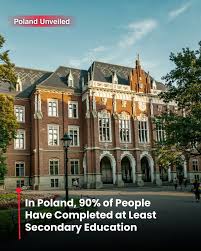
Poland’s higher education sector has become an important part of the country’s social, economic, and technological development. Universities and educational institutions are not only responsible for providing academic knowledge but also play a growing role in preparing students for a rapidly changing digital economy. As technology continues to influence almost every industry, Polish universities are increasingly focusing on digital skills, innovation, research, and practical education.
Poland’s Growing Higher Education Sector
Poland has a large network of universities, research institutions, technical universities, and specialized educational organizations. Students can choose from a wide range of programs, including engineering, information technology, business, medicine, science, and social sciences.
Major academic cities such as Warsaw, Kraków, Wrocław, Poznań, Gdańsk, and Łódź attract students from Poland and other countries. These cities have developed strong academic communities where universities work together with businesses, research organizations, and technology companies.
This connection between education and industry is becoming increasingly important. Employers need graduates who can combine theoretical knowledge with practical skills, while universities want their programs to remain relevant to the changing requirements of the job market.
Digital Education and Technology
Digital transformation is changing the way students learn. Polish educational institutions are using online learning platforms, digital libraries, virtual classrooms, and other technologies to make education more accessible and flexible.
Technology also allows students to access educational resources beyond traditional classrooms. Online courses, recorded lectures, digital research databases, and collaborative platforms can support students throughout their academic careers.
For universities, digital education can also improve communication between teachers and students. Assignments, academic materials, announcements, and feedback can be managed through online systems, creating a more organized learning environment.
The Importance of STEM Education
Science, technology, engineering, and mathematics, commonly known as STEM, are particularly important for Poland’s future workforce. As companies invest in software development, automation, cybersecurity, artificial intelligence, engineering, and other technology-driven fields, demand for skilled graduates continues to grow.
Polish technical universities contribute significantly to this development by offering programs related to computer science, engineering, telecommunications, data analysis, and emerging technologies.
Students who develop strong technical skills can find opportunities across multiple industries. At the same time, universities can encourage innovation by giving students access to laboratories, research projects, technology centers, and cooperation with private companies.
Research and Innovation at Polish Universities
Higher education is also closely connected with research and innovation. Universities provide an environment where researchers and students can explore new ideas, conduct experiments, and develop solutions to real-world problems.
Research in areas such as renewable energy, artificial intelligence, biotechnology, medicine, cybersecurity, and advanced engineering can contribute to economic development and technological progress.
Collaboration between universities and businesses can make this research even more valuable. Companies can provide practical challenges and resources, while universities contribute academic expertise and research capabilities. Such partnerships can also create opportunities for students to gain practical experience before entering the workforce.
International Students in Poland
Poland has also become an attractive destination for international students. Universities offer programs in different fields, including many courses taught in English. International education creates opportunities for cultural exchange and allows students from different backgrounds to study and work together.
For international students, studying in Poland can provide both academic and professional opportunities. They can experience European higher education while developing skills that may be useful in international careers.
Polish universities also benefit from international students because diverse classrooms can encourage new perspectives, collaboration, and cultural understanding.
Preparing Students for the Future
One of the most important responsibilities of modern education is preparing students for careers that may continue to evolve. Technical knowledge is important, but students also need communication, problem-solving, teamwork, research, and critical-thinking skills.
Universities can support this development through internships, practical projects, industry partnerships, entrepreneurship programs, and career services. These opportunities allow students to connect academic knowledge with real-world situations.
As automation and digital technologies continue to change the workplace, lifelong learning will also become increasingly important. Graduates may need to update their skills several times throughout their careers.
Conclusion
Poland’s higher education system has an important role in the country’s digital and economic future. Universities provide academic knowledge, support research, develop technical skills, and create connections between students and industry.
By combining traditional education with digital learning, practical experience, research, and international cooperation, Polish educational institutions can continue preparing students for a changing global economy. As technology develops, the connection between education, innovation, and the professional world will remain an important part of Poland’s future
Leave a Reply