Chemistry is an important field of education that contributes to scientific research, healthcare, environmental protection, engineering, and industrial development. In Poland, universities and higher education institutions provide students with opportunities to study chemistry through theoretical lessons, laboratory work, research projects, and practical training.
As modern industries increasingly depend on scientific knowledge, chemistry education can help prepare students for careers in laboratories, pharmaceutical companies, environmental organizations, manufacturing, research institutions, and other professional fields.
Chemistry Education at Polish Universities
Polish universities offer a variety of programs related to chemistry and chemical sciences. Students can study general chemistry as well as specialized areas such as analytical chemistry, organic chemistry, inorganic chemistry, physical chemistry, biochemistry, and materials science.
University education normally combines theoretical knowledge with practical laboratory experience. This combination is important because chemistry is a scientific discipline where students need to understand both concepts and their practical applications.
Through lectures and academic coursework, students can learn about chemical reactions, molecular structures, materials, and scientific principles. Laboratory sessions then provide opportunities to apply this knowledge through experiments and observations.
The Importance of Laboratory Learning
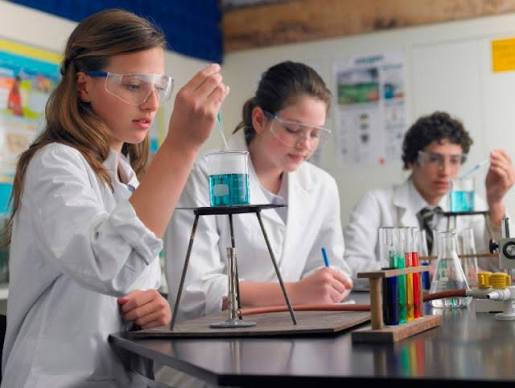
Laboratory education is one of the most important parts of chemistry studies. Students can learn how to handle laboratory equipment, follow experimental procedures, record observations, and analyze results.
Practical work also teaches students how to work carefully and systematically. Safety is particularly important in chemical laboratories, where students must learn appropriate procedures for handling substances, equipment, and experiments.
By gaining laboratory experience during university, students can become more familiar with the working environment they may encounter in professional laboratories and research facilities.
Chemistry and Scientific Research
Chemistry education is closely connected with academic research. Universities provide students and researchers with opportunities to investigate chemical processes, materials, environmental issues, and other scientific questions.
Research can cover areas such as new materials, sustainable chemistry, pharmaceuticals, energy storage, water treatment, and environmental analysis.
Students who participate in research projects can develop skills in experimental design, data analysis, scientific writing, and problem solving. These skills can be valuable for students who plan to continue their education through master’s or doctoral programs.
Chemistry and Environmental Protection
Environmental protection is another important area where chemistry plays a significant role. Chemical knowledge can help researchers understand pollution, water quality, soil contamination, and the behavior of different substances in the environment.
Polish universities can contribute to environmental research by studying methods for monitoring pollutants and developing more sustainable approaches to industrial processes.
Students studying chemistry may also explore topics related to waste management, renewable resources, water purification, and sustainable materials. This allows chemistry education to connect with broader environmental and sustainability goals.
Chemistry and the Pharmaceutical Industry
Chemistry is also essential to pharmaceutical research and healthcare. The development and analysis of medicines requires knowledge of chemical structures, reactions, materials, and laboratory techniques.
Students with chemistry backgrounds may find opportunities in pharmaceutical research, quality control, laboratory analysis, and related scientific fields.
University programs can provide the scientific foundation students need before entering specialized professional roles or continuing with advanced academic research.
Developing Practical and Analytical Skills
Chemistry education provides students with more than scientific knowledge. It also helps develop analytical thinking, attention to detail, problem-solving abilities, and research skills.
During laboratory experiments, students need to follow procedures carefully and evaluate their results. If an experiment does not produce the expected outcome, they may need to identify possible causes and consider how the process could be improved.
These skills can also be useful outside the laboratory. Employers across different industries often value graduates who can analyze information, solve problems, and work systematically.
The Future of Chemistry Education in Poland
The future of chemistry education is likely to involve greater cooperation between universities, research institutions, and industry. Such cooperation can provide students with practical experience and expose them to current scientific and technological developments.
Modern technologies are also changing chemical research. Advanced laboratory instruments, computer-based analysis, digital databases, and data-processing tools are becoming increasingly important in scientific work.
Universities can prepare students for these changes by combining traditional chemistry education with modern laboratory methods and digital technologies.
Conclusion
Chemistry education plays an important role in Poland’s higher education system. Through academic study, laboratory training, and research opportunities, students can develop the scientific and practical skills needed for careers in research, healthcare, environmental science, pharmaceuticals, and industry.
Leave a Reply