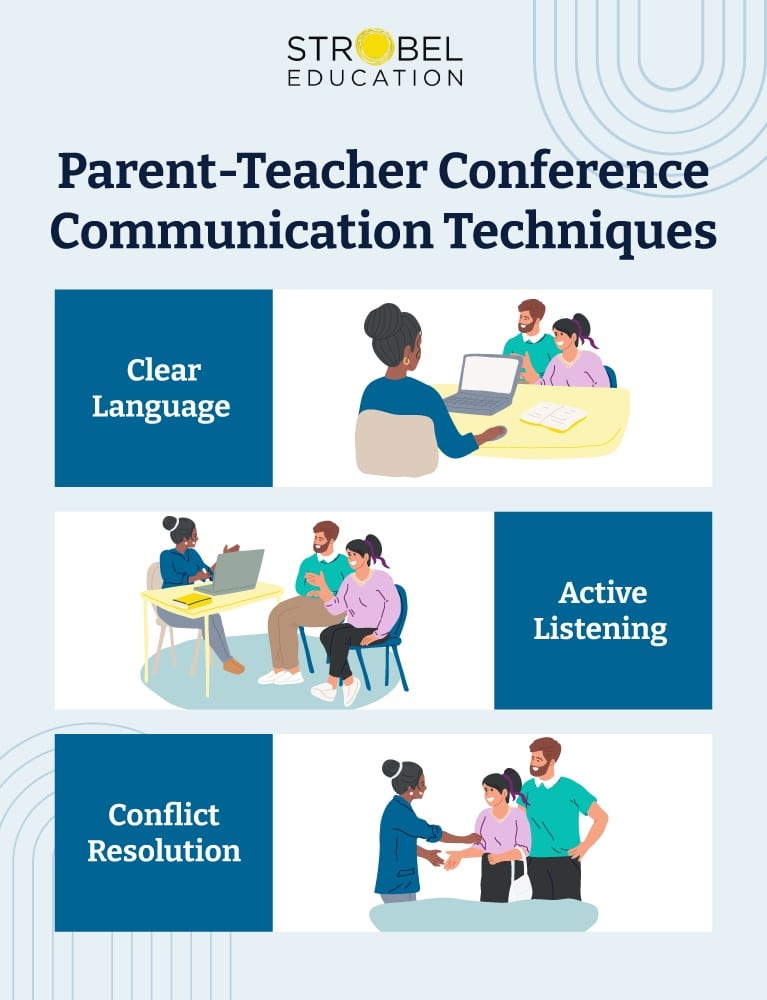
Parent-teacher conferences are an important opportunity for families and educators to work together to support student learning. These meetings allow teachers to explain academic progress, discuss classroom behavior, recognize student strengths, and identify areas where additional support may be needed. Parents and guardians can share valuable insights about their children’s interests, challenges, learning habits, and experiences outside school.
However, a productive conference requires more than exchanging grades or discussing recent classroom problems. Effective parent teacher conferences are built on preparation, respectful communication, meaningful evidence, and a shared commitment to helping students succeed.
When conferences are organized well, families leave with a clearer understanding of their child’s progress and practical ways to support learning at home. Teachers gain a better understanding of each student’s circumstances and can work with families to develop realistic goals.
This guide explains how schools and teachers can plan productive parent-teacher conferences, communicate difficult information constructively, address common challenges, and build stronger relationships between families and educators.
Why Parent-Teacher Conferences Matter
Parent-teacher conferences create a direct connection between a student’s home and school environments. Although teachers observe students in the classroom and families see them in other settings, neither perspective provides a complete picture on its own.
Sharing these perspectives helps both sides understand student needs more clearly.
Supporting Academic Progress
Conferences give teachers an opportunity to explain what students have learned, where they are making progress, and which skills need additional practice.
Instead of discussing grades alone, teachers can share examples of classwork, assessment results, reading development, writing samples, or other evidence that illustrates student learning.
Families can then ask questions and better understand how to support their children’s educational goals.
Identifying Challenges Early
A student who struggles with reading, organization, attendance, or classroom participation may benefit from early intervention.
Conferences allow teachers and families to discuss concerns before they become more difficult to address. By identifying patterns and sharing observations, both parties can work toward appropriate solutions.
Building Trust Between Families and Schools
Regular, respectful communication helps establish trust. When teachers recognize student strengths, listen carefully to family concerns, and explain classroom expectations clearly, parents and guardians are more likely to feel included in the educational process.
Trust is particularly important when a conversation involves academic difficulties, behavior concerns, or the need for additional support.
Creating Consistent Support for Students
Students benefit when the adults supporting them communicate effectively. Teachers and families can agree on manageable goals, reinforce positive learning habits, and monitor progress over time.
The aim is not for home and school to use identical methods in every situation. It is to develop a shared understanding of what the student needs and how each side can contribute.
1. Prepare Thoroughly Before the Conference
Preparation is one of the most important elements of effective parent teacher conferences. Teachers should enter each meeting with a clear understanding of the student’s progress, specific examples to discuss, and a realistic plan for using the available time.
Begin by reviewing relevant information, including:
- Recent assignments, projects, and assessments.
- Progress toward learning objectives.
- Classroom participation and engagement.
- Attendance and punctuality patterns, where relevant.
- Work habits, organization, and task completion.
- Previous communication with the family.
- Any agreed accommodations or support strategies.
Teachers should look for patterns rather than relying on one isolated incident or assessment result.
For example, a student who performs poorly on a single test may have misunderstood a particular topic. If the same difficulty appears across several assignments, additional instruction or a different learning strategy may be appropriate.
Preparation should also include identifying the student’s strengths. These might include creativity, persistence, collaboration, curiosity, improvement in a particular subject, or a willingness to help classmates.
Beginning with a balanced picture makes the conversation more informative and helps families understand the child as a whole learner.
Create a Simple Conference Checklist
A short checklist can help teachers stay organized.
Before each meeting, confirm that you have:
- Reviewed current student work.
- Identified two or three key discussion points.
- Prepared examples that explain your observations.
- Considered possible strategies for addressing challenges.
- Set a clear purpose for the meeting.
- Organized any relevant materials.
- Checked the conference time and location.
This process reduces last-minute preparation and makes it easier to focus on the family rather than searching for information during the conversation.
2. Set Clear Goals for Every Meeting
Parent-teacher conferences are usually time-limited. Without a clear purpose, a meeting can become a long list of unrelated observations that leaves families unsure about what to do next.
Teachers should identify the most important outcomes before the conversation begins.
Possible conference goals include:
- Explaining a student’s progress toward grade-level expectations.
- Discussing a specific academic difficulty.
- Reviewing improvements in classroom participation.
- Identifying strategies to improve organization or study habits.
- Understanding a change in attendance or engagement.
- Agreeing on a plan for additional learning support.
When several issues require attention, prioritize the ones with the greatest effect on the student’s learning and well-being.
For example, if a student is struggling with reading comprehension and also occasionally forgets homework, it may be more useful to focus first on understanding the reading difficulty and establishing a manageable practice routine.
Teachers can briefly explain the meeting’s purpose at the beginning and invite parents or guardians to share their priorities.
This creates a shared agenda and helps ensure that both sides have an opportunity to discuss what matters most.
3. Begin With a Positive and Welcoming Conversation
The opening minutes can influence the tone of the entire conference. Families may feel nervous about discussing school performance, particularly if they expect criticism or have had difficult experiences with educational institutions.
Teachers can reduce anxiety by welcoming families, expressing appreciation for their time, and identifying something meaningful that the student does well.
A positive opening should be genuine and specific.
Instead of saying, “Your child is a good student,” a teacher might say:
“I’ve noticed that your child asks thoughtful questions during science activities and has become more confident when explaining ideas to classmates.”
Specific examples show that the teacher knows the student and recognizes individual strengths.
Starting positively does not mean avoiding difficult topics. It creates a respectful foundation for discussing both progress and areas requiring attention.
Teachers should also avoid spending so much time on praise that important concerns receive insufficient attention. The purpose is to establish balance, not to delay the central discussion.
A welcoming tone, attentive listening, and clear language help families feel comfortable contributing their perspectives.
4. Use Evidence to Explain Student Progress
Effective conferences rely on clear examples rather than vague impressions.
Statements such as “Your child needs to work harder” or “The student is falling behind” do not explain what is happening or how improvement might occur.
Teachers should instead describe observable evidence.
For example, a teacher discussing writing progress might explain that the student can organize ideas effectively but needs support with paragraph transitions and editing punctuation.
A mathematics teacher might show examples of problems the student solves independently and identify the steps that still require guidance.
Useful evidence may include:
- Samples of recent classwork.
- Rubrics showing progress toward learning objectives.
- Reading fluency or comprehension records.
- Project assessments.
- Classroom participation observations.
- Progress reports across several assignments.
- Examples of improvement over time.
Teachers should explain what the evidence means in understandable language. Families may not be familiar with specialized educational terminology, grading systems, or assessment scales.
It is also important to distinguish between a confirmed pattern and a possible explanation. If a student frequently leaves assignments incomplete, the teacher can describe the pattern without immediately assuming that the student is unmotivated.
A productive conversation focuses on what is known, what remains uncertain, and what can be done next.
5. Listen Carefully to Parents and Guardians
A conference should be a two-way conversation, not a lecture delivered by the teacher.
Families may have information that helps explain a student’s classroom behavior, learning habits, or recent changes in performance. They may also notice strengths that are not always visible during school hours.
Teachers should ask open-ended questions and allow families time to respond.
Helpful questions include:
- “What have you noticed about your child’s learning at home?”
- “Which subjects does your child enjoy most?”
- “Have you noticed any recent changes in motivation or routine?”
- “What helps your child stay focused when completing assignments?”
- “Is there anything you would like us to understand about your child’s learning needs?”
- “What questions or concerns would you most like us to address today?”
Listening requires more than waiting for a turn to speak. Teachers should acknowledge concerns, ask clarifying questions, and avoid interrupting when families are explaining their experiences.
If a parent or guardian raises a concern the teacher cannot answer immediately, it is reasonable to explain that additional information is needed and agree on a follow-up.
Respectful listening helps build a partnership in which both sides contribute to understanding and supporting the student.
6. Discuss Academic or Behavioral Concerns Constructively
Some conferences involve difficult subjects, including low grades, incomplete assignments, frequent classroom disruptions, or declining attendance.
These conversations can become unproductive if families feel blamed or teachers feel their observations are being dismissed.
The most effective approach is to describe the concern clearly, focus on specific behavior or learning evidence, and work toward a practical response.
Focus on Actions Rather Than Labels
Avoid describing students with labels such as “lazy,” “careless,” or “disruptive.” These words can make a situation feel personal and do not identify a useful next step.
Instead, describe what has been observed.
For example:
“During the last three weeks, several assignments have been submitted incomplete. I would like us to explore whether the instructions, workload, or organization routine may be contributing to this pattern.”
This language communicates the concern without assuming its cause.
Separate Facts From Assumptions
A teacher may know that a student has missed several assignments but may not know why. Possible factors include difficulty understanding the material, competing responsibilities, limited access to learning resources, or challenges with planning and organization.
The conference should help identify what information is available and what further questions need to be explored.
Develop a Shared Response
Once the concern is clear, teachers and families can discuss possible strategies.
These might include checking assignment instructions together, dividing larger tasks into smaller steps, providing additional practice, or arranging a meeting with a relevant school support professional.
Any strategy should be realistic for the student and family. A plan that requires extensive daily supervision may not be suitable for every household.
The goal is to identify achievable steps and review whether they help.
7. Make the Conference Inclusive and Accessible
Schools serve families with different languages, schedules, cultural expectations, technological access, and levels of familiarity with the education system.
An effective conference process should reduce barriers to participation rather than assume every family can attend or communicate in the same way.
Offer Flexible Scheduling Options
Whenever possible, provide a range of meeting times. Some families may find it difficult to attend during standard working hours because of employment, transportation, childcare, or caregiving responsibilities.
Schools can consider in-person meetings, telephone conferences, or secure video meetings when appropriate.
Provide Language Support
Families who are not fluent in the school’s main language may need an interpreter or translated information to participate fully.
Schools should arrange qualified language support when available and avoid relying on children to interpret sensitive discussions about their own education.
Teachers should speak clearly, avoid unnecessary jargon, and pause regularly to check understanding.
Respect Different Family Circumstances
Not every family has the same resources or experience with school systems. Teachers should avoid assuming that limited attendance at school events means a family is uninterested in education.
A respectful approach asks what forms of communication work best and what support would make participation easier.
Protect Privacy
Conferences should take place in a setting where other families and students cannot overhear confidential discussions.
Teachers should share student information only with authorized individuals and follow applicable school policies and privacy requirements.
Accessibility, flexibility, and privacy help create a conference process that treats families with dignity.
8. Create a Practical Action Plan With Families
A conference is most useful when the discussion leads to clear next steps.
Simply identifying a problem does not guarantee improvement. Teachers and families need to understand what action will be taken, who is responsible, and when progress will be reviewed.
A useful action plan includes three or four elements:
The goal: Identify a specific area for improvement.
The action: Describe what the student, teacher, or family will do.
The timeline: Decide when the action begins and when progress will be checked.
The evidence of progress: Identify what will show whether the strategy is helping.
For example, a plan for improving reading comprehension might look like this:
| Element | Example |
|---|---|
| Goal | Improve understanding of grade-level reading passages |
| School action | Provide guided practice and review comprehension strategies |
| Home action | Encourage a manageable shared-reading routine when practical |
| Timeline | Review progress after four weeks |
| Evidence | Compare responses to comprehension questions and review classroom work |
The details should reflect the student’s needs and the family’s circumstances. Not every learning goal requires homework or additional activities at home; some challenges are best addressed primarily through school-based instruction and support.
Teachers should keep the plan concise so that everyone can remember and follow it.
9. End With a Clear Summary and Follow-Up Plan
The end of the conference is an opportunity to confirm what both sides have agreed to do.
Before the meeting finishes, summarize the main points, including the student’s strengths, the key concern or goal, and the next steps.
Ask whether the family has any remaining questions and whether the proposed actions feel realistic.
A brief written summary can help everyone remember the agreement. It might include the learning goal, planned support, the person responsible for each action, and the date for reviewing progress.
Teachers should also explain how families can contact them if questions arise later.
Follow-up is especially important when the conference identifies a significant learning concern or when additional school support is being considered. If a teacher promises to share resources, consult a specialist, or provide an update, that commitment should be recorded and completed within the agreed timeframe.
A short follow-up message can reinforce the partnership and prevent the conversation from ending without a clear path forward.
10. Manage Conference Time Effectively
Teachers often meet several families during one conference period. Staying organized helps ensure that each family receives adequate attention.
Schools should schedule realistic meeting lengths and communicate expectations in advance.
For many routine conferences, approximately 10 to 20 minutes may be sufficient, depending on the student’s needs and the school’s schedule. More complex concerns may require a separate meeting.
Teachers can manage time by preparing the most important discussion points, keeping supporting evidence organized, and using a consistent structure.
A practical meeting format might be:
- Opening: Welcome the family and share a student strength.
- Progress review: Discuss learning evidence and classroom experiences.
- Family perspective: Invite questions and observations.
- Problem-solving: Agree on priorities and possible strategies.
- Conclusion: Summarize actions and follow-up arrangements.
If an important issue cannot be resolved within the scheduled time, arrange another conversation rather than rushing through a complex discussion.
Teachers should also protect confidentiality by avoiding conversations about other students, even when comparisons seem relevant.
Good time management helps conferences remain focused without making families feel hurried or ignored.
Common Mistakes to Avoid During Parent-Teacher Conferences
Even well-intentioned conferences can become less productive when communication breaks down or the conversation lacks clear priorities.
Focusing Only on Grades
Grades provide useful information, but they do not explain every aspect of learning. Teachers should also discuss student understanding, effort, progress, participation, and specific skills.
Discussing Too Many Problems at Once
A long list of concerns can overwhelm families and make it difficult to identify priorities. Focus on the most important issues and agree on manageable next steps.
Using Educational Jargon
Terms such as “formative assessment” or “differentiated instruction” may be unfamiliar to some families. Explain educational concepts in plain language and use concrete examples.
Becoming Defensive When Parents Disagree
Families may interpret a situation differently from the teacher. Rather than treating disagreement as a challenge to professional authority, ask questions and examine the available evidence together.
Making Promises That Cannot Be Kept
Avoid guaranteeing a particular grade, outcome, or timeline when the result depends on multiple factors. Explain what support can be provided and when progress will be reviewed.
Failing to Follow Up
A thoughtful discussion can lose its value if agreed actions are never completed. Record commitments and make follow-up part of the conference process.
Comparing Students Unnecessarily
Discuss each student in relation to their own learning goals and relevant educational expectations. Sharing another student’s grades, behavior, or personal information is inappropriate and can undermine trust.
How Schools Can Improve the Parent-Teacher Conference Process
Individual teachers can improve their conversations, but school-wide systems also play an important role.
Administrators can make conferences more effective by creating consistent expectations, providing useful resources, and giving teachers enough time to prepare.
Provide Professional Development
Teachers may benefit from training in family communication, active listening, conflict resolution, culturally responsive practices, and explaining assessment results.
Role-playing common conference scenarios can help teachers practice responding to sensitive questions and managing difficult conversations respectfully.
Use Consistent Templates
A standard conference template can help teachers organize student strengths, learning evidence, family questions, goals, and follow-up actions.
Templates should support professional judgment rather than force every conversation into an overly rigid format.
Offer Clear Scheduling and Communication
Schools should tell families how to book meetings, what to expect, how to request language support, and whom to contact if they need an alternative arrangement.
Reminders should be sent early enough for families to plan.
Encourage Ongoing Communication
A conference should not be the only opportunity for families and teachers to exchange information.
Regular updates, appropriate progress reports, and timely communication about concerns can help prevent surprises during scheduled meetings.
Gather Feedback From Families
After conference periods, schools can ask families whether the meetings were understandable, welcoming, and useful.
Feedback can reveal practical barriers, such as inconvenient schedules, unclear reports, or insufficient time for questions.
Administrators should use this information to improve future conferences.
How to Measure the Success of Parent-Teacher Conferences
Schools can evaluate conference quality by examining whether meetings help families understand student progress and identify meaningful next steps.
Attendance is one useful indicator, but it should not be the only measure. A high attendance rate does not necessarily mean that conversations were productive, and families who cannot attend may still be actively involved in supporting learning.
Consider tracking several indicators:
| Area | Possible Measure | Purpose |
|---|---|---|
| Participation | Percentage of families reached through meetings or alternative communication | Identifies access and scheduling gaps |
| Preparedness | Teacher feedback on access to student work and conference materials | Highlights preparation needs |
| Family understanding | Short survey about clarity of learning goals and progress | Shows whether information was communicated effectively |
| Action planning | Percentage of conferences with agreed next steps when appropriate | Indicates whether discussions lead to practical actions |
| Follow-up | Completion of promised communications or review meetings | Helps assess consistency |
| Family experience | Feedback on respect, accessibility, and opportunities to ask questions | Identifies areas for improvement |
Schools should interpret these measures in context and avoid treating every conference as successful only when a written action plan is produced. Some meetings may appropriately focus on celebrating progress or maintaining communication.
The purpose of evaluation is to improve the quality of the process and ensure that families have meaningful opportunities to participate.
A Simple Checklist for an Effective Parent-Teacher Conference
Teachers can use the following checklist before, during, and after a meeting.
Before the Conference
- Review student work and current progress.
- Identify specific strengths and priority concerns.
- Prepare clear examples and supporting evidence.
- Set a realistic goal for the meeting.
- Arrange an interpreter or accessibility support if needed.
- Prepare questions for the family.
During the Conference
- Welcome the family respectfully.
- Begin with a genuine student strength.
- Explain progress using clear, specific examples.
- Listen to family observations and questions.
- Discuss concerns without blame or labels.
- Agree on practical next steps.
- Confirm any required follow-up.
After the Conference
- Record agreed actions in accordance with school policy.
- Share a concise summary when appropriate.
- Complete promised tasks or referrals.
- Arrange a progress review if needed.
- Reflect on what could improve future conversations.
This simple process helps teachers stay organized while allowing each conference to reflect the individual student’s needs.
Frequently Asked Questions About Effective Parent Teacher Conferences
What should teachers discuss during a parent-teacher conference?
Teachers should discuss student strengths, academic progress, classroom participation, learning habits, and any important concerns. They should use specific evidence, invite family observations, and agree on practical next steps when needed.
How long should a parent-teacher conference last?
Many routine conferences can be organized into approximately 10 to 20 minutes, although the ideal duration depends on the student’s needs and the purpose of the meeting. More complex concerns may require a separate, longer discussion.
How can teachers handle difficult conversations with parents?
Teachers should remain calm, listen carefully, describe observable facts, and avoid blaming language. Asking questions and exploring solutions together helps shift the conversation from disagreement toward the student’s needs.
What should parents bring to a parent-teacher conference?
Parents and guardians may bring questions, examples of concerns observed at home, relevant information about learning routines, and any schoolwork or communication they would like to discuss. They do not need to prepare formal documents for every routine meeting.
How can teachers make conferences more inclusive?
Schools can offer flexible scheduling, provide appropriate language support, explain educational terminology, and respect different family circumstances. Alternative meeting formats may help families who cannot attend in person.
What happens after a parent-teacher conference?
Teachers and families should follow through on any agreed actions. Depending on the discussion, this may involve additional classroom support, a home learning routine, communication with a school specialist, or a future progress review.
How can schools encourage more families to participate?
Schools can communicate early, offer convenient appointment options, explain the purpose of conferences clearly, and create a welcoming environment. They should also provide alternatives for families facing scheduling, language, transportation, or accessibility barriers.
Conclusion
Productive parent-teacher conferences help families and educators build a shared understanding of student learning. When teachers prepare carefully, communicate with evidence, listen respectfully, and agree on realistic next steps, conferences become more than routine school meetings.
The most effective parent teacher conferences recognize student strengths while addressing challenges honestly. They give families a meaningful voice, protect student privacy, and turn concerns into practical plans that can be reviewed over time.
Schools can strengthen this process by providing teacher training, consistent conference templates, flexible scheduling, and opportunities for ongoing communication. Teachers can contribute by preparing thoughtfully, using clear language, and following through on commitments.
Ultimately, successful conferences are built on partnership. When families and educators respect one another’s perspectives and work toward shared goals, they create stronger conditions for student learning, confidence, and long-term educational growth.
