Category: education

  • A Step-by-Step Guide to School Enrollment and Registration

    A Step-by-Step Guide to School Enrollment and Registration

    School enrollment is an important milestone for students and families. For parents, it marks the beginning of a child’s educational journey or a transition to a new learning environment. For school administrators, it involves coordinating applications, verifying information, reviewing documents, communicating with families, and preparing students for a successful start.

    A well-organized school enrollment and registration process helps schools manage admissions efficiently while making the experience clearer and less stressful for families. When requirements and deadlines are communicated properly, parents know what to prepare, administrators can reduce avoidable delays, and students can begin school with greater confidence.

    This step-by-step guide explains how school enrollment works, which documents families may need, how to complete an application, and what schools can do to make registration more accessible and effective.

    What Is the School Enrollment and Registration Process?

    School enrollment and registration are closely related activities, but they do not always mean exactly the same thing.

    School registration generally refers to providing the information and documents a school needs to process a student’s application or create an official student record.

    School enrollment refers more broadly to the process of admitting a student and arranging for them to attend a particular school or educational program.

    Depending on the institution, the process may include an application, an eligibility review, document verification, an admission decision, fee arrangements, and confirmation of the student’s place.

    Some schools use a single online form for registration and enrollment, while others require several steps or an in-person appointment. Public schools, private schools, international schools, and specialized educational institutions may also follow different policies.

    Parents should therefore review the instructions issued by their chosen school rather than assume that every institution follows the same procedure.

    Step 1: Research Schools and Understand Admission Requirements

    The first step is to identify a school that meets the student’s educational needs and the family’s practical requirements.

    Parents should consider more than a school’s location or reputation. The curriculum, teaching approach, class size, available student support, school environment, transportation, and total costs may all influence the decision.

    Before starting an application, review the school’s official admission information and look for answers to the following questions:

    • Which grades or year groups are accepting applications?
    • What age requirements apply to the intended grade?
    • Are places available for new students?
    • Is an entrance assessment or interview required?
    • What documents must parents submit?
    • Are there application fees, tuition fees, or other charges?
    • When does the application period open and close?
    • Does the school have specific requirements for transferring students?

    If the student has additional learning needs, parents may also wish to ask about available support services, accessibility arrangements, and the process for sharing relevant educational information.

    Creating a shortlist of suitable schools can make the decision easier. Compare the information systematically and contact the admissions office when a requirement is unclear.

    Step 2: Check Age, Grade Placement, and Eligibility

    Before completing the application, confirm that the student meets the school’s admission criteria.

    Age requirements are particularly important for kindergarten, preschool, and early primary education. Schools may use a specified cutoff date to determine eligibility for a particular grade. These dates differ by location and educational system.

    For older students, placement may depend on previous academic performance, completed coursework, transfer records, or the curriculum they studied at their previous school.

    Parents should prepare accurate information about the student’s date of birth, current grade, previous education, and intended entry date.

    For students transferring from another country or curriculum, the school may need to review transcripts or assess which grade is the most appropriate. Families should ask how international records are evaluated and whether translations or certified copies are necessary.

    Do not assume that a student will automatically enter the grade corresponding to their age. Confirm the placement rules with the school before submitting the final application.

    Step 3: Prepare the Required Registration Documents

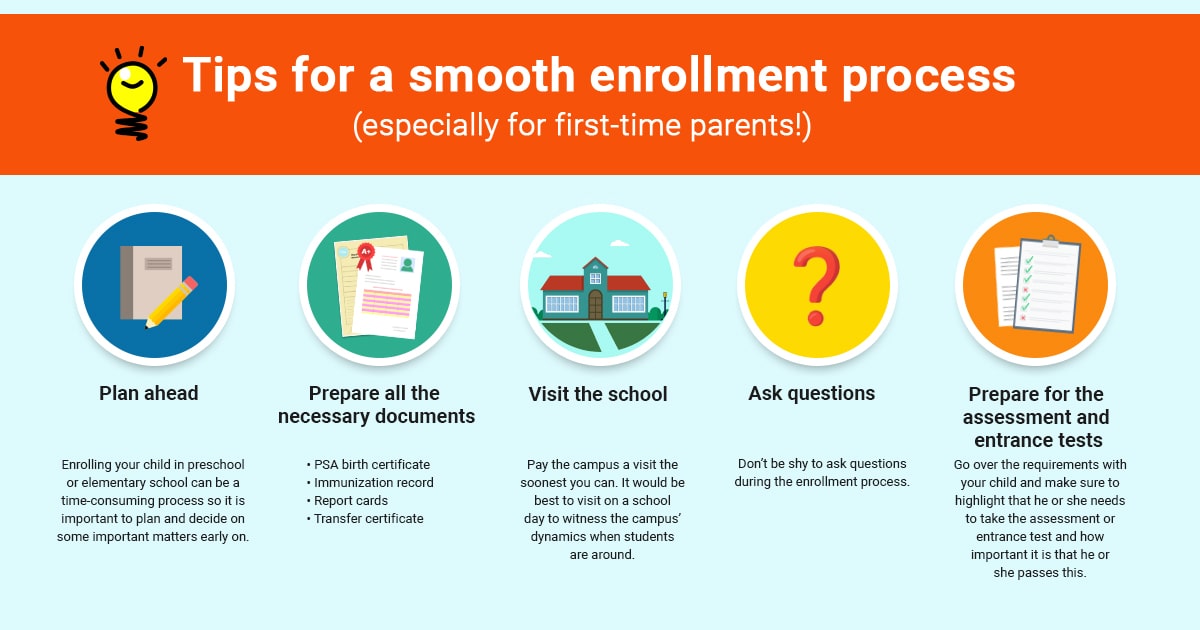
    Gathering documents early can prevent unnecessary delays. Although the exact requirements vary, schools commonly request information that establishes the student’s identity, age, previous education, and parent or guardian contact details.

    The following checklist can help families prepare.

    Common school enrollment documents

    1. Proof of age or identity

    This may include a birth certificate, passport, or another officially accepted document.

    2. Parent or guardian identification

    The school may request identification to verify the person completing the application and their authority to register the student.

    3. Proof of residence

    Some schools, particularly public schools with defined attendance areas, require evidence of the student’s home address. Accepted documents depend on the school’s local rules.

    4. Previous academic records

    Transfer students may need report cards, transcripts, examination results, or a school-leaving certificate if required.

    5. Health and immunization records

    Certain institutions or jurisdictions require vaccination documentation, health forms, or other medical information before attendance.

    6. Recent photographs

    Some schools request passport-sized photographs for student identification cards or administrative records.

    7. Emergency contact information

    Parents may need to provide telephone numbers and the details of adults who can be contacted if an emergency occurs.

    8. Additional forms, where applicable

    Depending on the student’s circumstances, these may include custody documents, transfer records, language-support information, or forms related to educational accommodations.

    Not every document on this list will be required by every school. Some information may be requested later rather than being a condition of enrollment. Families should follow the institution’s official checklist and applicable local requirements.

    It is also sensible to keep copies of submitted documents and maintain a record of application confirmations, receipts, and important correspondence.

    Step 4: Complete the School Enrollment Application

    Once the requirements are clear and the documents are ready, parents can complete the application.

    Many schools provide online registration systems, while others accept paper forms or require an in-person submission. Follow the method specified by the admissions office.

    Most applications request several categories of information.

    Student information

    Enter the student’s full legal name, date of birth, current address, intended grade, and previous school details where applicable.

    Parent or guardian information

    Provide accurate names, contact numbers, email addresses, and any additional information requested by the institution.

    Emergency contact details

    Include reliable contact information for the people authorized to be contacted in an emergency. Make sure these details remain current.

    Academic background

    For students who have attended another school, enter the requested details about previous grades, academic records, and transfer arrangements.

    Supporting documents

    Upload or attach the required documents in the specified format. Ensure that photographs or scans are clear, complete, and readable.

    Before submitting the form, review every section carefully. An incorrect date of birth, incomplete address, misspelled name, or missing attachment may require additional communication to correct.

    After submission, save the confirmation number or acknowledgment if one is provided. If the school does not send a confirmation, contact the admissions office to check whether the application was received.

    Step 5: Submit the Application and Complete Any Required Payment

    Some schools charge an application or registration fee, while others do not. Tuition deposits, admission fees, and other charges may also apply depending on the institution.

    Before making a payment, review the school’s published fee schedule and payment instructions. Confirm which charges are refundable, whether any financial assistance is available, and whether the payment reserves a place or simply covers application processing.

    Use the official payment method provided by the school. Keep the receipt or transaction confirmation for your records.

    Parents should also check whether the application is considered complete only after payment or whether the payment is handled at a later stage.

    If a family has difficulty meeting a deadline or understanding a charge, contacting the admissions office early may help clarify available options. Never assume that paying a fee guarantees admission unless the school explicitly states this in its official policy.

    Step 6: Attend an Interview, Assessment, or School Visit if Required

    Not every school requires an entrance examination or interview. However, some institutions use assessments, meetings, or classroom visits to understand a student’s educational needs and determine appropriate placement.

    Depending on the school and grade level, the process may include:

    • An academic assessment in subjects such as mathematics or language.
    • A meeting with the student and parent or guardian.
    • A review of previous academic records.
    • A language proficiency assessment, where relevant.
    • A school visit or orientation session.

    Parents should ask what the assessment involves, how long it takes, and whether the student needs to bring anything.

    For younger children, an assessment may focus on developmental readiness and familiarity with basic learning activities. For older students, it may evaluate subject knowledge or help determine the appropriate course level.

    Families should avoid putting unnecessary pressure on children. The purpose of an assessment should be understood from the school’s own explanation, and preparation should be appropriate to the student’s age and the institution’s requirements.

    Step 7: Wait for Application Review and Admission Confirmation

    After submission, the school typically reviews the application and any required supporting documents.

    The review may involve checking eligibility, confirming the student’s identity, evaluating academic records, assessing available places, and identifying any missing information.

    Some schools process applications on a rolling basis, while others follow fixed admission periods or use specific selection procedures.

    During this stage, parents should monitor their email, telephone messages, or application portal for updates. Respond promptly if the school requests clarification or additional documents.

    If the application is delayed, contact the admissions office politely and provide the student’s name, application reference, and submission date where appropriate.

    It is important to distinguish between an application acknowledgment and an official admission offer. Receiving confirmation that a form has been submitted does not necessarily mean that the student has been accepted.

    Parents should wait for clear confirmation and follow the school’s instructions for accepting an offered place.

    Step 8: Confirm the Student’s Place and Complete Outstanding Requirements

    Once admission is offered, parents may need to formally accept the place before a specified deadline.

    Depending on the school, the remaining steps may include:

    • Confirming acceptance of the admission offer.
    • Completing outstanding registration forms.
    • Submitting any remaining required documents.
    • Reviewing tuition fees and payment deadlines.
    • Selecting transportation or meal services, if available.
    • Providing information required for student support.
    • Confirming the student’s start date and timetable.

    Read the admission letter carefully. It may explain whether the offer is conditional, what actions are still required, and when the student is expected to begin attending.

    Parents should ask questions before signing agreements or making significant payments if any part of the offer is unclear.

    Keep the admission letter and other official communication in a safe place. These records may be useful when confirming the student’s grade, start date, or enrollment status.

    Step 9: Prepare the Student for the First Day of School

    Completing registration is only one part of a successful transition. Students also need to understand what to expect when they begin their new school.

    Parents can help by reviewing the school timetable, transport arrangements, uniform policy, required supplies, attendance procedures, and classroom expectations.

    If an orientation session is available, attending it can help the student become familiar with the building, teachers, and daily routine.

    For younger children, it may be useful to practise the morning routine, discuss how drop-off and collection will work, and explain whom they can approach for help.

    Students transferring from another school may need additional support adjusting to new subjects, classmates, teaching methods, or language expectations.

    Parents should inform the school about relevant concerns before the start date when possible. Early communication gives teachers and support staff an opportunity to plan appropriate assistance.

    A welcoming transition can help students feel more comfortable and ready to participate in learning.

    Step 10: Verify Enrollment and Maintain Accurate Student Records

    After the student begins school, the family and administration should ensure that enrollment information is accurate and complete.

    Parents should confirm that they have received the information needed to access the school’s communication system, timetable, attendance procedures, and relevant parent portal.

    Schools should check that the student’s official record contains the required information and that the student has been assigned to the correct grade or class.

    Administrators should also ensure that authorized staff can access the information needed to support the student while sensitive records remain protected.

    Contact details should be reviewed periodically. Outdated telephone numbers or emergency contacts can create difficulties when a school needs to reach a family.

    If a student transfers, withdraws, or changes personal details, parents should follow the school’s official process for updating records.

    Accurate student information supports communication, attendance monitoring, academic reporting, and the delivery of appropriate educational services.

    How Schools Can Improve the Enrollment and Registration Process

    School administrators play an important role in making registration understandable and efficient. A clear process reduces repeated inquiries, incomplete applications, and unnecessary administrative work.

    Publish clear admission guidelines

    Provide a dedicated admissions page or information document that explains eligibility, deadlines, required documents, fees, application methods, and contact details.

    Use straightforward language and organize information into sections so families can quickly locate the instructions they need.

    Create a simple document checklist

    A checklist helps parents understand which documents are required and which are optional or applicable only in certain circumstances.

    Where possible, explain acceptable alternatives and the process for families who cannot immediately obtain a particular record, subject to applicable law and school policy.

    Offer accessible application methods

    Online registration can make applications more convenient, but not every family has reliable internet access or the same level of digital confidence.

    Where resources allow, schools should provide assistance by telephone, email, or in person. Instructions should explain how to upload documents and whom to contact if the system does not work.

    Establish a reliable communication process

    Let families know when applications are received, whether additional information is needed, and when they can reasonably expect an update.

    Use consistent communication channels and provide a clear point of contact for admission-related questions.

    Protect student information

    Enrollment forms may contain personal, academic, and health-related information. Schools should collect only the information needed for legitimate purposes, use secure systems, restrict access appropriately, and follow applicable privacy requirements.

    Staff should be trained to handle documents responsibly and avoid sending sensitive information through inappropriate channels.

    Monitor application progress

    A centralized tracking system can help admissions teams identify incomplete forms, pending reviews, missing documents, and confirmed placements.

    Administrators can review the number of applications received, average processing time, common errors, and frequently asked questions to identify opportunities for improvement.

    Common School Registration Mistakes and How to Avoid Them

    Families can reduce delays by preparing carefully and checking the school’s instructions before submitting an application.

    Submitting an incomplete application

    Missing signatures, unanswered required fields, or unreadable attachments can delay processing. Review the form against the official checklist before submission.

    Missing admission deadlines

    Some schools have limited places or specific application windows. Record important dates and contact the admissions office if circumstances may prevent timely submission.

    Providing inconsistent information

    Names, dates of birth, addresses, and academic details should match the relevant official records. If a discrepancy exists, ask the school how it should be explained or corrected.

    Assuming every school requires the same documents

    Requirements differ by institution, grade level, location, and student circumstances. Use the chosen school’s current instructions rather than relying entirely on another school’s checklist.

    Ignoring messages from the admissions office

    A request for clarification or an additional document may be time-sensitive. Check the communication channels provided during registration and respond promptly.

    Confusing registration with confirmed admission

    Submitting an application does not always mean that a place has been offered. Wait for official confirmation and complete any required acceptance steps.

    Failing to prepare for the transition

    Students may need time to adjust to a new environment. Review routines, discuss expectations, and communicate relevant support needs before the first day.

    School Enrollment Checklist for Parents

    Use this general checklist to organize the process. Some items may not apply to every school.

    • Research schools and review admission criteria.
    • Confirm age eligibility and grade placement.
    • Check application dates and important deadlines.
    • Gather the required identity and age documents.
    • Prepare proof of residence if required.
    • Collect previous school records where applicable.
    • Prepare required health forms or immunization records.
    • Complete and review the application.
    • Submit documents using the school’s approved method.
    • Pay any applicable fees and retain receipts.
    • Attend any required assessment or interview.
    • Review the official admission decision.
    • Accept the offered place and complete outstanding requirements.
    • Confirm the start date, timetable, and school procedures.
    • Update contact information and prepare for the first day.

    Keeping this checklist in one place can help parents track progress and avoid overlooking important steps.

    Frequently Asked Questions About School Enrollment and Registration

    What is the first step in enrolling a child in school?

    Start by researching suitable schools and reviewing their admission requirements. Confirm the student’s eligibility, application deadlines, and required documents before beginning the registration form.

    Which documents are usually needed for school registration?

    Commonly requested documents include proof of age or identity, parent or guardian details, proof of residence where required, previous academic records for transfer students, and applicable health forms. The exact list depends on the institution and local rules.

    Can parents register a child online?

    Many schools offer online registration, but some require paper forms, document checks, or an in-person appointment. Follow the official instructions provided by the chosen school.

    How long does the school enrollment process take?

    Processing times vary depending on the school, application volume, document completeness, admission requirements, and availability of places. Families should check the school’s published timeline and ask the admissions office if they need an estimate.

    What should parents do if a required document is missing?

    Contact the school before assuming that the application cannot proceed. Ask whether an alternative document, later submission, or another approved arrangement is possible. The answer depends on the school’s policies and applicable regulations.

    Is registration confirmation the same as admission?

    Not necessarily. A registration receipt may only confirm that an application was received. Parents should look for an official admission decision and complete any additional steps required to secure the student’s place.

    What should parents do after admission is confirmed?

    Review the admission letter, complete outstanding requirements, confirm the start date, arrange transportation if needed, and prepare the student for the school’s daily routines.

    Conclusion

    A clear school enrollment and registration process helps families understand admission requirements and allows schools to manage student intake more effectively. From researching suitable institutions and preparing documents to receiving admission confirmation and getting ready for the first day, each step contributes to a smoother transition.

    Parents can avoid many common delays by checking official guidelines, submitting accurate information, keeping records of important communication, and responding promptly to requests from the admissions office.

    Schools can further improve the experience by publishing clear instructions, offering accessible registration support, protecting student information, and tracking applications consistently.

    With careful preparation and good communication, enrollment becomes more than an administrative task. It becomes the first step toward a positive and well-organized educational experience for every student.
  • School-Year Planning: A Practical Calendar for Administrators

    School-Year Planning: A Practical Calendar for Administrators

    A successful school year begins long before students enter the classroom. School administrators must coordinate academic goals, examinations, staff development, school events, budgets, holidays, and communication with families. Without a clear plan, important deadlines can overlap, teachers may face unnecessary pressure, and students may lose valuable learning time.

    A school year planning calendar for schools helps administrators organise these responsibilities in a practical and manageable way. Instead of reacting to problems as they arise, school leaders can anticipate important dates, assign responsibilities, and monitor progress throughout the academic year.

    This guide explains how to create a practical school-year calendar, organise monthly priorities, coordinate academic and administrative activities, and review the plan as school needs change.

    Why School-Year Planning Matters

    A school calendar is more than a list of holidays, examination dates, and special events. It is a coordination tool that connects academic planning with everyday school operations.

    When administrators plan the year carefully, teachers have a clearer picture of curriculum expectations, parents receive important dates in advance, and support staff can prepare for upcoming responsibilities.

    Effective school-year planning can help schools:

    • Protect sufficient instructional time for curriculum delivery.
    • Schedule assessments without overwhelming students and teachers.
    • Coordinate parent-teacher meetings and school events.
    • Organise professional development for teachers.
    • Plan budgets, staffing, supplies, and building maintenance.
    • Improve communication among school leaders, staff, students, and families.
    • Identify potential scheduling conflicts before they become urgent problems.

    The goal is not to predict every situation perfectly. It is to create a reliable framework that helps the school respond to changes without losing sight of its priorities.

    Step 1: Review the Previous Academic Year

    Before creating a new calendar, administrators should evaluate what happened during the previous school year. Reviewing earlier plans can reveal recurring problems and help leaders make better decisions.

    Begin by examining examination schedules, attendance reports, curriculum completion, school events, staff feedback, and parent concerns. Identify which activities went smoothly and which required last-minute changes.

    For example, if teachers struggled to complete the syllabus before final examinations, the new calendar may need earlier curriculum checkpoints or additional revision periods. If several major events occurred in the same week, administrators can distribute them more evenly.

    Ask the leadership team questions such as:

    • Were the planned instructional days sufficient?
    • Did examinations take place at appropriate times?
    • Were teachers given enough preparation and marking time?
    • Which events created the greatest workload?
    • Were parents informed about schedule changes promptly?
    • Which administrative tasks were repeatedly delayed?

    Record the findings in a short review document. Use this information to improve the new calendar rather than simply copying the previous year’s schedule.

    Step 2: Establish the Main Academic Dates

    The next step is to identify the dates that will shape the entire school year. These should be confirmed before smaller activities are scheduled.

    Start by checking applicable education department instructions, examination board announcements, official holidays, and school policies. Dates that depend on external authorities should be treated as provisional until confirmed.

    Your calendar should include the following major milestones:

    • First and last days of the academic year.
    • Term or semester start and end dates.
    • Midterm and final examination periods.
    • School holidays and scheduled breaks.
    • Report card preparation and distribution dates.
    • Parent-teacher conference periods.
    • Staff orientation and professional development days.
    • Graduation ceremonies and major school events.
    • Admission, registration, and enrolment deadlines.

    Once these dates are established, calculate the available teaching time in each term. This helps department heads determine whether the curriculum can realistically be completed before assessment periods.

    Avoid filling every available week with activities. A practical calendar needs some flexibility for unexpected closures, student support, revision, and unfinished learning objectives.

    Step 3: Create a Month-by-Month Planning Framework

    A month-by-month calendar makes a large annual plan easier to manage. The example below is a flexible framework, not a fixed academic schedule. Administrators should adjust the months to match their school’s academic year, local holidays, examination requirements, and climate.

    Planning periodMain administrative priorities
    Two to three months before reopeningReview last year’s performance, approve academic priorities, estimate the budget, confirm major dates, and plan staffing.
    Opening monthOrient staff, prepare classrooms, verify student records, communicate expectations, and establish routines.
    Early termMonitor attendance, review lesson plans, check curriculum progress, and identify students needing support.
    First assessment periodCoordinate tests, arrange marking schedules, review results, and communicate progress to families.
    Midyear reviewEvaluate academic targets, review spending, gather staff feedback, and revise the next term’s priorities.
    Second half of the yearStrengthen intervention plans, monitor syllabus completion, prepare major events, and review examination readiness.
    Final assessment periodConfirm examination arrangements, protect revision time, organise marking, and prepare student reports.
    Closing periodComplete records, communicate results, review the year’s achievements, and document recommendations for the next session.
    Vacation or transition periodArrange maintenance, update policies, prepare resources, and finalise the next academic calendar.

    This framework allows administrators to see the complete academic cycle without assuming that every school follows the same opening or closing month.

    Step 4: Align Curriculum Planning With the Calendar

    A school calendar becomes more useful when it is connected to curriculum planning. Setting an examination date without checking curriculum progress can create unnecessary pressure for teachers and students.

    Each department should break its curriculum into manageable units and estimate the time needed to teach, practise, assess, and review them. These estimates should be compared with the actual instructional days available.

    Department heads can use a simple planning process:

    1. List the major learning objectives for each subject.
    2. Estimate the teaching time required for each unit.
    3. Identify suitable dates for formative assessments and major tests.
    4. Schedule revision before important examinations.
    5. Set curriculum review checkpoints during each term.
    6. Flag units that may require additional support or flexible teaching time.

    Administrators should review progress at regular intervals rather than waiting until the end of the term. If a department falls behind, leaders can explore adjustments early, such as reallocating support, revising nonessential activities, or adding targeted learning sessions.

    Curriculum coverage should not be measured only by the number of chapters completed. Schools should also consider whether students have understood the material and can demonstrate the expected learning outcomes.

    Step 5: Build a Balanced Examination Schedule

    Examinations require coordination across subjects, classrooms, teachers, and administrative teams. Poorly timed assessments can create a heavy workload for students and leave teachers with insufficient marking time.

    When developing the assessment calendar, consider:

    • Dates for class tests, midterm examinations, and final examinations.
    • Paper preparation and review deadlines.
    • Printing, room allocation, and supervision arrangements.
    • Time required for marking and moderation.
    • Dates for entering grades and checking results.
    • Report card preparation and distribution.
    • Parent meetings to discuss student progress.

    Try to avoid scheduling several demanding examinations on consecutive days when the timetable allows alternatives. Coordinate assessment dates across departments so students have a reasonable opportunity to prepare.

    After each major assessment period, schedule time to review results. Teachers can identify common misconceptions, students who need additional support, and topics that require reteaching.

    An examination calendar should support learning rather than turn the academic year into a continuous sequence of tests.

    Step 6: Schedule Teacher Professional Development

    Teacher development should be planned as a continuing part of school improvement, not as an activity added only when time becomes available.

    At the beginning of the year, identify the professional learning priorities that align with school goals. These might include classroom management, formative assessment, inclusive teaching, technology integration, subject-specific instruction, or strategies for supporting diverse learners.

    A practical professional development calendar can include:

    • Staff orientation before students return.
    • Workshops linked to the school’s improvement priorities.
    • Department meetings for curriculum collaboration.
    • Peer observation and feedback opportunities.
    • Midyear reflection sessions.
    • Training on updated policies, systems, or assessment procedures.

    Allow time for teachers to apply what they learn and discuss the results with colleagues. A workshop is more valuable when it leads to practical classroom changes rather than simply completing a training requirement.

    Administrators should also review workload when scheduling training. Avoid placing major workshops immediately before examination deadlines or other periods when teachers already face significant responsibilities.

    Step 7: Coordinate School Events and Family Communication

    Assemblies, sports days, cultural activities, educational visits, community projects, and parent-teacher meetings contribute to school life. However, these events require preparation and should be scheduled around academic priorities.

    For each major event, record:

    • The proposed date and an alternative date, if appropriate.
    • The staff member or team responsible.
    • The estimated budget and required resources.
    • Safety, transport, and supervision arrangements.
    • The deadline for communicating with families.
    • Any effect on classroom instruction.

    Parent communication should also be included in the annual calendar. Schedule report distribution, family meetings, school newsletters, admission reminders, and important policy updates.

    Use clear and consistent communication channels. Families should know where to find the latest calendar and how they will be notified when a date changes.

    If an event must be rescheduled, communicate the revised date, explain what has changed, and update the shared calendar. This reduces confusion and helps families make alternative arrangements.

    Step 8: Include Budgets, Staffing, and Facilities

    Academic planning is closely connected to financial and operational planning. A school may have excellent educational goals but struggle to achieve them if staffing, supplies, or facilities are not ready at the right time.

    The annual calendar should identify important operational deadlines, including:

    • Budget preparation and review meetings.
    • Staff recruitment and assignment deadlines.
    • Textbook, stationery, and classroom supply orders.
    • Technology checks and equipment maintenance.
    • Building inspections and safety reviews.
    • Transport and support-service arrangements.
    • Admission and enrolment periods.
    • Financial reporting and administrative audits, where applicable.

    Work backward from important dates. If classroom materials must be ready before the first day, set an earlier ordering deadline and assign someone to check delivery.

    For major purchases or projects, identify dependencies. For example, a technology upgrade may require budget approval, purchasing, installation, testing, and staff training. These steps should be scheduled separately so that one delay does not disrupt the entire plan.

    Step 9: Use a Shared School Calendar Template

    A school-year planning calendar should be easy to understand, update, and share. A spreadsheet or digital calendar can work well, provided the school establishes clear ownership and consistent procedures.

    A useful template should include these fields:

    FieldWhat to record
    Date or date rangeWhen the activity starts and ends
    ActivityExamination, meeting, deadline, holiday, or event
    CategoryAcademic, staffing, finance, facilities, or communication
    Responsible personStaff member or team leading the task
    Preparation deadlineWhen required materials or arrangements must be ready
    StatusPlanned, in progress, completed, or rescheduled
    NotesDependencies, resources, and important instructions

    For example:

    DateActivityResponsible teamPreparation deadline
    Week 1Staff orientationSchool leadershipOne week before reopening
    Week 4Curriculum progress reviewDepartment headsTwo working days before the meeting
    Week 8Parent-teacher meetingsTeachers and administrationOne week before meetings
    End of termAssessment reviewAcademic teamAfter results are verified

    These examples illustrate how to structure a calendar; they are not prescribed dates for every school.

    Keep one central version of the calendar as the official reference. Staff may use personal reminders, but important changes should be reflected in the central version to prevent conflicting schedules.

    Step 10: Review the Calendar Throughout the Year

    Even a carefully prepared calendar needs regular review. Unexpected closures, changes to official examination dates, staffing issues, and new school priorities may require adjustments.

    Establish a simple review routine:

    Weekly review: Check immediate deadlines, upcoming events, and tasks that need attention.

    Monthly review: Assess completed activities, identify scheduling conflicts, and confirm important dates for the next month.

    Termly review: Evaluate curriculum progress, assessment results, staffing needs, and progress toward school improvement goals.

    Annual review: Record what worked, what did not, and which changes should be included in the next planning cycle.

    During reviews, focus on decisions and responsibilities. If an activity is delayed, identify the reason, agree on the next action, and assign an owner and deadline.

    A calendar should be updated when circumstances change, but changes should be deliberate. Too many uncoordinated revisions can undermine staff confidence in the schedule.

    Common School-Year Planning Mistakes to Avoid

    Administrators can make their planning more effective by avoiding several common mistakes.

    Copying the previous year’s calendar without review

    The previous calendar can provide a useful starting point, but dates, staffing, curriculum requirements, and school priorities may have changed. Review every major item before carrying it forward.

    Scheduling too many activities in the same period

    An overloaded calendar can reduce instructional time and increase staff stress. Check the combined workload across departments, not only each team’s individual schedule.

    Forgetting preparation and follow-up time

    Events and examinations involve more than the date on which they happen. Include deadlines for planning, materials, supervision, marking, reporting, and evaluation.

    Keeping the calendar with only one administrator

    A central owner is helpful, but staff also need access to the information relevant to their responsibilities. Share the calendar in a format that is easy to find and understand.

    Failing to communicate changes

    A revised date can cause confusion if it is not communicated consistently. Update the central calendar and notify everyone affected by the change.

    Treating the calendar as the entire school improvement plan

    A calendar records when activities happen. A school improvement plan explains what the school wants to achieve, why it matters, and how success will be measured. The two should support each other.

    How to Measure the Effectiveness of Your Planning Calendar

    A school calendar is effective when it improves coordination and helps the school achieve its goals. Administrators should review a small set of meaningful indicators rather than tracking every activity separately.

    Useful measures may include:

    • Percentage of major deadlines completed on time.
    • Progress toward curriculum coverage targets.
    • Number of avoidable scheduling conflicts.
    • Timeliness of report cards and parent communications.
    • Staff feedback about workload and planning clarity.
    • Completion of scheduled professional development.
    • Budget variance for planned activities.
    • Attendance and participation in key school events.

    Compare results with previous terms where reliable data is available. Look for patterns rather than drawing conclusions from one isolated incident.

    For example, repeated delays in report preparation may indicate that marking deadlines are unrealistic or that staff need a more efficient reporting process. The purpose of monitoring is to improve systems, not simply to assign blame.

    Frequently Asked Questions

    What should a school-year planning calendar include?

    It should include academic dates, term schedules, examinations, holidays, curriculum checkpoints, staff development, school events, parent meetings, budget deadlines, staffing tasks, and facilities maintenance. The exact contents depend on the school’s needs and applicable requirements.

    When should administrators prepare the annual school calendar?

    Administrators should begin several months before the academic year when possible. This allows time to confirm official dates, consult staff, coordinate budgets, arrange resources, and communicate the schedule before reopening.

    Who should be involved in school-year planning?

    The principal or school leader should coordinate the process with department heads, teachers, administrative staff, finance and facilities teams, and relevant governing bodies. Parent representatives may also provide useful feedback where appropriate.

    How often should the school calendar be updated?

    Review immediate tasks weekly, upcoming activities monthly, and broader priorities at the end of each term. Update the calendar whenever a confirmed change affects staff, students, or families.

    What is the difference between an academic calendar and a school improvement plan?

    An academic calendar shows when important activities and deadlines occur. A school improvement plan sets priorities, defines intended outcomes, assigns actions, and establishes ways to measure progress. A strong planning process connects both documents.

    Conclusion

    A practical school-year planning calendar gives administrators a clear framework for coordinating teaching, assessment, staffing, professional development, school events, and daily operations. It helps teams identify deadlines early, use instructional time carefully, and reduce avoidable last-minute pressure.

    The most effective approach is to begin with the previous year’s lessons, confirm major academic dates, consult the people responsible for implementation, and build realistic time for preparation and review. A shared calendar should then be monitored throughout the year and adjusted when genuine changes arise.

    By treating school-year planning as an ongoing process rather than a one-time administrative task, school leaders can create a more organised environment for teachers, students, and families—and keep the school’s daily work aligned with its long-term educational goals.

  • How to Design Fair and Transparent School Discipline Policies

    How to Design Fair and Transparent School Discipline Policies

    School discipline policies play an important role in creating a safe, respectful, and productive learning environment. They explain what behavior schools expect, how misconduct will be addressed, and what students can expect when rules are broken. However, a discipline policy is effective only when students, families, teachers, and administrators understand it and believe that it is applied fairly.

    Fair school discipline policies establish clear expectations, use proportionate consequences, protect students from discrimination, and provide opportunities for learning and improvement. Rather than relying entirely on punishment, well-designed policies help students understand the impact of their actions, take responsibility, and develop better decision-making skills.

    Schools need discipline systems that maintain safety while protecting students’ dignity and access to education. Achieving this balance requires thoughtful policy development, consistent implementation, open communication, and regular evaluation.

    This guide explains how school leaders can design transparent discipline policies that support accountability, student well-being, and a positive school climate.

    What Are Fair School Discipline Policies?

    Fair school discipline policies are written rules and procedures that define acceptable behavior, explain how violations will be handled, and establish safeguards against arbitrary or discriminatory treatment.

    A fair policy does not mean that every student receives an identical consequence in every situation. Instead, it means that decisions follow consistent principles while taking relevant circumstances, student needs, the seriousness of the behavior, and applicable legal requirements into account.

    For example, two students who disrupt a lesson may require different responses if one deliberately interferes with instruction while the other misunderstands an expectation or needs an accommodation. Fairness involves examining the circumstances and applying established rules appropriately.

    Effective discipline policies typically include:

    • Clear descriptions of expected behavior and prohibited conduct.
    • Consequences that are reasonable and proportionate to the incident.
    • Procedures for investigating incidents and hearing students’ accounts.
    • Guidance for communicating with parents and guardians.
    • Supportive interventions that help students improve behavior.
    • Safeguards for students with disabilities and other protected rights.
    • Procedures for appealing or reviewing disciplinary decisions.
    • Regular reviews of discipline data to identify inconsistencies.

    When these elements are clearly documented, schools can reduce confusion and help everyone understand how disciplinary decisions are made.

    Why Fair and Transparent Discipline Policies Matter

    Discipline policies influence more than classroom behavior. They also affect students’ sense of belonging, relationships with teachers, willingness to seek help, and ability to participate in learning.

    1. They Create Clear Behavioral Expectations

    Students are more likely to understand school expectations when rules are written in straightforward language and explained before problems occur.

    For example, a rule such as “Show respect” communicates a general value but may not explain what respectful behavior looks like. A clearer policy could describe specific expectations, such as listening while others speak, avoiding personal insults, following classroom safety instructions, and resolving disagreements without threats.

    Specific expectations make it easier for students to understand what is required and for teachers to respond consistently.

    2. They Promote Consistency Across Classrooms

    Without shared procedures, similar incidents may result in very different consequences depending on which teacher or administrator handles them.

    One teacher might issue a warning for repeated interruptions, while another immediately sends the student out of class. Although professional judgment remains important, unexplained differences can make school rules seem arbitrary.

    A common discipline framework establishes expectations for responding to different types of behavior while allowing appropriate flexibility for individual circumstances.

    3. They Help Protect Students From Unfair Treatment

    Transparent procedures reduce the risk that personal assumptions, stereotypes, or individual preferences will influence disciplinary decisions.

    Schools should examine whether rules are enforced consistently across student groups and whether subjective categories such as “disrespect” or “defiance” are being interpreted differently in similar situations.

    Fair procedures support accountability by requiring staff to explain decisions using documented expectations and relevant evidence.

    4. They Support Learning and Positive Behavior

    Discipline should address misconduct while helping students develop the skills needed to make better choices.

    A consequence may be necessary, but students may also need support with emotional regulation, conflict resolution, communication, or problem-solving.

    When schools combine accountability with appropriate interventions, discipline becomes an opportunity to improve behavior rather than simply penalize mistakes.

    Step 1: Establish a Clear Purpose for the Discipline Policy

    Before writing specific rules, school leaders should identify what the policy is intended to achieve.

    The purpose should include maintaining a safe environment, protecting the right to learn, promoting respectful relationships, preventing discrimination, and helping students develop responsibility.

    These priorities should guide every part of the policy, including how rules are written, how incidents are investigated, and which consequences are appropriate.

    A school might adopt a guiding statement such as:

    “Our discipline policy promotes safety, respect, accountability, fairness, and student growth. All disciplinary decisions will follow established procedures, consider relevant circumstances, and protect students’ rights.”

    A clear statement of purpose helps staff distinguish between actions that genuinely protect the school community and practices that rely on punishment without addressing the underlying problem.

    School leaders should also ensure that the policy complies with applicable education laws, disability protections, safeguarding requirements, and local regulations. Legal obligations vary by location, so policies should be reviewed against the rules that govern the individual school.

    Step 2: Write Specific and Understandable Rules

    Rules should be clear enough for students and staff to understand what behavior is expected and what conduct violates school requirements.

    Vague rules can lead to inconsistent enforcement because different people may interpret the same behavior differently. Terms such as “inappropriate attitude” or “disrespectful conduct” should be accompanied by specific examples and clear decision-making criteria.

    Separate Minor Misconduct From Serious Violations

    Schools can organize behavior expectations into categories based on the nature and seriousness of the conduct.

    Minor classroom disruptions might include occasional interruptions, off-task behavior, or failure to follow a routine after a reminder.

    Repeated or more significant violations might include persistent disruption, targeted verbal harassment, repeated unauthorized use of school technology, or deliberate damage to property.

    Serious safety-related incidents may include credible threats, physical violence, or other conduct requiring an immediate protective response.

    These categories should be defined carefully, and examples should not replace professional assessment of the actual circumstances. A first incident involving a serious safety risk may require a different response from a repeated minor disruption.

    Use Positive Language Where Appropriate

    Policies should explain what students are expected to do, not only what they must avoid.

    For example, a school can explain how students should use technology responsibly, participate in discussions, respect personal boundaries, and seek help when conflicts arise.

    Positive wording makes expectations easier to teach and reinforces the behaviors schools want to encourage.

    Step 3: Create a Proportionate Consequence Framework

    A fair discipline policy explains how the response to misconduct will reflect its seriousness, impact, context, and any relevant history.

    Consequences should not be arbitrary or excessively harsh. At the same time, fairness does not require schools to ignore repeated misconduct or serious threats to safety.

    A consequence framework helps staff make informed decisions while maintaining reasonable consistency.

    Behavior categoryPossible responseEducational purpose
    Minor, first-time disruptionReminder, redirection, or brief discussionClarify expectations
    Repeated classroom disruptionIndividual conference and behavior support planIdentify barriers and improve routines
    Interpersonal conflictGuided conversation or restorative process when appropriateDevelop communication and repair harm
    Repeated rule violationsDocumented intervention and family meetingEstablish accountability and support
    Serious safety-related misconductImmediate protective action and formal review under school proceduresProtect the community and determine an appropriate response

    This table is an illustrative framework, not a universal schedule of punishments. Each school should adapt its procedures to students’ ages, local requirements, the seriousness of the incident, and individual circumstances.

    Avoid Automatic Punishments That Ignore Context

    Automatic consequences can appear consistent, but they may produce unfair outcomes when relevant differences are ignored.

    For example, a policy that treats every incident of classroom disruption identically may fail to account for a student’s age, a communication difficulty, a disability-related need, or whether the behavior was intentional.

    Schools should establish clear criteria for exercising discretion. Staff should document why a particular response was selected and explain how the decision aligns with the policy.

    This approach makes flexibility more transparent and helps prevent inconsistent or unexplained decisions.

    Step 4: Make Disciplinary Procedures Transparent

    A discipline policy should explain not only which behaviors violate school rules but also how the school will make decisions about reported incidents.

    Students and families should be able to understand the process from the initial report through the final decision.

    A transparent procedure generally includes the following stages:

    1. Record the incident: Document the reported behavior, relevant time and location, and available evidence.
    2. Gather information: Speak with the people involved and review relevant accounts or records.
    3. Give the student an opportunity to respond: Allow the student to explain their perspective before a decision is made, consistent with the seriousness of the incident and applicable procedures.
    4. Evaluate the evidence: Determine which policy provisions apply and consider relevant circumstances.
    5. Select an appropriate response: Apply the established criteria and document the reasons for the decision.
    6. Communicate the outcome: Explain the decision and any required follow-up to the appropriate individuals.
    7. Provide a review process: Explain how a student or family can request reconsideration or appeal when permitted by policy.

    The level of formality should reflect the seriousness of the allegation and applicable legal requirements. Serious incidents may require additional procedural protections, and schools should obtain appropriate guidance when necessary.

    Protect Student Privacy

    Transparency does not mean sharing confidential disciplinary information with the entire school community.

    Schools should communicate general rules and procedures openly while restricting access to individual student records to authorized people. Staff should avoid discussing a student’s disciplinary history with classmates or unrelated families.

    A policy can be transparent about how decisions are made without disclosing private information about particular students.

    Step 5: Involve Students, Families, Teachers, and School Leaders

    Discipline policies are more likely to be understood and supported when the people affected by them have meaningful opportunities to contribute.

    School leaders can consult teachers, support staff, students, parents, guardians, and relevant specialists when developing or revising the policy.

    Each group can provide a different perspective. Teachers may identify practical classroom challenges, students may explain which rules are confusing, and families may highlight communication barriers or concerns about consistency.

    Ways to Gather Feedback

    Schools can use several methods to involve their communities:

    • Conduct anonymous student and family surveys.
    • Hold meetings to discuss proposed rules and procedures.
    • Invite student representatives to review age-appropriate policy summaries.
    • Ask teachers to identify areas where disciplinary decisions vary unnecessarily.
    • Provide confidential channels for raising concerns.
    • Publish a summary of major policy changes and explain why they were made.

    Participation does not mean that every suggestion must be adopted. School leaders remain responsible for making decisions that protect safety, meet legal requirements, and support learning.

    However, explaining how feedback was considered can increase confidence in the process.

    Step 6: Use Restorative Practices Alongside Accountability

    Restorative practices focus on understanding the impact of harmful behavior, taking responsibility, repairing harm where possible, and rebuilding relationships.

    Rather than concentrating exclusively on which rule was broken, a restorative approach also asks what happened, who was affected, and what steps could help address the harm.

    For example, if a student makes a hurtful comment to a classmate, an appropriate response might include a formal consequence when warranted, a structured conversation, reflection on the impact of the comment, and an agreed plan to prevent recurrence.

    Restorative practices are not suitable for every incident and should never replace necessary safety measures or required formal procedures. Participation should be handled appropriately, especially where there is a significant power imbalance, bullying, coercion, or a risk of further harm.

    Examples of Restorative Strategies

    Restorative conversations: A trained staff member helps students describe what happened, explain its impact, and identify reasonable next steps.

    Reflection activities: Students consider how their actions affected others and what they could do differently in the future.

    Repairing harm: When appropriate, students take practical steps to address damage or disruption caused by their actions.

    Reintegration support: Students returning after a disciplinary removal receive clear expectations and appropriate help to rejoin classroom learning.

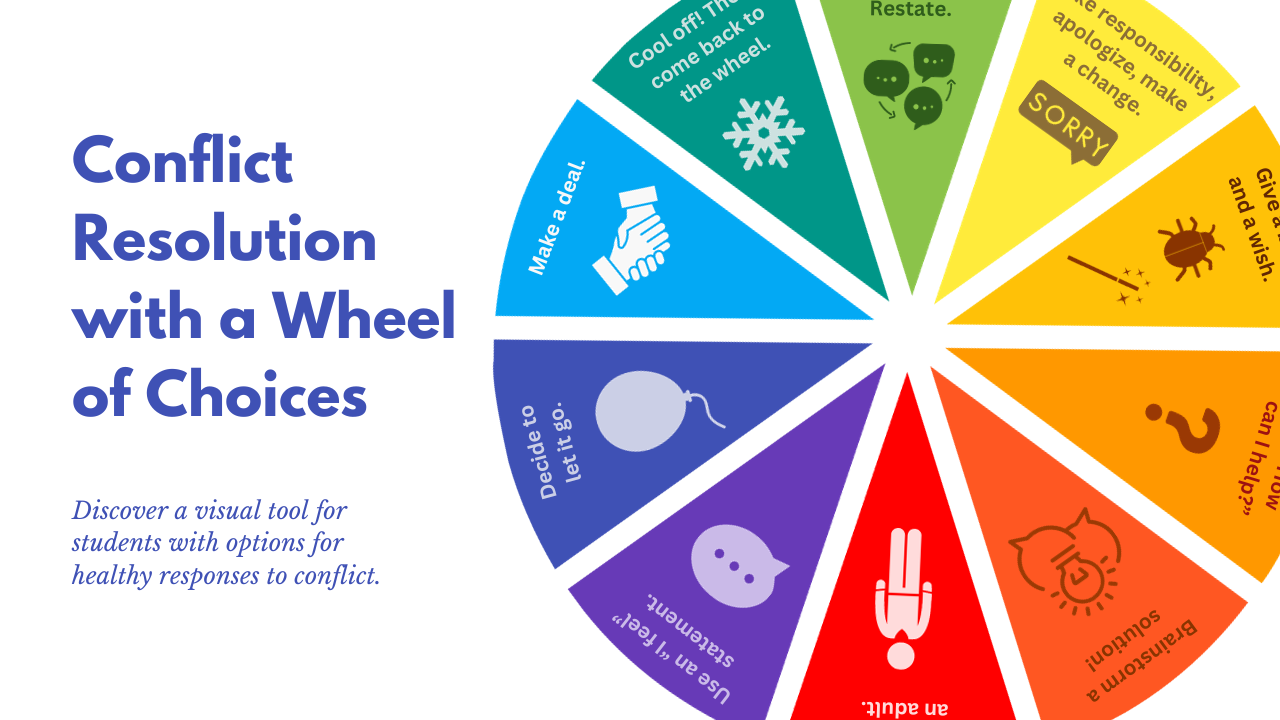
    These strategies can complement formal consequences and support the development of stronger communication and conflict-resolution skills.

    Step 7: Protect Students With Disabilities and Individual Support Needs

    Fair school discipline policies must account for applicable disability rights, required accommodations, and individual educational needs.

    Some students may experience behavioral challenges connected to communication barriers, unmet learning needs, emotional difficulties, or disabilities. These circumstances do not automatically remove accountability, but they may affect which response is appropriate and what support is necessary.

    Schools should follow applicable laws and educational plans when considering disciplinary action involving students with disabilities. Staff should consult qualified special education professionals or other relevant specialists when the situation requires it.

    Practical Measures for Inclusive Discipline

    Schools can improve fairness by:

    • Training staff to recognize when behavior may indicate an unmet support need.
    • Providing clear and accessible explanations of behavioral expectations.
    • Considering relevant accommodations and support plans.
    • Using individualized interventions where appropriate.
    • Documenting decisions and the reasons behind them.
    • Reviewing repeated incidents to identify patterns and possible barriers.
    • Following required procedural safeguards before making significant disciplinary decisions.

    A student should not be treated unfairly because a disability-related need is misunderstood as deliberate misconduct. At the same time, schools must protect other students and staff and respond appropriately to genuine safety concerns.

    The goal is to make decisions that are safe, legally compliant, individualized where necessary, and consistent with the school’s stated principles.

    Step 8: Train Staff to Apply Policies Consistently

    Even a well-written policy can fail if teachers and administrators interpret it differently.

    Staff training should explain the policy’s definitions, documentation requirements, decision-making criteria, communication procedures, and available student supports.

    Training should also address subjective judgments, respectful communication, disability-related considerations, de-escalation, and the importance of separating observed behavior from assumptions about a student’s intentions.

    Use Shared Scenarios During Training

    School leaders can present hypothetical situations and ask staff how they would respond.

    For example, teachers might review two similar incidents of repeated classroom interruption and discuss what information they need before choosing a consequence. They can compare their decisions and identify whether differences are supported by relevant circumstances or reflect unclear expectations.

    These exercises help staff build a shared understanding of the policy while recognizing that individual situations sometimes require different responses.

    Establish a Review and Support Process

    Schools can designate an administrator or trained team to review significant disciplinary decisions, answer staff questions, and identify inconsistent interpretations.

    This process should support sound professional judgment rather than discourage teachers from addressing genuine behavioral problems.

    Regular discussion helps staff apply expectations more reliably and identify areas where policy language needs clarification.

    Step 9: Monitor Discipline Data for Fairness

    Transparent school discipline requires more than publishing written rules. Schools should also examine whether the policies are being implemented as intended.

    Discipline records can help administrators identify repeated problems, evaluate interventions, and detect differences in how rules are enforced.

    Useful measures may include:

    • The number and types of disciplinary incidents.
    • The frequency of warnings, referrals, suspensions, and other consequences.
    • Repeat incidents and the outcomes of support plans.
    • Differences in disciplinary outcomes across student groups.
    • Time students spend away from classroom instruction.
    • Student and family perceptions of fairness and safety.
    • The availability and effectiveness of behavior support services.

    Where lawful and appropriate, schools can analyze data by grade level, disability status, race, gender, or other relevant categories. Such analysis should protect student privacy and comply with applicable data-protection requirements.

    Look Beyond the Total Number of Incidents

    A reduction in disciplinary referrals does not automatically prove that a policy has become fairer. It may reflect improved behavior, but it could also reflect changes in reporting practices.

    Similarly, differences in disciplinary outcomes do not by themselves establish why those differences occurred. Schools need to examine relevant context, policy implementation, and possible barriers before drawing conclusions.

    For example, if one group of students receives more referrals for subjective behaviors such as “defiance,” administrators can review incident descriptions, compare similar situations, and determine whether expectations are being interpreted consistently.

    Research-informed approaches emphasize ongoing monitoring, staff support, and changes to practices when evidence reveals problems.

    Schools can use their findings to update definitions, strengthen training, improve interventions, and make procedures more consistent.

    Step 10: Establish a Fair Appeals and Complaint Process

    Students and families should know how to raise concerns about a disciplinary decision.

    An appeal process gives the school an opportunity to correct factual errors, review whether procedures were followed, and determine whether the consequence was consistent with the policy.

    A well-designed process should identify:

    • Who can submit an appeal or complaint.
    • How and where to submit it.
    • Any applicable deadlines.
    • Who will review the concern.
    • What documents or information may be considered.
    • How the school will communicate its decision.
    • Which additional review options may be available.

    The reviewer should be appropriately impartial and should not simply repeat the original decision without examining the concern.

    Schools should also prohibit retaliation against students or families who raise concerns in good faith. Complaints involving discrimination, safeguarding, or other protected matters may require additional procedures under applicable law.

    A clear review process builds accountability by showing that school decisions can be questioned through established channels.

    Common Mistakes to Avoid When Designing School Discipline Policies

    Schools can weaken their discipline systems when rules are unclear, consequences are disconnected from educational goals, or staff lack sufficient guidance.

    Relying Too Heavily on Subjective Rules

    Terms such as “bad attitude” can be interpreted differently by different staff members. Schools should define observable behavior and provide examples to reduce unnecessary ambiguity.

    Treating Every Violation as Equally Serious

    A minor first-time mistake should not automatically receive the same response as a serious threat or repeated harmful behavior. Consequences should reflect the actual circumstances and established criteria.

    Using Exclusion Without Considering Educational Impact

    Suspension or removal from class may be necessary in certain circumstances, particularly when safety is at risk. However, schools should consider appropriate alternatives where possible and provide required educational support when a student is removed.

    Ignoring Students’ Perspectives

    Making decisions without giving students an appropriate opportunity to explain what happened can result in incomplete or inaccurate conclusions.

    Failing to Review Outcomes

    A policy should not remain unchanged simply because it has been used for years. Schools need regular reviews to determine whether the rules are understandable, consistently applied, and achieving their intended goals.

    Publishing Rules Without Explaining Them

    A policy stored in a handbook may be technically available but practically inaccessible if students and families do not understand its language. Schools should provide clear summaries and explain important procedures during the school year.

    A Practical Checklist for Reviewing School Discipline Policies

    School leaders can use the following checklist when creating a new policy or evaluating an existing one.

    • Are behavioral expectations specific, age-appropriate, and easy to understand?
    • Are violations defined clearly enough to reduce arbitrary interpretation?
    • Are consequences proportionate to the seriousness and circumstances of each incident?
    • Are investigation and documentation procedures explained?
    • Can students provide their accounts before relevant decisions are made?
    • Are students and families informed about decisions and review procedures?
    • Are disability-related accommodations and legal protections addressed?
    • Are restorative and supportive interventions available when appropriate?
    • Have staff received training on consistent implementation?
    • Does the school review disciplinary data for patterns and disparities?
    • Are student records and confidential information protected?
    • Is there a regular schedule for reviewing and updating the policy?

    A school does not need to complete every improvement at once. Leaders can prioritize urgent safety and compliance requirements, clarify confusing rules, and develop a realistic timeline for further improvements.

    How Fair Discipline Policies Improve School Climate

    School climate describes how students and staff experience the learning environment, including their sense of safety, belonging, respect, and support.

    Discipline policies influence these experiences because they communicate what a school values and how it responds when expectations are not met.

    When rules are clear and decisions are explained, students have a better opportunity to understand school expectations. When staff respond respectfully and consistently, disciplinary interactions can become opportunities for learning rather than sources of unnecessary conflict.

    Fairness also depends on whether students believe they can raise concerns, receive support, and be treated with dignity. Schools should listen to feedback and use it to identify problems that may not appear in disciplinary records alone.

    These efforts reinforce one another by promoting safety, respectful relationships, early intervention, and consistent expectations throughout the school community.

    Conclusion

    Designing fair school discipline policies requires more than establishing a list of rules and punishments. Schools need clear expectations, proportionate consequences, transparent procedures, trained staff, meaningful student and family involvement, and reliable methods for reviewing decisions.

    The most effective policies combine accountability with opportunities for students to learn from mistakes and improve their behavior. They also protect student rights, address individual support needs, and use evidence to identify inconsistencies or unintended consequences.

    School leaders should treat discipline policies as living documents that evolve in response to school needs, community feedback, applicable requirements, and implementation data.

    By reviewing policies regularly and applying them thoughtfully, schools can create a safer, more supportive learning environment where expectations are understood, decisions are accountable, and every student has a fair opportunity to succeed.

  • Helping Students Develop Media Literacy and Spot Misinformation

    Helping Students Develop Media Literacy and Spot Misinformation

    Students encounter information every day through social media, online videos, news websites, search engines, podcasts, and messaging apps. Although these platforms provide valuable opportunities to learn, they also expose young people to misleading headlines, manipulated images, unverified claims, biased reporting, and inaccurate information. Without the right skills, students may struggle to distinguish reliable evidence from content designed to attract attention or influence opinions.

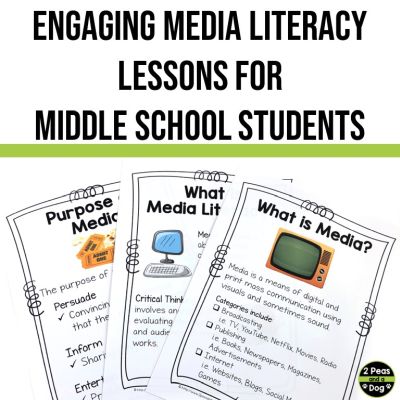
    Media literacy lessons for students help learners develop the critical-thinking skills needed to evaluate information, recognize misleading content, and make informed decisions. Rather than accepting every online claim as true, students learn to question sources, examine evidence, compare perspectives, and verify information before sharing it.

    Schools can make these lessons part of everyday learning across subjects such as English, social studies, science, journalism, and digital citizenship. With regular practice, students can become more confident researchers, responsible digital citizens, and thoughtful consumers of media.

    What Is Media Literacy?

    Media literacy is the ability to access, understand, analyze, evaluate, and create media messages. It helps people recognize how information is presented, why particular content is published, and how media can influence beliefs, emotions, and decisions.

    For students, media literacy involves more than identifying fake news. It includes understanding the difference between facts and opinions, recognizing persuasive techniques, examining possible bias, and considering the context in which a message appears.

    For example, a student might encounter a social media post claiming that a particular study method guarantees higher exam scores. Instead of immediately believing or sharing the post, a media-literate student would ask who created the claim, what evidence supports it, whether the research is accurately represented, and what other credible sources report.

    These habits encourage students to become active investigators rather than passive recipients of information.

    Why Media Literacy Lessons for Students Matter

    Young people need reliable information to complete school assignments, participate in discussions, make personal decisions, and understand the world around them. Media literacy provides a foundation for using digital resources responsibly.

    1. Students Learn to Identify Misinformation

    Misinformation is inaccurate or misleading information that is shared regardless of whether the person sharing it intends to deceive others. Disinformation, by contrast, involves deliberately creating or spreading false or misleading information to deceive or manipulate an audience.

    Students who understand these distinctions can better recognize questionable claims and avoid spreading inaccurate content.

    Teachers can introduce examples such as an outdated photograph presented as a current event, an exaggerated headline, or a social media post that misrepresents scientific research. Students can investigate what is wrong with each example and explain what evidence would be needed to verify it.

    2. Critical Thinking Becomes Stronger

    Media literacy encourages learners to examine information instead of accepting it at face value. Students practice asking questions, comparing explanations, identifying assumptions, and distinguishing evidence from speculation.

    These skills also support academic performance. When students research an assignment, they can make better decisions about which sources to trust and how to support their arguments.

    3. Students Become More Responsible Online

    Sharing an unverified claim can create confusion, damage reputations, or contribute to unnecessary fear. Teaching students to pause and verify information before sharing it encourages more responsible online behavior.

    Students should understand that they have a role in the information environment. They can help reduce the spread of misleading content by checking claims, correcting mistakes respectfully, and avoiding the redistribution of suspicious posts.

    4. Learners Understand Bias and Persuasion

    Media messages may be shaped by an author’s viewpoint, a publisher’s goals, advertising interests, or an audience’s expectations. Students need to recognize that a message can contain accurate facts while still presenting an incomplete or one-sided picture.

    Classroom discussions can help students examine word choice, missing information, emotional language, and the difference between reporting an event and persuading an audience to support a particular position.

    Essential Media Literacy Skills Students Should Develop

    Effective media literacy instruction focuses on practical skills students can apply whenever they encounter new information.

    Evaluating the Credibility of Sources

    Students should learn to examine who created a piece of content, what qualifications or experience the author has, and whether the publisher has a record of reliable reporting.

    Teachers can ask learners to investigate the author’s identity, publication date, supporting references, and purpose. Students should also consider whether the author is reporting original research, summarizing another source, expressing an opinion, or promoting a product.

    A professional-looking website is not necessarily trustworthy, and a familiar platform does not guarantee that every post is accurate. Students should judge the quality of the evidence rather than relying on appearance or popularity alone.

    Distinguishing Facts from Opinions

    A fact is a claim that can be checked against evidence. An opinion expresses a judgment, preference, interpretation, or belief. Some statements contain both factual and opinion-based elements.

    For example:

    • Fact: The school library opens at 8:00 a.m.
    • Opinion: The school library is the best place to study.
    • Mixed claim: The school library is the best place to study because it provides quiet spaces and access to books.

    Students can practice identifying which parts of a statement are verifiable and which parts reflect personal judgment. This skill helps them evaluate articles, advertisements, opinion pieces, and online discussions more carefully.

    Checking Evidence and Supporting Claims

    Reliable claims should be supported by relevant evidence. Depending on the topic, that evidence might include original documents, published research, official statistics, expert interviews, or direct observations.

    Students should examine whether the evidence actually supports the conclusion being presented. A headline may make a broad claim even when the underlying research involves a small sample or a limited set of circumstances.

    Teachers can encourage learners to ask:

    • What evidence supports this statement?
    • Where did the evidence originate?
    • Is the information complete and presented in context?
    • Does the evidence justify the conclusion?
    • What additional information would help verify the claim?

    These questions make research more accurate and strengthen students’ ability to write evidence-based arguments.

    Recognizing Emotional Manipulation

    Misleading content often uses fear, anger, excitement, or outrage to encourage quick reactions. Urgent wording, dramatic images, and claims that something is being hidden can discourage people from checking the facts.

    Students should learn to treat strong emotional reactions as a reason to pause and investigate, not as proof that a claim is false. Some important and accurate news is naturally upsetting. The goal is to separate emotional impact from the quality of the evidence.

    Understanding Images, Videos, and AI-Generated Content

    Images and videos can be edited, taken out of context, or generated using artificial intelligence. A genuine photograph may be paired with an inaccurate caption, while a real video may be presented as if it shows an event from a different time or place.

    Students can examine the original source of an image, search for earlier appearances, compare captions, and look for independent reporting about the event. Reverse image search tools may help identify where an image appeared previously.

    Visual clues alone are not always sufficient to determine whether content has been manipulated. Students should combine careful observation with source verification and corroborating evidence.

    Practical Media Literacy Lessons for Students

    Media literacy becomes more meaningful when students practice evaluating realistic examples instead of simply memorizing definitions. The following activities can be adapted for middle school, high school, and other learning environments.

    Lesson 1: The Source Credibility Challenge

    Objective: Teach students how to assess the reliability of websites, articles, and online posts.

    Activity: Provide students with three sources discussing the same topic. One might be a research-based article, another a personal blog, and the third a social media post with limited supporting evidence.

    Ask students to investigate each source using the following questions:

    1. Who created the content?
    2. What expertise or experience does the author have?
    3. When was the information published or updated?
    4. What evidence or references are provided?
    5. Do independent, reliable sources support the main claim?

    Students can record their findings in a comparison chart and explain which sources they would use for a school assignment.

    Learning outcome: Students learn that credibility depends on evidence, transparency, expertise, and context rather than website design alone.

    Lesson 2: Fact-Checking a Viral Claim

    Objective: Help students verify popular claims before accepting or sharing them.

    Activity: Present a fictional viral post claiming that a common household activity improves memory by 90 percent. Explain that the statistic is an invented example for classroom practice.

    Ask students to identify the main claim, determine what kind of evidence could test it, and search for credible research or expert explanations. They should also check whether the original post links to a study and whether that study supports the stated conclusion.

    Students can classify their final findings as supported, contradicted, misleading, or not yet verified.

    Learning outcome: Students practice investigating claims instead of relying on repetition, popularity, or confident language.

    Lesson 3: Compare Multiple News Reports

    Objective: Develop awareness of framing, context, and media bias.

    Activity: Select two or three reports about the same public event from established news organizations. Have students compare their headlines, selected facts, quotations, images, and explanations.

    Ask them to identify what the reports have in common and what information appears in only one account. Encourage them to consider whether differences result from editorial focus, publication timing, available evidence, or a clear attempt to persuade readers.

    Students should avoid assuming that every difference proves bias or that one source must be entirely right while another is entirely wrong.

    Learning outcome: Students learn to compare perspectives and investigate missing context before reaching conclusions.

    Lesson 4: Investigate an Image or Video

    Objective: Teach students to question the context and authenticity of visual media.

    Activity: Present an image with a deliberately misleading caption or a fictional scenario in which an old photograph is described as a current event. Ask students to identify the original source, investigate the publication date, and look for other reports featuring the same image.

    For video content, students can check the uploader, location, date, original footage, and independent accounts of the event.

    Teachers should choose age-appropriate materials and avoid exposing students to disturbing content.

    Learning outcome: Students understand that a real image can still be used to communicate a false or misleading message.

    Lesson 5: Create a Responsible Social Media Post

    Objective: Help students apply media literacy when creating and sharing information.

    Activity: Ask students to prepare a short educational post about a school topic, scientific concept, or community issue. Each student must identify reliable supporting evidence, represent that evidence accurately, and distinguish facts from personal opinions.

    Before presenting their work, students should review their wording, check numerical claims, confirm image permissions, and ensure that the headline does not exaggerate the findings.

    Learning outcome: Students recognize that responsible media creation requires the same attention to accuracy and context as responsible media consumption.

    Teaching Students to Use Lateral Reading

    Lateral reading is an important fact-checking technique in which readers leave the original webpage and investigate the source and its claims using other websites and independent sources.

    Instead of relying only on an article’s own explanation of its credibility, students open additional tabs to research the publisher, author, evidence, and main claim.

    For example, if students find an unfamiliar website making a surprising health or science claim, they can search for the organization’s background, look for original research, and compare the claim with information from recognized scientific institutions.

    A simple classroom routine can help learners practice this method:

    1. Identify the claim: Write down the exact statement that needs verification.
    2. Investigate the source: Find out who published it and what is known about the organization or author.
    3. Search independently: Look beyond the original page for reliable reporting, research, or primary evidence.
    4. Compare findings: Determine whether independent sources agree, disagree, or provide important qualifications.
    5. Reach a careful conclusion: Explain what the evidence supports and what remains uncertain.

    Students should document their sources and explain how each one influenced their conclusion. This makes their reasoning visible and gives teachers a clearer way to assess their research skills.

    How Students Can Recognize Misleading Headlines

    Headlines are often designed to capture attention quickly. Some accurately summarize an article, while others exaggerate the findings, omit important qualifications, or create a false impression.

    Teachers can help students recognize several warning signs.

    Sensational Language

    Words such as “shocking,” “secret,” or “guaranteed” may be used to encourage clicks rather than communicate precise information. Students should read beyond the headline and determine whether the article’s evidence supports its wording.

    Missing Context

    A headline may highlight one statistic without explaining the sample size, timeframe, comparison group, or limitations. Learners should examine the full article and, when possible, the original report.

    Unsupported Certainty

    Claims that promise guaranteed outcomes or describe complex issues as completely settled deserve closer inspection. Students should look for the evidence behind such certainty and consider whether the claim overstates what is known.

    Misleading Comparisons

    A post may compare two figures that were measured differently or use percentages without providing the original numbers. Students should check how the figures were calculated and whether the comparison is fair.

    These lessons help students understand that misleading content does not always consist of entirely fabricated information. Sometimes the problem is selective presentation, exaggerated wording, or the removal of important context.

    Teaching Media Literacy in Different School Subjects

    Media literacy does not need to be taught as a separate subject in every school. Teachers can integrate its core skills into existing lessons.

    English and Language Arts

    Students can analyze persuasive writing, identify rhetorical techniques, compare opinion pieces with factual reporting, and evaluate the quality of evidence used in arguments.

    They can also practice writing balanced summaries that preserve the meaning of an original source without exaggerating its conclusions.

    Science

    Science teachers can guide students in evaluating research summaries, checking scientific claims, interpreting charts, and distinguishing correlation from causation.

    Students should learn to examine how a study was conducted, whether its limitations are explained, and whether other research supports similar conclusions.

    Social Studies

    Students can compare historical accounts, investigate primary documents, examine the context of public statements, and analyze how different sources portray the same event.

    This approach supports historical reasoning and helps learners understand why evidence, perspective, and context matter.

    Mathematics

    Mathematics lessons provide opportunities to evaluate statistics, percentages, graphs, and numerical claims used in advertising or news reports.

    Students can investigate whether a chart uses misleading scales, whether percentages have a clear reference point, and whether the data justify the conclusions being presented.

    Digital Citizenship

    Digital citizenship lessons can connect media literacy with online privacy, respectful communication, responsible sharing, and the consequences of publishing inaccurate information.

    Students can discuss what to do when they encounter a suspicious post, how to correct a mistake, and when to report content through appropriate platform channels.

    How Teachers Can Assess Media Literacy Skills

    Assessment should measure students’ ability to apply media literacy strategies, not just memorize vocabulary.

    Teachers can use short research assignments, group discussions, written reflections, source-comparison charts, and fact-checking exercises.

    A practical assessment rubric can consider the following areas:

    • Source evaluation: Does the student investigate the author’s credibility and the publisher’s background?
    • Evidence analysis: Does the student identify relevant evidence and assess whether it supports the claim?
    • Cross-checking: Does the student compare information with independent sources?
    • Context and bias: Does the student recognize missing context, persuasive language, or possible bias?
    • Reasoning: Does the student explain how the evidence supports the final conclusion?
    • Responsible communication: Does the student present findings accurately and acknowledge uncertainty?

    Teachers can assess these skills through repeated practice. A student who initially accepts a headline without question may gradually learn to investigate the original evidence and explain why a conclusion is or is not justified.

    The goal is not to expect students to identify every false claim immediately. It is to help them develop a consistent, evidence-based process for evaluating information.

    Common Challenges in Teaching Media Literacy

    Although media literacy is valuable, teachers may face challenges when introducing it into the classroom.

    Limited Instructional Time

    Teachers already have many curriculum requirements. Short activities can help make media literacy manageable. A five-minute source check at the start of a research assignment can reinforce skills without requiring a separate unit.

    Students’ Existing Beliefs

    Students may be more willing to accept claims that agree with their existing opinions. Teachers can encourage them to apply the same standards of evidence to all sources, including those that support their preferred viewpoint.

    Respectful discussion and open-ended questions can help students reconsider assumptions without feeling personally attacked.

    Rapidly Changing Digital Content

    New platforms, editing tools, and AI-generated media create additional verification challenges. Instead of teaching students to rely on a fixed list of websites or visual clues, schools should emphasize adaptable habits: checking sources, investigating context, comparing evidence, and acknowledging uncertainty.

    Confusing Disagreement With Misinformation

    Two credible sources may interpret evidence differently or emphasize different aspects of a complex issue. A disagreement does not automatically mean that one source is deliberately misleading readers.

    Students should examine the underlying evidence, distinguish factual disagreements from differences in interpretation, and consider whether additional research is needed.

    The Role of Families in Developing Media Literacy

    Families can reinforce classroom learning by discussing online information with children in everyday situations. A news headline, a forwarded message, or a popular video can provide an opportunity to ask how the information was verified.

    Parents and caregivers can encourage children to pause before sharing surprising claims, check the original source, and consider whether the content leaves out important context.

    Adults should also model these habits themselves. A willingness to correct a mistake or change an opinion after reviewing new evidence shows students that critical thinking is an ongoing process rather than a test they must always pass.

    When schools and families reinforce the same principles, students have more opportunities to develop responsible information habits.

    Building a School Culture That Values Reliable Information

    Individual lessons are important, but media literacy becomes more effective when schools consistently value accuracy, evidence, and thoughtful discussion.

    School libraries can help students find reliable research materials and learn how to evaluate digital sources. Teachers can require students to explain their source choices in projects, while school leaders can support professional development focused on digital literacy and misinformation.

    Schools can also create student-led fact-checking projects, media clubs, research showcases, and classroom campaigns promoting responsible information sharing.

    These activities give students opportunities to apply their skills to meaningful questions. They also encourage a learning environment in which asking for evidence is viewed as a strength rather than a challenge to authority.

    Conclusion

    Helping students develop media literacy is an essential part of preparing them for learning and participation in a digital world. As students encounter an increasing variety of online information, they need practical strategies for evaluating sources, checking evidence, recognizing misleading content, and understanding how media messages influence audiences.

    Effective media literacy lessons for students combine direct instruction with regular opportunities to investigate real-world examples. Through source credibility challenges, fact-checking activities, image verification, and cross-subject learning, teachers can help students build habits that extend beyond the classroom.

    The ultimate goal is not to make students distrust everything they see online. It is to help them decide what deserves confidence, what requires further investigation, and what should not be shared until it has been verified. By making critical inquiry a routine part of school life, educators can support more informed, independent, and responsible learners.

  • How Schools Can Build Inclusive Extracurricular Programs

    How Schools Can Build Inclusive Extracurricular Programs

    Extracurricular activities give students valuable opportunities to discover their interests, develop new skills, build friendships, and participate in school life beyond the classroom. Sports teams, music clubs, drama groups, debate societies, coding clubs, art workshops, and volunteer projects can help students explore their strengths while developing confidence and a sense of belonging.

    However, not every student has the same opportunity to participate. Costs, transportation difficulties, inaccessible facilities, scheduling conflicts, language barriers, and limited awareness of available programs can prevent students from joining activities they enjoy. Students with disabilities may face additional challenges when activities, equipment, or registration procedures are not designed with accessibility in mind.

    Schools can address these barriers by making inclusion a central part of extracurricular planning. Creating inclusive extracurricular activities schools means ensuring that students with different abilities, backgrounds, financial circumstances, and interests have fair opportunities to participate, contribute, and succeed.

    An inclusive program does more than allow students to attend. It makes sure they can take meaningful roles, develop relationships, express their ideas, and feel that they belong to the school community.

    What Are Inclusive Extracurricular Programs?

    Inclusive extracurricular programs are school-organized activities designed to welcome students with different needs, abilities, interests, and life circumstances. They aim to reduce barriers that might otherwise prevent students from participating fully.

    These programs can take many forms, including athletic teams, performing arts groups, academic clubs, student leadership organizations, environmental projects, technology workshops, and community service initiatives.

    For example, an inclusive sports program may adapt equipment or rules so students with different physical abilities can participate. A drama club might offer acting, set design, costume preparation, lighting, and scriptwriting roles. A science club could provide accessible materials and multiple ways for students to contribute to experiments.

    The purpose is not to create a single activity that suits every student. Instead, schools should provide a range of opportunities and make reasonable adjustments so students can take part in ways that reflect their interests and needs.

    Effective inclusive extracurricular programs typically emphasize:

    • Fair access to activities and registration.
    • Affordable participation and transparent costs.
    • Accessible facilities, equipment, and materials.
    • Flexible roles and appropriate accommodations.
    • Respectful communication and supportive supervision.
    • Student choice, feedback, and meaningful involvement.
    • Regular evaluation of participation and barriers.

    When these principles guide program design, extracurricular activities can become a more equitable part of the educational experience.

    Why Inclusive Extracurricular Activities Matter

    Extracurricular activities can contribute to students’ personal development in ways that complement academic learning. They create opportunities to practice skills, discover interests, collaborate with peers, and contribute to shared goals.

    When students cannot access these opportunities, they may miss valuable experiences that help them feel connected to school.

    1. Building a Stronger Sense of Belonging

    Students are more likely to feel connected to their school when they have opportunities to contribute, build relationships, and participate in activities that matter to them.

    Clubs and teams can bring together students who might not otherwise interact during regular lessons. Working toward a shared goal can encourage cooperation and help students recognize one another’s strengths.

    For example, a school environmental club might invite students to plan a recycling campaign, maintain a school garden, or organize a community clean-up. Each student can contribute through planning, research, communication, design, or practical tasks.

    Schools should make sure participation does not depend on popularity, existing friendships, or a narrow definition of ability. Welcoming recruitment practices and supportive group expectations can help more students feel comfortable joining.

    2. Supporting Social and Communication Skills

    Extracurricular activities give students opportunities to practice communication, teamwork, leadership, and problem-solving in practical situations.

    A debate club helps students express opinions and listen to opposing arguments. A music ensemble teaches coordination and shared responsibility. A community service project encourages students to organize tasks and cooperate with people from different backgrounds.

    Inclusive programs allow students with different communication styles and abilities to contribute to these experiences.

    Teachers and activity leaders can support participation by providing clear instructions, establishing respectful group rules, and offering different ways to communicate. These practices help students learn from one another while reducing unnecessary barriers.

    3. Encouraging Confidence and Personal Growth

    Students may discover strengths outside traditional academic subjects through art, sports, technology, performance, or community projects.

    An inclusive program gives students opportunities to explore these interests without requiring them to meet unnecessary prerequisites or conform to a single standard of performance.

    For example, a student who finds public speaking difficult may begin by helping with event preparation before choosing to present in front of an audience. Another student may contribute exceptional technical skills to a theater production without appearing on stage.

    These experiences can help students recognize their abilities and develop confidence through meaningful participation.

    Schools should avoid assuming that every student wants the same role. Providing options allows students to choose challenges that suit their interests and developmental needs.

    4. Promoting Fairness and Equal Opportunity

    When extracurricular programs are accessible only to students who can afford fees, arrange transportation, attend after-school sessions, or meet rigid participation requirements, some students are placed at a disadvantage.

    Inclusive planning encourages schools to examine these barriers and develop practical solutions.

    Possible measures include reduced fees, equipment-sharing systems, accessible transportation arrangements, alternative meeting times, and flexible participation options.

    Fairness does not mean every activity must operate in exactly the same way. It means identifying what students need to participate meaningfully and responding appropriately.

    5. Encouraging Respect for Differences

    Students learn about inclusion through everyday interactions. When they work with peers who have different experiences, abilities, and perspectives, they have opportunities to develop understanding and challenge assumptions.

    Activity leaders can encourage students to recognize different contributions and avoid treating one way of participating as superior to another.

    For instance, a robotics club may value programming, design, documentation, testing, and presentation. Students with different strengths can contribute to a common project while learning from their teammates.

    This approach helps establish a school culture in which differences are respected and cooperation is encouraged.

    Common Barriers to Extracurricular Participation

    Before improving extracurricular programs, schools need to understand why some students do not participate. The barriers are often practical, environmental, or social rather than a lack of interest.

    Financial Costs

    Participation fees, uniforms, equipment, supplies, transportation, and competition expenses can make activities unaffordable for some families.

    Schools can reduce these barriers by offering subsidized participation, lending equipment, seeking community sponsorships, and choosing low-cost activities when possible.

    Costs should be communicated clearly before students register so families can make informed decisions.

    Inaccessible Facilities and Equipment

    Stairs, narrow doorways, unsuitable bathrooms, inaccessible playing areas, and equipment that cannot be adapted may prevent students with disabilities from taking part.

    Schools should review activity locations and equipment before programs begin. They can consult students and families about access requirements and explore reasonable adjustments to facilities, rules, materials, or roles.

    Accessibility should be planned from the beginning rather than treated as a last-minute exception.

    Scheduling and Transportation Difficulties

    Students may have family responsibilities, limited transportation, health-related needs, or other commitments that make after-school attendance difficult.

    Schools can consider lunch-hour clubs, rotating schedules, earlier sessions, activity buses where available, or occasional remote participation when suitable.

    Offering several ways to participate can help students remain involved without creating unnecessary pressure on their families.

    Social Exclusion and Unwelcoming Environments

    Students may avoid clubs or teams if they fear teasing, rejection, discrimination, or being judged for their abilities or backgrounds.

    Activity leaders should establish clear expectations for respectful behavior, address bullying promptly, and monitor whether students are included in discussions and group decisions.

    A program is not genuinely inclusive if students can register but are routinely ignored, excluded from important tasks, or made to feel unwelcome.

    Limited Awareness of Available Activities

    Some students may not know which activities exist or may assume that certain clubs are only for high-achieving students, experienced performers, or skilled athletes.

    Schools should provide clear information through assemblies, classroom announcements, accessible notices, and student-led demonstrations. Descriptions should explain whether beginners are welcome, what participation involves, and whether any costs apply.

    Open-house events and introductory sessions can help students explore options before making a commitment.

    Practical Strategies for Building Inclusive Extracurricular Programs

    Schools can make meaningful progress by combining thoughtful planning with regular feedback from students and families.

    1. Ask Students What They Want to Join

    Inclusive program planning should begin with student interests rather than assumptions about what students need or enjoy.

    Schools can use short surveys, student council discussions, suggestion boxes, and informal conversations to discover which activities students would like to see offered.

    Ask students what prevents them from participating in existing programs. Some may want more creative activities, while others may need a different schedule, lower costs, accessible facilities, or a less competitive environment.

    Schools should also consult students who are currently underrepresented in extracurricular activities. Their perspectives can reveal barriers that are not obvious to staff.

    The information collected should lead to practical changes. Asking for feedback without responding to it may reduce student confidence in the process.

    2. Offer a Diverse Range of Activities

    A limited extracurricular program can unintentionally favor students with particular interests or resources.

    For example, a school that offers only competitive sports may overlook students who prefer creative, academic, technical, or service-based activities.

    A varied program can include:

    • Art, photography, and creative writing clubs.
    • Music, drama, dance, and performance groups.
    • Coding, robotics, and science clubs.
    • Debate, reading, and public speaking societies.
    • Gardening, environmental, and sustainability projects.
    • Chess, board games, and recreational clubs.
    • Student leadership and community service groups.
    • Adapted sports and recreational physical activities.

    Schools do not need to launch every activity at once. They can begin with a small selection, review student interest, and expand as resources permit.

    The aim is to provide meaningful choices so students with different strengths and preferences can find opportunities that appeal to them.

    3. Make Registration Simple and Accessible

    Complicated registration procedures can discourage participation before an activity even begins.

    Schools should provide clear information about eligibility, schedules, fees, required equipment, locations, and accommodation requests.

    Forms should be accessible and written in language families can understand. Where possible, schools should provide alternative ways to register for students or caregivers who face language, technology, or literacy barriers.

    Avoid unnecessary requirements that are unrelated to the activity. For example, a beginner-friendly art club generally should not require prior awards or extensive experience.

    Clear, welcoming registration procedures communicate that the school wants students to participate.

    4. Plan for Accessibility From the Start

    Accessibility should be considered during program selection, scheduling, budgeting, and activity preparation.

    Before an activity begins, leaders can review whether students can enter the venue, move around safely, use relevant facilities, access materials, and participate in the main tasks.

    Depending on the activity and individual needs, adjustments might include:

    • Providing accessible routes and suitable workspaces.
    • Offering large-print, digital, visual, or alternative-format materials.
    • Adjusting equipment, game rules, or task instructions.
    • Allowing additional time or planned breaks.
    • Providing captions, visual instructions, or communication supports.
    • Offering different roles that contribute meaningfully to the shared goal.

    Students and families should be involved in identifying useful adjustments rather than having staff make assumptions about what a student can or cannot do.

    The objective is to preserve meaningful participation while addressing practical barriers.

    5. Train Teachers, Coaches, and Club Leaders

    Even well-designed programs may struggle if the adults leading them lack the knowledge or confidence to support diverse learners.

    Schools can provide training in inclusive communication, disability awareness, behavior support, accessible activity design, anti-bullying procedures, and appropriate accommodation planning.

    Training should include practical examples. A sports coach might learn how to adapt drills, while a drama leader might explore ways to provide alternative performance roles or accessible scripts.

    Leaders should also understand how to respond to exclusion, harassment, or conflicts within their groups.

    Schools can support staff by providing planning time, clear guidance, access to relevant specialists, and opportunities to share effective strategies.

    6. Create a Welcoming Group Culture

    Students need to feel respected and valued after joining an activity.

    Club leaders can help establish this environment by setting clear expectations for behavior, encouraging introductions, rotating responsibilities, and recognizing different kinds of contributions.

    For example, a science club can celebrate careful research, creative design, teamwork, and clear documentation—not only the final competition result.

    Leaders should watch for patterns in which certain students repeatedly control decisions while others are left out. Structured turn-taking and shared responsibilities can make participation more balanced.

    When exclusion or bullying occurs, adults should address it promptly and follow school procedures.

    7. Offer Flexible Ways to Participate

    Students have different schedules, energy levels, responsibilities, and support needs. A rigid program may prevent otherwise interested students from taking part.

    Where practical, schools can offer flexible attendance, shorter introductory sessions, rotating responsibilities, or different levels of involvement.

    For example, a school newspaper might allow students to write articles, edit text, create illustrations, conduct interviews, or help with digital publishing.

    Flexible participation should not mean that students are excluded from important experiences. Instead, it should provide appropriate choices while maintaining the activity’s shared purpose.

    8. Build Partnerships With Families and Communities

    Families, community organizations, local businesses, libraries, sports groups, and arts organizations can help schools expand extracurricular opportunities.

    Community partnerships may provide equipment, instructors, accessible venues, transport support, or funding for students who need financial assistance.

    Schools should establish clear expectations for partner organizations, including student safety, supervision, accessibility, and respectful treatment.

    Families can also provide valuable feedback about scheduling, transportation, costs, and the activities their children would like to explore.

    Strong partnerships allow schools to use available resources more effectively without relying entirely on their own budgets.

    How to Make Specific Extracurricular Activities More Inclusive

    Inclusion looks different depending on the activity. Schools should consider the main barriers associated with each program and make adjustments that preserve meaningful student involvement.

    Inclusive Sports and Physical Activities

    Sports can encourage teamwork, confidence, and physical activity, but traditional rules or equipment may limit participation for some students.

    Schools can offer recreational and competitive options, adapted equipment, modified rules where appropriate, and activities with different physical demands.

    For example, a recreational games club could focus on cooperation and skill development rather than selection based solely on athletic performance.

    Facilities should be accessible, and staff should consider safety, rest breaks, communication, and individual support needs.

    Students should have opportunities to contribute to the activity itself, not simply observe from the sidelines.

    Inclusive Arts and Performance Programs

    Art, music, dance, and drama offer many ways for students to express themselves.

    Schools can provide accessible instruments and materials, adaptable rehearsal arrangements, visual instructions, and a range of performance and production roles.

    In a theater group, students might contribute through acting, set design, costumes, lighting, sound, writing, or stage management.

    Leaders should ensure that alternative roles are valued and connected to the central activity rather than used automatically to separate students who need accommodations.

    Inclusive Academic and Technology Clubs

    Science, coding, robotics, debate, and reading clubs can attract students with different levels of experience.

    Schools can make these activities more accessible by welcoming beginners, providing clear instructions, sharing equipment, and organizing collaborative tasks with varied responsibilities.

    For a robotics project, one student may focus on programming, another on construction, and another on testing or documenting the design. Roles can rotate so students have opportunities to learn new skills.

    Leaders should avoid assuming that prior experience, expensive equipment, or exceptional academic performance is necessary for participation unless a specific advanced activity genuinely requires it.

    Inclusive Community Service Programs

    Community service allows students to work together on projects that benefit other people.

    Examples include organizing a book drive, preparing educational materials, maintaining a garden, supporting a local environmental campaign, or developing awareness resources.

    Schools should consider accessibility, transport, cost, language, and the physical demands of each project.

    Offering different responsibilities—such as planning, design, communication, research, and coordination—can help more students contribute to a shared goal.

    Students should also have a voice in choosing projects that reflect their interests and community priorities.

    The Role of Student Voice in Inclusive Programs

    Students should have opportunities to influence the extracurricular activities available at their school and the way those activities are organized.

    Student councils, club representatives, feedback sessions, and planning committees can help schools understand which programs are useful and which barriers remain.

    For example, a student committee might discover that a popular club meets too late for students who depend on school transportation. Another group may recommend providing shared equipment so families do not have to purchase expensive supplies.

    Student voice should include students who rarely participate in existing activities, not only those who already hold leadership positions.

    Schools can make consultation more accessible by providing different ways to share feedback, including written suggestions, small-group discussions, anonymous forms, or supported communication.

    Listening to students helps schools design programs that reflect real needs and strengthens students’ sense of ownership over school life.

    How Schools Can Measure Inclusion and Participation

    Schools need more than registration totals to determine whether extracurricular programs are genuinely inclusive.

    High enrollment may hide the fact that certain groups rarely join, frequently leave, or participate without meaningful involvement.

    A useful evaluation process examines both access and the quality of students’ experiences.

    Schools can review:

    • The number of activities available and the range of interests represented.
    • Participation and retention across different student groups, where appropriate and lawful to assess.
    • Fees, equipment requirements, and other financial barriers.
    • Accessibility of venues, materials, and transportation arrangements.
    • Student feedback about belonging, safety, and meaningful participation.
    • The availability and effectiveness of requested accommodations.
    • Reports of bullying, exclusion, or unfair treatment.
    • Whether students believe their contributions are valued.

    Schools should collect information respectfully, protect privacy, and avoid unnecessary disclosure of sensitive personal details.

    When participation data identifies a gap, staff should investigate the reasons rather than assuming students lack interest. The problem may be related to costs, timing, access, recruitment, or the social environment.

    Regular reviews help schools make informed improvements and allocate resources where they are most useful.

    Common Mistakes Schools Should Avoid

    Good intentions alone do not guarantee an inclusive experience. Schools should watch for common practices that can unintentionally exclude students.

    Offering access without meaningful participation. Allowing a student to attend is not enough if they cannot take part in the central activity. Leaders should identify meaningful roles and appropriate adjustments.

    Assuming all students with similar needs require the same support. Students have individual interests, preferences, and abilities. Ask what works for each student rather than relying on stereotypes.

    Treating inclusion as the responsibility of one specialist. Inclusion should be part of the planning and practice of every club, team, and activity, with specialist support where necessary.

    Ignoring financial barriers. Fees, supplies, uniforms, and travel costs may prevent participation. Schools should examine the full cost of joining an activity.

    Consulting students but making no changes. Feedback is useful only when schools consider it and explain what action will follow.

    Measuring success by enrollment alone. Attendance figures do not reveal whether students feel welcome, contribute meaningfully, or continue participating.

    Avoiding these mistakes helps schools move from simply offering activities to building programs in which more students can genuinely belong.

    A Practical Action Plan for School Leaders

    Schools do not need to redesign every extracurricular program at once. A phased approach can make improvements more manageable.

    Step 1: Review current activities. List existing clubs, teams, schedules, costs, entry requirements, and facilities.

    Step 2: Identify participation barriers. Gather feedback from students, families, and activity leaders, including people who do not currently participate.

    Step 3: Choose achievable priorities. Start with changes that can make a meaningful difference, such as lending equipment, improving registration information, or adjusting a meeting time.

    Step 4: Prepare staff and resources. Provide relevant training, identify accommodation options, and assign responsibility for implementation.

    Step 5: Communicate opportunities clearly. Make activity information accessible and explain how students can request support.

    Step 6: Monitor experiences and outcomes. Review participation, retention, student feedback, and unresolved barriers.

    Step 7: Improve the program over time. Use what the school learns to adjust existing activities and plan new opportunities.

    This approach allows schools to make steady progress while using resources carefully and responding to the needs of their own communities.

    Conclusion

    Building inclusive extracurricular programs helps schools create opportunities for students to develop skills, explore interests, form friendships, and contribute to their communities. However, meaningful inclusion requires more than making activities available. Schools must identify and reduce barriers related to cost, accessibility, scheduling, recruitment, and social exclusion.

    By listening to students, offering diverse activities, preparing staff, adapting programs where appropriate, and measuring the quality of participation, schools can make extracurricular experiences more welcoming and equitable.

    The most effective approach treats inclusion as an ongoing responsibility shared by school leaders, teachers, families, community partners, and students themselves.

    When every student has a fair opportunity to participate and make a meaningful contribution, extracurricular programs can become an important part of a school community where differences are respected, talents are developed, and belonging is strengthened.

  • Teaching Conflict Resolution Skills in Schools

    Teaching Conflict Resolution Skills in Schools

    Conflict is a natural part of school life. Students may disagree about group assignments, misunderstand a classmate’s intentions, compete for opportunities, or struggle to express their feelings calmly. Although disagreements are common, the way students respond to them can affect their friendships, classroom participation, emotional well-being, and overall learning experience.

    Schools have an important opportunity to teach students how to manage these situations constructively. Rather than treating every disagreement as a disciplinary problem, educators can help students develop communication, empathy, self-control, and problem-solving skills that enable them to work through differences respectfully.

    Teaching conflict resolution skills for students is an important part of creating a supportive school environment. Through classroom discussions, role-playing, cooperative learning, and guided problem-solving, teachers can give students practical ways to handle disagreements and build stronger relationships.

    These skills do not eliminate every conflict. Instead, they help students recognize problems early, express their concerns appropriately, understand different perspectives, and seek solutions that respect the needs of everyone involved.

    What Are Conflict Resolution Skills?

    Conflict resolution skills are the abilities students use to understand disagreements, communicate their concerns, manage emotions, and work toward acceptable solutions. These skills help young people respond thoughtfully rather than reacting through insults, aggression, avoidance, or blame.

    Students can learn conflict resolution at different stages of their education. Younger children may begin by identifying emotions, taking turns, and using respectful words. Older students can develop more advanced abilities, such as negotiation, mediation, perspective-taking, and collaborative decision-making.

    Important conflict resolution skills include:

    • Active listening: Paying attention to another person’s explanation without interrupting.
    • Emotional regulation: Managing frustration, anger, disappointment, and anxiety.
    • Clear communication: Explaining feelings and concerns without personal attacks.
    • Empathy: Recognizing that other people may have different experiences and perspectives.
    • Problem-solving: Identifying the cause of a disagreement and considering possible solutions.
    • Negotiation: Finding a reasonable compromise when people have different preferences.
    • Accountability: Accepting responsibility for one’s actions and helping repair harm.
    • Cooperation: Working with others toward a fair and practical outcome.

    These abilities are useful beyond school. Students can apply them in family relationships, sports, community activities, future workplaces, and other situations where people need to cooperate.

    Why Conflict Resolution Should Be Taught in Schools

    Students do not automatically know how to handle every disagreement. They may need guidance to recognize emotions, understand boundaries, and communicate effectively when they feel upset.

    Without appropriate support, small misunderstandings can develop into repeated arguments, exclusion, classroom disruption, or damaged friendships. Students may also struggle to concentrate on lessons when interpersonal problems remain unresolved.

    Teaching conflict resolution gives students a structured way to respond to these challenges.

    1. Creating a Positive Classroom Environment

    A classroom becomes more supportive when students know how to disagree respectfully and seek help when necessary. Clear expectations about listening, language, and personal boundaries help establish a culture in which students feel safer expressing their views.

    Teachers can reinforce these expectations by modeling calm communication and responding consistently to disagreements.

    For example, if two students disagree about the responsibilities in a group project, the teacher can help them explain their concerns, identify the task requirements, and divide the work fairly.

    Over time, repeated practice can help students understand that disagreements do not have to become personal conflicts.

    2. Strengthening Communication Skills

    Many student conflicts begin with unclear messages, assumptions, or words spoken in frustration. Students may believe that a classmate intentionally ignored them when the other person simply did not understand the situation.

    Conflict resolution lessons help students explain what happened, ask clarifying questions, and listen before drawing conclusions.

    Teachers can encourage students to use statements such as:

    • “I felt left out when the groups were chosen without me.”
    • “Can you explain what you meant by that comment?”
    • “I see the situation differently. Can we talk about it?”
    • “Let’s find a way to divide the work fairly.”

    These phrases help students focus on the problem rather than attacking another person’s character.

    3. Developing Empathy and Perspective-Taking

    Students may interpret a disagreement differently because they have different experiences, expectations, or information. Learning to consider another person’s perspective can help them understand the reasons behind a reaction without automatically agreeing with it.

    Teachers can develop empathy through stories, guided discussions, cooperative activities, and reflection exercises.

    For instance, after reading a story about a disagreement between friends, students can discuss how each character might have felt, what each person needed, and how the situation could have been handled differently.

    This practice encourages thoughtful responses and helps students recognize that a fair solution should consider the people affected by the conflict.

    4. Supporting Emotional Regulation

    Strong emotions can make it difficult to listen, explain a concern, or evaluate possible solutions. Students who feel angry or embarrassed may react quickly before considering the consequences of their words or actions.

    Teachers can help students recognize early signs of frustration and practice appropriate ways to calm down.

    Depending on the student’s age and needs, these strategies might include taking slow breaths, requesting a short break, naming the emotion, or speaking with a trusted adult.

    Students should understand that taking time to calm down is not the same as avoiding responsibility. It is a way to prepare for a more productive conversation.

    5. Encouraging Responsibility and Problem-Solving

    Conflict resolution teaches students that they have a role in improving difficult situations. Rather than focusing only on who is to blame, students can learn to identify what happened, consider the effects, and decide what needs to change.

    This approach encourages accountability without humiliating students.

    For example, a student who damages a classmate’s project may need to acknowledge the harm, apologize sincerely, and help repair or replace the damaged work when appropriate.

    The purpose is to help students understand consequences and take meaningful steps toward a better outcome.

    Effective Strategies for Teaching Conflict Resolution Skills for Students

    Conflict resolution is best taught through explicit instruction and repeated practice. Teachers can introduce a skill, demonstrate it, allow students to rehearse it, and then reinforce it during everyday classroom interactions.

    1. Use Role-Playing Activities

    Role-playing allows students to practice responding to realistic disagreements in a controlled environment. Teachers can present situations involving shared materials, group assignments, misunderstandings, or disagreements during games.

    Students can act out different responses and discuss which approaches are more likely to solve the problem.

    For example, two students might disagree about who should present a group project. One approach could involve arguing or refusing to participate. Another could involve discussing each student’s preferences and agreeing to share the presentation.

    After each activity, ask students what helped the conversation improve and what made it more difficult.

    Role-playing should be age-appropriate and should not require students to reenact personal or distressing experiences.

    2. Teach Active Listening

    Active listening helps students understand a disagreement before attempting to resolve it. It involves giving the speaker attention, avoiding interruptions, and checking that the message has been understood correctly.

    Teachers can demonstrate this skill through short partner activities.

    One student explains a harmless disagreement or classroom preference. The other listens and summarizes the main point before responding.

    Useful prompts include:

    • “What I heard you say was…”
    • “It sounds like you felt…”
    • “Did I understand you correctly?”
    • “Can you tell me more about what happened?”

    These exercises teach students that resolving a disagreement begins with understanding the situation, not simply preparing a response.

    3. Introduce a Step-by-Step Conflict Resolution Process

    A clear process gives students a practical structure to follow when disagreements arise.

    Schools can teach the following six steps:

    1. Pause and calm down. Take a moment to manage strong emotions.
    2. Describe the problem. Explain what happened using specific, neutral language.
    3. Listen to each person. Give everyone an appropriate opportunity to speak.
    4. Identify needs and concerns. Determine what each person wants or feels is important.
    5. Explore possible solutions. Suggest options and consider their likely consequences.
    6. Agree on next steps. Choose a realistic solution and review whether it worked.

    Teachers should explain that this process is most appropriate for ordinary disagreements where everyone can participate safely and voluntarily.

    Serious incidents involving threats, violence, bullying, harassment, coercion, or a significant power imbalance require adult intervention and the school’s safeguarding procedures. Students should never be expected to resolve such situations alone.

    4. Practice Collaborative Problem-Solving

    Collaborative problem-solving teaches students to work together rather than treating every disagreement as a competition.

    Teachers can introduce tasks in which students have different preferences but share a common objective. For example, a group might need to plan a class event within a limited budget or decide how to distribute responsibilities for a project.

    Students can identify the problem, suggest options, compare advantages, and reach a decision.

    Teachers should observe whether students listen to different ideas and distribute responsibilities fairly. If one student controls every decision, the teacher can introduce turn-taking or require each member to contribute an idea.

    These activities show students that different opinions can improve decision-making when everyone has a meaningful opportunity to participate.

    5. Use Classroom Discussions and Reflection

    Short, structured discussions help students explore how conflicts develop and how people can respond constructively.

    Teachers might ask:

    • What is the difference between disagreeing and disrespecting someone?
    • Why can misunderstandings lead to conflict?
    • How can we express anger without hurting another person?
    • What makes an apology meaningful?
    • When should we ask an adult for help?

    Students can reflect privately through journals, written responses, or exit tickets. They should not be pressured to disclose sensitive personal experiences in front of classmates.

    Reflection helps learners connect classroom lessons with real situations while respecting individual privacy.

    6. Model Respectful Conflict Resolution

    Teachers influence how students understand disagreement by the way they respond to mistakes, challenges, and differences of opinion.

    When educators remain calm, listen carefully, acknowledge misunderstandings, and explain decisions respectfully, they demonstrate the skills they want students to develop.

    For example, a teacher might say, “I understand that you are frustrated. Let’s talk about what happened and decide how to move forward.”

    Modeling does not mean avoiding boundaries or consequences. Teachers can remain firm about classroom expectations while treating students fairly and respectfully.

    Consistent adult behavior helps make conflict resolution part of everyday school culture rather than an occasional lesson.

    Teaching Conflict Resolution at Different Age Levels

    Conflict resolution lessons should reflect students’ developmental stages, communication abilities, and social experiences.

    Early Childhood and Elementary Students

    Younger students often need concrete examples and short, repeated activities. They may be learning to name emotions, share resources, take turns, and understand how their actions affect others.

    Teachers can use picture books, puppets, emotion cards, and simple role-play scenarios.

    A basic prompt such as “Stop, explain the problem, listen, and find a solution” may be easier for younger children to remember than a long set of instructions.

    Adults should provide close guidance and intervene when children cannot resolve a disagreement safely.

    Middle School Students

    Middle school students may face more complicated friendship issues, group pressures, misunderstandings, and disagreements about fairness or belonging.

    Teachers can use peer scenarios, group problem-solving, structured debates, and guided reflection to help students practice listening, negotiation, and perspective-taking.

    Lessons should address respectful online communication as well as face-to-face interactions. Digital disagreements can escalate quickly when messages lack tone or context.

    Students should also learn when to disengage from an unproductive exchange and seek help from a trusted adult.

    High School Students

    Older students can explore negotiation, boundaries, mediation principles, and the consequences of different responses in more complex situations.

    Activities may include case studies, student-led discussions, collaborative decision-making, and structured conflict analysis.

    High school students can also examine how misunderstandings, group dynamics, stereotypes, and unequal power relationships affect disagreements.

    The goal is to develop independent problem-solving while reinforcing that students remain responsible for respecting others and seeking adult support when a situation is unsafe.

    Peer Mediation: Helping Students Resolve Everyday Disagreements

    Peer mediation is a structured process in which trained students help classmates discuss an appropriate disagreement and explore a mutually acceptable solution.

    A peer mediator does not decide who is right, impose a punishment, or force students to become friends. Instead, the mediator helps each participant explain their perspective, listen to the other person, and consider possible next steps.

    A school-based peer mediation program may involve:

    • Selecting and training suitable student mediators.
    • Establishing clear rules and confidentiality limits.
    • Identifying which types of disputes are appropriate for mediation.
    • Providing adult supervision and referral procedures.
    • Evaluating the program and offering ongoing support.

    Research on school conflict resolution programs suggests that structured training can help students learn negotiation and mediation skills. However, outcomes depend on the quality of training, implementation, school context, and the type of conflict being addressed.

    Peer mediation is not appropriate for every situation. Bullying, threats, abuse, violence, coercion, or serious power imbalances should be handled through safeguarding and adult-led procedures rather than treated as equal disagreements between peers.

    Restorative Practices and Conflict Resolution

    Restorative practices focus on understanding the effects of harmful behavior, taking responsibility, and repairing relationships where appropriate. They can help schools respond to some conflicts by addressing the harm caused rather than concentrating exclusively on punishment.

    For example, if a student makes a hurtful comment, a restorative conversation may explore what happened, who was affected, what needs to be repaired, and how similar harm can be prevented.

    Possible restorative approaches include guided conversations, classroom circles, and structured meetings facilitated by trained adults.

    These practices should be implemented with care. Participation must be appropriate to the situation, and affected students should not be pressured to meet, forgive, or reconcile with someone who harmed them.

    Restorative approaches also do not replace safety measures, formal reporting, or appropriate consequences when required.

    When used thoughtfully, restorative practices can complement direct instruction in communication, empathy, accountability, and conflict resolution.

    How Parents and Families Can Reinforce Conflict Resolution Skills

    Students benefit when the communication skills they learn at school are reinforced through supportive relationships at home.

    Parents and caregivers can help children discuss disagreements without automatically assigning blame. Listening calmly, acknowledging feelings, and asking questions about possible solutions can teach children how to approach difficult conversations.

    Families can reinforce these skills by:

    • Encouraging children to explain what happened in their own words.
    • Helping them distinguish feelings from actions.
    • Practicing respectful ways to disagree.
    • Discussing how different choices affect other people.
    • Encouraging appropriate apologies and efforts to repair harm.
    • Explaining when a trusted adult should become involved.

    Adults should avoid expecting children to resolve every conflict independently. Some situations require protection, advocacy, or intervention from parents, school staff, or other appropriate professionals.

    Schools can support families by sharing conflict resolution strategies through parent meetings, newsletters, and workshops. A consistent message about respect, boundaries, and problem-solving helps students apply their skills across different environments.

    Common Challenges When Teaching Conflict Resolution

    Even well-planned programs can encounter difficulties. Understanding these challenges helps schools implement strategies more effectively.

    Students react before thinking. Strong emotions can make it difficult to use newly learned skills.

    What teachers can do: Practice calming strategies regularly and revisit conflict resolution steps when students are not already upset.

    One student dominates the conversation. Some learners may interrupt others or insist that their interpretation is the only correct one.

    What teachers can do: Use structured speaking turns, clear discussion rules, and guided questions to give everyone an appropriate opportunity to contribute.

    Students confuse compromise with giving in. Learners may believe that resolving a conflict means accepting an unfair outcome.

    What teachers can do: Explain the difference between a fair compromise and surrendering an important boundary. Students should be allowed to say no to unsafe or unreasonable proposals.

    Skills are not used outside lessons. Students may understand a strategy during a classroom activity but forget it during a real disagreement.

    What teachers can do: Reinforce the same language during everyday interactions and recognize constructive responses when they occur.

    Serious incidents are treated as ordinary disputes. Attempting to mediate bullying, threats, or abuse as though both parties have equal responsibility can increase harm.

    What teachers can do: Establish clear safeguarding rules and train staff to distinguish routine disagreements from situations requiring formal intervention.

    Successful teaching requires repetition, consistent adult support, and realistic expectations about how quickly students develop new habits.

    How Schools Can Measure Progress

    Schools should evaluate conflict resolution education by examining both student skill development and the broader classroom environment.

    Possible indicators include:

    • Students’ ability to explain the steps of a constructive conversation.
    • Improved use of active listening and respectful language during activities.
    • Student confidence in seeking help when needed.
    • Teacher observations of how disagreements are managed.
    • Patterns in conflict-related referrals and repeated incidents.
    • Student feedback about respect, safety, and belonging.
    • Participation in appropriate peer mediation or restorative processes.

    Schools should interpret these indicators carefully. A reduction in disciplinary referrals, for example, does not necessarily mean that all conflicts have been resolved; students may also be less likely to report incidents. Feedback from students and staff can help explain what the numbers mean.

    Evaluation should protect student privacy and avoid publicly labeling individual students as troublemakers.

    Rather than expecting immediate changes, schools can review progress over time and adjust lessons, staff training, and support procedures as needed.

    Conclusion

    Teaching conflict resolution skills for students helps schools prepare young people to manage disagreements with greater understanding, responsibility, and respect. Through active listening, emotional regulation, empathy, negotiation, and collaborative problem-solving, students can learn to respond to everyday conflicts more constructively.

    Teachers can build these skills through role-playing, guided discussions, cooperative activities, and consistent modeling. Peer mediation and restorative practices may provide additional support when they are appropriate, carefully implemented, and supported by trained adults.

    Conflict resolution education must also recognize its limits. Bullying, abuse, threats, violence, and other serious safety concerns require appropriate adult intervention rather than placing the responsibility on students to settle the matter themselves.

    By making conflict resolution a regular part of classroom learning, schools can help students develop stronger communication habits, take responsibility for their actions, and contribute to a more respectful and supportive school community.

  • How Classroom Seating Arrangements Influence Collaboration

    How Classroom Seating Arrangements Influence Collaboration

    Classroom seating arrangements play an important role in shaping how students communicate, share ideas, and work together. The way desks and chairs are organized can influence whether learners interact easily with classmates, participate in discussions, and feel comfortable contributing to group activities. For teachers, choosing the right classroom layout is therefore an important part of creating an effective learning environment.

    Traditional rows, small-group tables, U-shaped seating, and flexible classroom layouts each offer different opportunities for learning. Some arrangements support independent concentration, while others make discussion and teamwork more convenient. The most effective option depends on the lesson objectives, students’ needs, classroom size, and teaching approach.

    Understanding classroom seating arrangements for learning helps educators design spaces that encourage collaboration without sacrificing focus, accessibility, or individual learning time. With thoughtful planning, teachers can make better use of available classroom space and help students develop communication, problem-solving, and teamwork skills.

    Why Classroom Seating Arrangements Matter

    A classroom is more than a place where students listen to lessons. It is a social learning environment where students ask questions, exchange ideas, practice skills, and develop relationships. The physical arrangement of desks influences how easily these activities can take place.

    When students can see one another, reach shared materials, and communicate comfortably, collaborative activities may become easier to organize. In contrast, layouts that make interaction difficult can create unnecessary barriers during discussions or group projects.

    Seating arrangements can influence several aspects of classroom learning:

    • Communication: Students can exchange ideas more easily when seating supports face-to-face interaction.
    • Participation: A well-planned layout can make it easier for students to contribute to discussions.
    • Teamwork: Shared workspaces help students divide responsibilities and complete tasks together.
    • Teacher interaction: Classroom layouts affect how easily teachers can reach students and provide guidance.
    • Attention: The right arrangement can reduce some distractions and support focused learning.
    • Inclusion: Accessible layouts can help more students participate comfortably in classroom activities.

    However, no seating arrangement guarantees better collaboration or higher academic performance. Teachers should consider the purpose of each lesson and observe how students respond to different layouts.

    Common Classroom Seating Arrangements for Learning

    Different classroom layouts support different instructional goals. Understanding their strengths and limitations helps teachers select an arrangement that matches the activity.

    1. Traditional Row Seating

    <AsyncImage query=”school classroom desks arranged in traditional straight rows facing whiteboard” aspectRatio=”16:9″ width=”100%” />

    Traditional row seating places desks in lines facing the front of the classroom. This arrangement is commonly used for direct instruction, individual assignments, tests, and activities that require sustained attention.

    Rows make it easier for students to focus on the teacher or instructional materials. They can also help teachers monitor individual work and maintain clear walking paths when desks are spaced appropriately.

    However, rows may limit face-to-face interaction between classmates. Students often need to turn around or move their chairs to work together, which can interrupt the flow of a collaborative activity.

    Best use: Individual assignments, assessments, demonstrations, and lessons that require students to concentrate on a shared focal point.

    Teachers can make row seating more flexible by allowing students to turn toward a partner for short discussions or temporarily move desks into groups when needed.

    2. Small-Group or Cluster Seating

    <AsyncImage query=”elementary school classroom desks arranged in small clusters of four students for teamwork” aspectRatio=”16:9″ width=”100%” />

    Cluster seating brings small groups of desks together, often accommodating three to six students. This layout is particularly useful for cooperative learning, peer discussion, project work, and shared problem-solving activities.

    Students can exchange ideas without repeatedly changing their positions. They can also share resources, compare answers, and divide responsibilities more easily.

    Cluster seating can create challenges if students become distracted by nearby conversations or if one student dominates the group. Teachers may need to establish clear expectations and assign responsibilities to ensure that everyone contributes.

    Best use: Group projects, peer tutoring, collaborative research, science activities, and problem-solving tasks.

    To improve this arrangement, teachers can assign rotating roles such as discussion leader, note-taker, materials manager, and presenter. These roles help students practice different teamwork skills and make individual contributions more visible.

    3. U-Shaped or Horseshoe Seating

    <AsyncImage query=”classroom desks arranged in U shape horseshoe layout with open center and teacher at front” aspectRatio=”16:9″ width=”100%” />

    U-shaped seating positions desks around an open central space. Most students can see the teacher and many of their classmates, making this arrangement suitable for discussions, demonstrations, presentations, and interactive lessons.

    The layout encourages students to respond to one another rather than directing every comment toward the teacher. It can also help teachers move through the classroom and notice when students need support.

    However, a U-shaped arrangement may not fit comfortably in a small classroom or a room with many students. Some students may also be farther from the main teaching area than others.

    Best use: Whole-class discussions, debates, presentations, question-and-answer sessions, and activities that benefit from shared visibility.

    Teachers should ensure that every student has a clear view of displays and classmates, and that the arrangement leaves enough space for accessible movement.

    4. Circle Seating

    Circle seating places chairs or desks in a circular formation, allowing students to face one another during discussions. It can create a more conversational atmosphere and encourage students to listen carefully to different viewpoints.

    This layout works particularly well when the purpose of the lesson is to exchange perspectives, reflect on an issue, or discuss a shared reading.

    Circle seating is less practical for activities requiring extensive written work, individual computer use, or large amounts of equipment. Some students may also feel uncomfortable speaking in front of the whole class.

    Best use: Class meetings, reflective discussions, literature circles, social-emotional learning activities, and student-led conversations.

    Teachers can make circle discussions more inclusive by providing thinking time, using structured speaking turns, and allowing students to contribute in different ways.

    5. Flexible Seating Arrangements

    Flexible seating allows teachers to adjust the classroom layout according to the learning activity. Desks may be arranged in rows for independent work, clusters for teamwork, and a semicircle for discussion.

    The main advantage is adaptability. Instead of expecting one layout to support every learning goal, teachers can create a classroom that changes with the lesson.

    Flexible seating does not necessarily require expensive furniture. In many classrooms, movable desks and chairs are enough to create several useful arrangements.

    However, frequent rearrangement can consume lesson time if students do not understand the process. Teachers should establish simple routines for moving furniture safely and returning it to its original position.

    Best use: Classrooms that combine independent learning, collaborative projects, teacher-led instruction, and student presentations.

    How Seating Arrangements Encourage Student Collaboration

    Effective collaboration requires more than placing students next to one another. Students need opportunities to communicate, share responsibilities, listen respectfully, and work toward a common goal. Classroom design can support these behaviors when it is combined with clear teaching strategies.

    Improving Face-to-Face Communication

    Students often need to explain their reasoning, ask questions, and respond to their classmates during collaborative work. Seating that allows students to face one another can make these exchanges more natural.

    For example, during a mathematics activity, students sitting in a small cluster can compare different ways of solving a problem. Each learner can explain a method, listen to alternatives, and identify mistakes through discussion.

    Teachers should also consider the classroom’s noise level. If groups are too close together, conversations may overlap and make it difficult for students to hear one another.

    Encouraging Equal Participation

    Some students naturally speak more often than others. A well-planned layout, combined with structured activities, can help teachers create more opportunities for quieter students to contribute.

    Teachers can use strategies such as round-robin sharing, partner discussions, and written idea generation before group conversations begin.

    Seating should not be used as the only solution to participation differences. Clear instructions, supportive relationships, and classroom norms are equally important.

    Supporting Peer Learning

    Peer learning allows students to explain concepts to one another, compare ideas, and practice skills collaboratively. Seating arrangements that provide access to shared materials and comfortable discussion can make these activities easier to manage.

    For instance, students working on a science investigation can gather around a shared workspace to record observations and discuss results.

    Teachers should ensure that each student remains actively involved rather than allowing one learner to complete the entire task. Individual accountability makes collaborative learning more meaningful.

    Building Positive Classroom Relationships

    Working alongside different classmates can help students become more familiar with one another and develop communication skills. Research on classroom seating has found that physical proximity can influence friendship formation, although relationships are also shaped by personal preferences, classroom culture, and other factors.

    Teachers can rotate group membership thoughtfully so that students have opportunities to work with different peers while maintaining a sense of safety and belonging.

    The goal is not to force friendships but to create respectful opportunities for students to cooperate with a wider range of classmates.

    Matching Classroom Seating to the Learning Activity

    The best classroom seating arrangement depends on what students are expected to accomplish. A layout that works well for a discussion may be less suitable for a test or an individual reading task.

    Teachers can use the following examples when planning lessons:

    Learning activitySuggested arrangementMain benefit
    Individual reading or writingRows or individual desksSupports concentration
    Partner discussionsPairs or neighboring desksMakes quick exchanges easier
    Group projectsSmall desk clustersSupports shared tasks
    Class debatesU-shaped seatingImproves visibility and discussion
    Student presentationsSemicircle or U-shapeHelps classmates see the presenter
    Practical activitiesFlexible workstationsOrganizes materials and movement
    Reflection or class meetingsCircle seatingEncourages shared conversation

    These suggestions are starting points rather than strict rules. Teachers should adapt them to the age of students, the complexity of the activity, available space, and accessibility requirements.

    A useful approach is to plan the learning objective first and choose the seating arrangement afterward.

    Practical Strategies for Teachers

    Teachers can improve the value of classroom seating by connecting room organization with clear instructional routines.

    1. Start With the Lesson Objective

    Before moving desks, identify what students should learn or produce. If the task requires independent concentration, rows may be appropriate. If students need to compare ideas or create a shared product, small groups may work better.

    This simple decision prevents classroom arrangement from becoming a routine that is disconnected from the learning goal.

    2. Establish Clear Group Roles

    Collaborative seating works best when students understand their responsibilities. Assigning roles can help prevent confusion and reduce the chance that one student completes most of the work.

    Roles should change regularly so students can practice different skills, including organizing information, explaining ideas, managing resources, and presenting results.

    3. Create Clear Movement Paths

    Students and teachers need to move safely around the classroom. Desks should not block entrances, emergency routes, accessible pathways, or access to essential learning materials.

    Teachers should check that students can reach their seats comfortably and that the layout accommodates mobility devices and other accessibility needs.

    4. Minimize Unnecessary Distractions

    Group seating can make communication easier, but it may also increase off-task conversation during activities that require concentration.

    Teachers can reduce distractions by creating enough space between groups, giving specific time limits, using clear task instructions, and establishing signals for when students should talk or work quietly.

    Where possible, provide quieter seating options for students who find busy environments difficult.

    5. Invite Student Feedback

    Students experience the classroom arrangement every day and can offer useful feedback about visibility, comfort, noise, and collaboration.

    Teachers can ask simple questions after trying a new layout:

    • Could you see the board and instructional materials clearly?
    • Was it easy to work with your group?
    • Did everyone have an opportunity to contribute?
    • What made the task easier or more difficult?

    Student feedback should inform decisions without requiring teachers to adopt every preference. Educators must balance student input with learning objectives, safety, and practical constraints.

    6. Review and Adjust Regularly

    A seating arrangement that works well for one class may not work equally well for another. Teachers should observe participation, task completion, student interactions, and the amount of time needed to organize activities.

    If a layout creates repeated problems, make a small adjustment and observe whether it helps. This approach is more useful than assuming that one classroom design will always be the best.

    Supporting Different Learning Needs Through Seating

    An effective classroom layout should provide opportunities for collaboration while recognizing that students have different needs and preferences.

    Some students may benefit from sitting closer to the teacher or instructional display. Others may need fewer distractions, additional physical space, or easier access to classroom materials.

    Teachers should consider the following factors when planning seating.

    Visibility and hearing: Students should be able to access spoken instructions, presentations, and visual materials. Individual needs may require specific seating choices or additional accommodations.

    Sensory preferences: Noise, movement, and close proximity to classmates can affect some students’ comfort and participation. A quieter area may help them complete certain tasks.

    Mobility and accessibility: Furniture should allow safe movement and accommodate students who use mobility aids or need additional space.

    Social comfort: Some students may feel anxious when asked to speak in large groups. Starting with pairs or small groups can provide a more manageable path toward wider participation.

    Language development: Students learning the classroom language may benefit from clear opportunities to hear peers, discuss vocabulary, and receive supportive explanations.

    Teachers should avoid assigning seats based on stereotypes or assumptions about ability. Seating decisions should be guided by observed needs, student feedback, relevant support plans, and the demands of the lesson.

    Common Mistakes to Avoid When Arranging Classroom Seating

    Even a carefully intended seating plan can create difficulties when practical considerations are overlooked.

    Keeping the Same Layout for Every Activity

    One arrangement may not suit all learning tasks. Using rows for every lesson can limit some collaborative opportunities, while keeping all students in groups may make individual work more distracting.

    Better approach: Change the layout when the learning objective genuinely requires a different type of interaction.

    Grouping Students Without Clear Instructions

    Sitting together does not automatically produce meaningful collaboration. Students may become distracted or divide work unfairly when expectations are unclear.

    Better approach: Explain the task, set a shared goal, define responsibilities, and establish how the group will report its results.

    Ignoring Visibility and Classroom Acoustics

    Students may struggle to follow a lesson if they cannot see displays or hear instructions clearly. Excessive background noise can also make discussion more difficult.

    Better approach: Check sightlines, reduce unnecessary noise, and arrange groups so that students can communicate without overwhelming nearby classmates.

    Overlooking Student Comfort and Accessibility

    Crowded desks and blocked pathways can make participation difficult for students with mobility needs or other accessibility requirements.

    Better approach: Plan the room around safe movement, comfortable working space, and equitable access to learning materials.

    Treating Seating as a Guaranteed Academic Solution

    A new seating plan cannot replace effective teaching, positive classroom relationships, or appropriate learning support.

    Better approach: Use seating as one part of a broader classroom strategy and evaluate its impact through observation and student feedback.

    How Schools Can Evaluate the Effectiveness of Seating Arrangements

    School leaders and teachers can make more informed seating decisions by evaluating what happens after a classroom layout changes.

    Rather than judging success by appearance alone, consider collecting simple observations over several lessons.

    Useful indicators include:

    • The number of students who contribute to group discussions.
    • Whether group members share responsibilities fairly.
    • How often students remain focused on the assigned task.
    • Whether students can access materials and move safely.
    • The amount of time spent rearranging desks.
    • Student feedback about comfort, visibility, and teamwork.
    • The quality of completed collaborative work.

    Teachers can compare observations across different layouts while keeping the learning task as consistent as possible. This makes it easier to identify which changes may have contributed to an improvement.

    Results should be interpreted carefully because seating is only one influence on student behavior and learning. Teaching methods, group composition, task difficulty, classroom relationships, and individual differences can all affect outcomes.

    Regular review allows teachers to make practical adjustments based on evidence from their own classrooms rather than relying on a single universal seating formula.

    The Role of School Leaders in Creating Collaborative Learning Spaces

    School leaders can help teachers develop classrooms that support both independent learning and teamwork. Their role includes providing suitable furniture, supporting professional development, and ensuring that classroom layouts meet safety and accessibility requirements.

    Where budgets are limited, schools can begin with low-cost changes. Movable desks, clearly defined group areas, organized shared materials, and consistent classroom routines may improve flexibility without requiring a complete redesign.

    Professional development can also help teachers learn how to manage group work, plan classroom movement, and use different seating arrangements effectively.

    School leaders should encourage teachers to share successful strategies and discuss challenges. Collaborative planning across departments can help schools make better use of available space and develop consistent expectations for student teamwork.

    Ultimately, a collaborative classroom depends on both its physical design and the teaching practices that bring students together.

    Conclusion

    Classroom seating arrangements influence how students communicate, participate, and collaborate during learning activities. Rows can support independent concentration, desk clusters can facilitate teamwork, and U-shaped or circular layouts can encourage discussion. Flexible arrangements allow teachers to adapt the classroom to different instructional goals.

    The most effective approach is to match seating with the task, provide clear expectations, maintain accessible pathways, and consider students’ individual needs. Teachers should also observe how students respond and make adjustments when an arrangement creates unnecessary distractions or limits participation.

    By treating classroom seating as an adaptable teaching tool rather than a fixed decision, educators can create learning environments that support meaningful collaboration, student engagement, and a stronger sense of classroom community.

  • Supporting Students During School Transitions

    Supporting Students During School Transitions

    Changing schools can be an important turning point in a student’s educational journey. Whether a child is moving to a new elementary school, entering middle school, starting high school, or relocating to another community, the transition can bring new opportunities as well as uncertainty. Students may need to adjust to unfamiliar teachers, different academic expectations, new friendships, and changes in daily routines.

    For some students, the adjustment happens quickly. Others may experience anxiety, loneliness, reduced confidence, or temporary difficulties with schoolwork. These reactions can affect classroom participation, attendance, relationships, and overall well-being.

    Helping students transition between schools requires cooperation among teachers, school administrators, families, and student support professionals. With thoughtful planning, clear communication, and consistent encouragement, schools can make the transition more manageable and help students feel welcomed, connected, and ready to learn.

    This guide explores practical strategies schools and families can use before, during, and after a school transition to support academic progress, social adjustment, emotional well-being, and long-term student success.

    Why School Transitions Matter

    School transitions involve more than moving from one building to another. Students must learn how a new educational environment operates while adjusting to changes in relationships, expectations, and responsibilities.

    A student entering middle school, for example, may move between several classrooms, work with multiple teachers, and become responsible for managing a more complicated timetable. A student transferring to a different school district may encounter a new curriculum, unfamiliar assessment methods, or different expectations for homework.

    These changes can create challenges in several areas.

    Academic Adjustment

    Students may discover that their new school teaches subjects in a different sequence or expects different levels of independence. Even when students have strong academic skills, gaps between curricula can make certain topics more difficult.

    Teachers can reduce these challenges by reviewing previous learning, identifying differences in curriculum expectations, and providing additional instruction when necessary.

    Social Adjustment

    Entering an established classroom can make it difficult for students to form friendships. They may worry about fitting in, understanding social expectations, or finding classmates with similar interests.

    Positive peer relationships help students feel connected to school. Welcoming routines and structured opportunities for interaction can make it easier for new students to participate.

    Emotional Well-Being

    Uncertainty about teachers, friendships, school rules, and academic performance can cause stress. Some students may express their concerns directly, while others become quiet, withdraw from activities, or show changes in behavior.

    Schools should recognize that adjustment takes time and that students respond differently to change.

    Changes in Independence and Responsibility

    Moving to a new grade level often involves greater responsibility. Students may need to organize materials, manage assignments, navigate larger buildings, or communicate with several teachers.

    Teaching these skills explicitly can prevent avoidable frustration and help students develop confidence in their ability to manage new demands.

    1. Prepare Students Before the School Transition

    Preparation can reduce uncertainty by helping students understand what to expect. Whenever possible, schools should begin transition planning before the first day at the new school.

    A student who knows where to go, whom to ask for help, and how the school day works may feel more prepared than a student who must discover everything independently.

    Organize School Visits and Orientation Activities

    Schools can arrange visits that allow students to become familiar with the building, classrooms, library, cafeteria, playground, and other important spaces.

    Orientation activities may include:

    • A guided tour of the school.
    • An introduction to key teachers and support staff.
    • A demonstration of how to read the timetable.
    • Information about transportation and arrival procedures.
    • An explanation of attendance and dismissal routines.
    • Opportunities to ask questions in a relaxed setting.

    When in-person visits are not possible, schools can provide virtual tours, maps, photographs, or short introductory videos.

    For younger students, visual schedules and simple explanations may be especially useful. Older students may prefer practical information about course selection, assessment expectations, extracurricular activities, and school technology.

    The purpose of orientation is not to explain every policy at once. It is to give students enough information to approach their first days with greater confidence.

    Explain What Will Change and What Will Stay the Same

    Students may find change easier to manage when they understand which parts of their routine will be different and which familiar elements will remain.

    Teachers and families can discuss the new school schedule, learning expectations, and transportation arrangements while maintaining reassuring routines at home.

    For example, a student may attend a new school but continue familiar activities such as reading before bed, playing a favorite sport, or talking with family members after school.

    Recognizing these sources of continuity can help students feel that a school change does not mean losing every familiar part of their lives.

    2. Build a Welcoming School Environment

    The first days at a new school can strongly influence a student’s sense of belonging. Schools should establish routines that make new students feel noticed, respected, and included.

    A welcoming environment does not depend on one greeting or orientation session. It develops through consistent interactions with teachers, classmates, administrators, and other school staff.

    Introduce New Students to Classmates

    Teachers can help students make connections by using structured activities that encourage cooperation without forcing anyone to share personal information.

    Examples include:

    • Pairing students for a classroom task.
    • Organizing small-group discussions.
    • Using introductory activities based on hobbies or interests.
    • Creating collaborative projects with clear roles.
    • Inviting students to participate in clubs or school activities.

    Teachers should avoid assuming that every student feels comfortable speaking in front of a large group. Smaller interactions may be more suitable for students who are shy or anxious.

    Establish a Buddy System

    A peer buddy can help a new student navigate everyday school routines.

    Depending on the student’s age, a buddy might explain where classrooms are located, show how lunch procedures work, introduce classmates, or answer basic questions about school activities.

    Schools should provide clear guidance to students serving as buddies. They should not be expected to resolve bullying, provide counseling, or manage serious concerns independently.

    Buddy arrangements should also be monitored to ensure that the new student is not left dependent on a single classmate. Encouraging connections with several peers helps broaden the student’s social network.

    Make Belonging Part of Everyday Practice

    Schools should not limit inclusion efforts to students who have recently transferred.

    Teachers can build a supportive classroom culture by encouraging respectful communication, addressing exclusion, celebrating different strengths, and creating opportunities for students to contribute.

    When classrooms are welcoming to everyone, new students have more opportunities to develop relationships naturally.

    3. Identify Academic Gaps and Provide Targeted Support

    A student entering a new school may have learned the same subjects through a different curriculum or teaching approach. Schools should avoid assuming that previous grades alone provide a complete picture of the student’s knowledge.

    Instead, teachers can use a combination of records, conversations, classwork, and low-pressure assessments to understand current learning needs.

    Review Previous Academic Records

    Where appropriate and permitted, school staff should review available records to understand the student’s educational background.

    Relevant information may include:

    • Previous courses and curriculum topics.
    • Recent assessment results.
    • Learning strengths and areas requiring additional practice.
    • Existing educational support plans.
    • Language-learning needs.
    • Completed projects or relevant samples of student work.

    Records should be shared securely and accessed only by authorized staff.

    Teachers should remember that assessment systems vary between schools. Differences in grading scales, teaching methods, and curriculum coverage may make direct comparisons difficult.

    Use Formative Assessment

    Short activities can help teachers identify what a student already understands and where further instruction is needed.

    For example, a mathematics teacher might use a brief problem-solving activity to identify gaps in prerequisite skills. A language arts teacher might review reading comprehension, writing samples, or vocabulary knowledge.

    The purpose should be to guide instruction rather than label the student as behind.

    Teachers can then provide targeted support through small-group instruction, additional practice, adapted materials, or opportunities to revisit essential concepts.

    Avoid Overloading Students With Catch-Up Work

    Students who change schools may already be managing unfamiliar routines and social expectations. Giving them large amounts of extra work immediately can increase stress.

    Instead, teachers should prioritize essential learning objectives, coordinate support across subjects, and create a manageable plan for addressing gaps.

    Regular progress checks can help staff determine whether the student needs additional assistance or can gradually move toward the same expectations as classmates.

    4. Support Students’ Emotional Well-Being

    A school transition can bring excitement, worry, frustration, or several emotions at once. Students may miss former classmates, feel uncertain about making friends, or worry that they will not meet new academic expectations.

    Schools and families should create opportunities for students to express these feelings without being made to feel that their concerns are unreasonable.

    Normalize Common Transition Feelings

    Teachers and parents can explain that feeling nervous in an unfamiliar environment is common and does not mean that a student will be unsuccessful.

    A student may feel comfortable in class but anxious during lunch or between lessons. Another may enjoy meeting new people but worry about the difficulty of schoolwork.

    Asking specific, open-ended questions can help adults understand these experiences.

    For example:

    • “What part of the new school feels easiest so far?”
    • “Is there a time of day when you feel unsure about what to do?”
    • “Have you found anyone you enjoy spending time with?”
    • “What would make tomorrow a little easier?”

    These questions invite practical discussion without suggesting that the student should already have adjusted completely.

    Teach Simple Coping Strategies

    Students can learn ways to manage uncertainty and everyday stress.

    Useful approaches include breaking unfamiliar tasks into smaller steps, preparing school materials the night before, identifying a trusted adult, using age-appropriate breathing exercises, and making a short plan for the next school day.

    Adults should also help students distinguish between problems they can solve independently and situations where they should ask for assistance.

    If distress is persistent, severe, or interfering significantly with attendance, learning, sleep, or relationships, families and schools should consider support from an appropriate school counselor or qualified professional.

    Recognize Different Adjustment Timelines

    There is no universal timeline for feeling comfortable at a new school. Some students develop friendships quickly, while others need more time to observe classroom routines and build trust.

    Schools should avoid comparing one student’s adjustment with another’s.

    Instead, look for gradual progress, such as increased participation, greater confidence asking questions, improved familiarity with routines, or growing willingness to join activities.

    5. Strengthen Communication Between Families and Schools

    Families often notice changes that teachers may not see during the school day. A student who appears comfortable in class may talk about worries at home, struggle to complete homework, or become unusually tired.

    Teachers, in turn, can share observations about classroom participation, friendships, academic progress, and school routines.

    Consistent communication helps both sides understand the student’s adjustment more completely.

    Establish a Clear Contact Person

    New families should know whom to contact when they have questions about schedules, assignments, transportation, learning support, or school policies.

    Depending on the concern, the appropriate contact may be the classroom teacher, school office, grade-level coordinator, counselor, or another designated staff member.

    Providing clear contact information prevents families from having to approach several departments to resolve a straightforward issue.

    Schedule Early Check-Ins

    Schools can arrange a brief check-in during the first few weeks after a transfer.

    These conversations can explore whether the student understands daily routines, has made social connections, can access learning resources, and knows how to request help.

    Check-ins should be supportive rather than intrusive. Students and families need opportunities to raise concerns without feeling that every aspect of their adjustment is being evaluated.

    Communicate in Accessible Ways

    Families may have different language preferences, schedules, or levels of familiarity with school procedures.

    Schools can support participation by offering clear written information, translated materials or interpretation where available, and alternative meeting arrangements when appropriate.

    Communication should focus on practical information and shared problem-solving.

    6. Teach Organization and Study Skills Explicitly

    School transitions frequently introduce new systems for homework, assessment, and time management. A student who was successful with a simple daily routine may struggle when expected to track assignments from several teachers.

    Schools should teach organizational skills instead of assuming that students will automatically adapt.

    Explain Timetables and School Routines

    Students should learn how to read their schedules, identify classroom locations, understand break times, and follow arrival and dismissal procedures.

    Older students may also need guidance on managing rotating timetables, assignment deadlines, online learning platforms, and examination calendars.

    Visual schedules, written checklists, and guided practice can help students become familiar with these systems.

    Develop a Manageable Homework Routine

    Families can help students establish a regular time and place for completing schoolwork.

    The routine should account for transportation, extracurricular activities, rest, family responsibilities, and the student’s age.

    Teachers can support this process by explaining homework expectations clearly and avoiding unnecessary inconsistencies in how assignments are communicated.

    A planner, calendar, or school-approved digital tool can help students track tasks and deadlines.

    Encourage Independence Gradually

    Students need opportunities to take responsibility for their learning, but the amount of independence expected should reflect their developmental stage and previous experience.

    A younger student may need reminders to pack materials, while an older student may benefit from learning how to break a major assignment into stages.

    Adults can gradually reduce prompts as students demonstrate greater confidence and reliability.

    The objective is to help students develop skills they can use beyond the immediate school transition.

    7. Provide Additional Support for Students With Different Needs

    Some students face additional challenges when changing schools. These may include disabilities, learning differences, language barriers, interrupted education, health-related needs, or major family changes.

    Schools should plan for these needs before the transition whenever possible.

    Coordinate Learning Accommodations

    When a student has an existing support plan, authorized staff should coordinate the information needed to implement relevant accommodations.

    This may involve discussing accessible learning materials, classroom seating, assessment arrangements, assistive technology, or other agreed support measures.

    Schools should follow applicable legal requirements and institutional procedures while protecting the student’s privacy.

    Support Students Learning a New Language

    Students who are learning the language used for instruction may understand subject concepts but struggle to express their knowledge in that language.

    Teachers can use visual resources, clear instructions, vocabulary previews, demonstrations, and structured opportunities for discussion.

    Where appropriate, schools should coordinate language-learning support with subject teachers so that students can participate in academic activities while developing language proficiency.

    Help Students With Disabilities Navigate the New Environment

    A new building, different classroom routines, unfamiliar staff, or changes in sensory conditions can create additional barriers.

    Schools should consider accessibility, transitions between rooms, communication preferences, and the student’s established support strategies.

    Where possible, allow students to become familiar with important spaces and routines before the first full school day.

    Coordinate Support Across Staff Members

    A student should not have to explain the same needs repeatedly to every adult they encounter.

    With appropriate consent, authorization, and privacy safeguards, relevant staff can coordinate information so that support is consistent across classrooms and activities.

    The level of support should be based on individual needs rather than assumptions about a student’s background or circumstances.

    8. Help Students Build Friendships and Social Connections

    Social connection is an important part of feeling comfortable at school. Students who have opportunities to build friendships may find it easier to participate in lessons, join activities, and develop a sense of belonging.

    However, schools should recognize that friendships develop at different rates.

    Use Cooperative Classroom Activities

    Structured group work can give new students opportunities to interact with classmates around a shared purpose.

    Teachers can assign clear roles, rotate partners, and design activities that allow different students to contribute their strengths.

    This approach can be more effective than simply telling a new student to make friends.

    Encourage Participation in Clubs and Activities

    Sports teams, arts programs, music groups, academic clubs, and other extracurricular activities can help students connect with peers who share their interests.

    Schools should explain how students can join these activities and provide information about any costs, schedules, or participation requirements.

    Where possible, offering a range of activities helps students with different interests find a suitable place to participate.

    Monitor Bullying and Social Exclusion

    New students may not immediately know how to report bullying or whom to approach when they feel excluded.

    Schools should explain reporting procedures clearly and respond promptly to concerns.

    Teachers should also observe classroom interactions and address behavior that undermines safety or belonging.

    A peer buddy system can help, but it should not replace adult responsibility for preventing and responding to bullying.

    9. Monitor Progress During the First Semester

    A successful transition requires attention beyond the first day or orientation week. Students may initially appear comfortable but encounter difficulties as academic demands increase or social relationships change.

    Schools can use regular check-ins to understand how adjustment is progressing.

    Review Academic Progress

    Teachers should monitor assignments, assessment results, classroom participation, and understanding of essential concepts.

    If a student experiences difficulties, staff can determine whether the issue relates to curriculum differences, unfamiliar expectations, missing prerequisite knowledge, or another factor.

    Support can then be adjusted accordingly.

    Observe Attendance and Engagement

    Changes in attendance, frequent lateness, reduced participation, or repeated requests to leave class may indicate that a student is having difficulty adjusting.

    These signs do not prove that a transition is the cause. Staff should explore the circumstances sensitively and avoid making assumptions.

    Gather Student Feedback

    Students should have an opportunity to describe what is going well and what remains challenging.

    Short conversations or age-appropriate surveys can ask whether students know where to get help, understand their schedule, feel included, and have access to the materials they need.

    Adjust Support as Needed

    Some students may need additional check-ins, academic support, social opportunities, or help organizing their workload.

    Others may be ready for greater independence.

    Reviewing progress allows schools to respond to the student’s actual needs rather than continuing the same support plan regardless of results.

    10. Make Transition Support a Whole-School Responsibility

    Although individual teachers play a major role, student transitions are more manageable when the whole school works together.

    Administrators can establish consistent procedures for welcoming new students, transferring records, communicating with families, and coordinating academic and social support.

    A school transition plan should clarify:

    • Who contacts the family before the student’s first day.
    • Who reviews and transfers relevant educational information.
    • Who explains school routines and essential procedures.
    • Who coordinates accommodations and additional learning support.
    • How the student will be introduced to classmates.
    • When progress will be reviewed.
    • How families and students can raise concerns.

    Schools should also consider transitions between grade levels within the same institution. Moving from elementary to middle school or from middle to high school can involve major changes even when students remain in the same community.

    A coordinated approach reduces the likelihood that important information will be missed and helps students experience a more consistent support system.

    A Practical School Transition Plan: Before, During, and After the Move

    The following framework can help schools organize support across the transition period.

    StageKey ActionsIntended Benefit
    Before the moveReview records, contact the family, explain expectations, identify support needs, and arrange orientationReduces uncertainty and prepares staff
    First dayWelcome the student, review the schedule, introduce key staff, and explain how to ask for helpBuilds familiarity and confidence
    First two weeksCheck classroom routines, peer connections, materials, and homework expectationsIdentifies early difficulties
    First monthReview academic progress, family feedback, and student well-beingAllows support to be adjusted
    First semesterMonitor learning, attendance, relationships, and independenceSupports longer-term adjustment

    The timeline should be adapted to the student’s age, the reason for the move, and the complexity of the transition.

    A student moving during a school year may need a different approach from a group of students entering a new grade level together.

    Common Mistakes to Avoid When Supporting School Transitions

    Even well-intentioned schools and families can unintentionally make the adjustment harder.

    Expecting Immediate Adjustment

    Students may need time to learn routines, form friendships, and become comfortable with new expectations. Adults should recognize gradual progress rather than expecting everything to feel normal immediately.

    Assuming Academic Records Tell the Whole Story

    Previous grades and assessments provide useful information but may not reflect curriculum differences, learning interruptions, or the student’s current needs.

    Teachers should combine records with classroom observations and appropriate assessment.

    Overloading Students With Information

    Providing every school rule and procedure on the first day can be overwhelming. Introduce essential information first and reinforce other details as students encounter them.

    Ignoring Social Belonging

    Academic support is important, but students also need opportunities to develop relationships and feel accepted. Schools should pay attention to inclusion and peer interactions.

    Comparing New Students With Their Classmates

    Students enter school with different experiences, strengths, and support needs. Comparisons can undermine confidence and may not provide a meaningful measure of progress.

    Treating Every Difficulty as a Transition Problem

    A student may struggle for reasons unrelated to changing schools. Teachers should investigate concerns carefully and consider whether additional academic, social, or professional support is needed.

    Ending Support Too Early

    An orientation session may help with initial familiarity, but new difficulties can emerge later. Schools should plan follow-up rather than assuming that the student is fully adjusted after the first week.

    How to Measure the Success of School Transition Support

    Schools can evaluate their transition procedures by examining whether students feel informed, connected, and able to participate in learning.

    No single indicator provides a complete picture. A student may achieve good grades while feeling socially isolated, or may initially need academic support while developing strong relationships and confidence.

    Useful indicators include:

    AreaPossible IndicatorWhat It Helps Identify
    OrientationPercentage of new students receiving essential orientationWhether preparation procedures are consistent
    Academic adjustmentProgress toward relevant learning goalsWhether instructional support is effective
    Social belongingStudent feedback about peer connections and inclusionWhether students feel welcomed
    AttendancePatterns of attendance and latenessWhether additional investigation may be needed
    Family communicationFeedback about clarity and access to supportWhether families know how to seek help
    Student well-beingAppropriate check-in feedback and referralsWhether students may need additional assistance
    Support coordinationCompletion of agreed transition actionsWhether responsibilities are being followed

    Schools should interpret these measures carefully and protect student confidentiality.

    The purpose is not to rank students by how quickly they adjust. It is to identify barriers, improve support, and ensure that each student has a reasonable opportunity to succeed.

    Frequently Asked Questions About Helping Students Transition Between Schools

    How can parents help a child adjust to a new school?

    Parents can talk openly about the change, visit the school when possible, establish predictable daily routines, and encourage their child to ask questions. They can also maintain communication with teachers and give the child time to develop friendships and confidence.

    How long does it take a student to adjust to a new school?

    There is no fixed adjustment period. Some students become comfortable within a few days, while others need several weeks or longer. Age, previous experiences, curriculum differences, social relationships, and individual support needs can all influence the process.

    What should schools do before a new student arrives?

    Schools should review relevant educational information, contact the family, explain essential procedures, identify necessary accommodations, prepare classroom staff, and arrange orientation when possible. These steps help reduce confusion and support a smoother start.

    How can teachers support students who feel anxious about changing schools?

    Teachers can explain routines clearly, create opportunities for questions, identify a trusted adult, encourage manageable social interactions, and check in regularly. If distress persists or significantly affects daily functioning, the school should involve appropriate support professionals.

    How can schools help new students make friends?

    Teachers can use cooperative activities, introduce students to classmates with shared interests, explain clubs and extracurricular opportunities, and monitor social inclusion. Peer buddy systems can also help when they are appropriately supervised.

    What support do students with learning differences need during a transition?

    Support should reflect each student’s individual needs. Schools may need to coordinate relevant records, accommodations, accessible materials, assistive technology, or specialist services. Information should be shared securely and in accordance with applicable requirements.

    How can schools support students who transfer in the middle of the year?

    Schools can provide an individual orientation, review the curriculum already covered, identify essential learning gaps, introduce classroom routines, and arrange early check-ins. A designated staff contact can help the student and family navigate questions as they arise.

    What are signs that a student may be struggling with a school transition?

    Possible signs include persistent anxiety, social withdrawal, reduced classroom participation, changes in attendance, difficulty completing work, or repeated concerns about school. These signs can have many causes, so adults should speak with the student and explore the situation before deciding what support is appropriate.

    Conclusion

    Supporting students during school transitions requires planning, patience, and cooperation between educators and families. A new school can introduce unfamiliar academic expectations, social relationships, routines, and responsibilities, but these challenges become more manageable when students receive clear guidance and consistent support.

    Helping students transition between schools begins with preparation and a welcoming first experience. It continues through targeted academic assistance, emotional support, opportunities for friendship, accessible family communication, and regular reviews of student progress.

    Schools should recognize that students adjust at different rates and that effective support must respond to individual needs. A student who needs additional time or assistance is not necessarily falling behind; they may simply need a clearer pathway into the new environment.

    By coordinating staff responsibilities, listening to students and families, and maintaining support beyond the first few days, schools can create a stronger sense of belonging and help students build the confidence, relationships, and skills needed for continued educational success.

  • How to Run Productive Parent-Teacher Conferences

    How to Run Productive Parent-Teacher Conferences

    Parent-teacher conferences are an important opportunity for families and educators to work together to support student learning. These meetings allow teachers to explain academic progress, discuss classroom behavior, recognize student strengths, and identify areas where additional support may be needed. Parents and guardians can share valuable insights about their children’s interests, challenges, learning habits, and experiences outside school.

    However, a productive conference requires more than exchanging grades or discussing recent classroom problems. Effective parent teacher conferences are built on preparation, respectful communication, meaningful evidence, and a shared commitment to helping students succeed.

    When conferences are organized well, families leave with a clearer understanding of their child’s progress and practical ways to support learning at home. Teachers gain a better understanding of each student’s circumstances and can work with families to develop realistic goals.

    This guide explains how schools and teachers can plan productive parent-teacher conferences, communicate difficult information constructively, address common challenges, and build stronger relationships between families and educators.

    Why Parent-Teacher Conferences Matter

    Parent-teacher conferences create a direct connection between a student’s home and school environments. Although teachers observe students in the classroom and families see them in other settings, neither perspective provides a complete picture on its own.

    Sharing these perspectives helps both sides understand student needs more clearly.

    Supporting Academic Progress

    Conferences give teachers an opportunity to explain what students have learned, where they are making progress, and which skills need additional practice.

    Instead of discussing grades alone, teachers can share examples of classwork, assessment results, reading development, writing samples, or other evidence that illustrates student learning.

    Families can then ask questions and better understand how to support their children’s educational goals.

    Identifying Challenges Early

    A student who struggles with reading, organization, attendance, or classroom participation may benefit from early intervention.

    Conferences allow teachers and families to discuss concerns before they become more difficult to address. By identifying patterns and sharing observations, both parties can work toward appropriate solutions.

    Building Trust Between Families and Schools

    Regular, respectful communication helps establish trust. When teachers recognize student strengths, listen carefully to family concerns, and explain classroom expectations clearly, parents and guardians are more likely to feel included in the educational process.

    Trust is particularly important when a conversation involves academic difficulties, behavior concerns, or the need for additional support.

    Creating Consistent Support for Students

    Students benefit when the adults supporting them communicate effectively. Teachers and families can agree on manageable goals, reinforce positive learning habits, and monitor progress over time.

    The aim is not for home and school to use identical methods in every situation. It is to develop a shared understanding of what the student needs and how each side can contribute.

    1. Prepare Thoroughly Before the Conference

    Preparation is one of the most important elements of effective parent teacher conferences. Teachers should enter each meeting with a clear understanding of the student’s progress, specific examples to discuss, and a realistic plan for using the available time.

    Begin by reviewing relevant information, including:

    • Recent assignments, projects, and assessments.
    • Progress toward learning objectives.
    • Classroom participation and engagement.
    • Attendance and punctuality patterns, where relevant.
    • Work habits, organization, and task completion.
    • Previous communication with the family.
    • Any agreed accommodations or support strategies.

    Teachers should look for patterns rather than relying on one isolated incident or assessment result.

    For example, a student who performs poorly on a single test may have misunderstood a particular topic. If the same difficulty appears across several assignments, additional instruction or a different learning strategy may be appropriate.

    Preparation should also include identifying the student’s strengths. These might include creativity, persistence, collaboration, curiosity, improvement in a particular subject, or a willingness to help classmates.

    Beginning with a balanced picture makes the conversation more informative and helps families understand the child as a whole learner.

    Create a Simple Conference Checklist

    A short checklist can help teachers stay organized.

    Before each meeting, confirm that you have:

    • Reviewed current student work.
    • Identified two or three key discussion points.
    • Prepared examples that explain your observations.
    • Considered possible strategies for addressing challenges.
    • Set a clear purpose for the meeting.
    • Organized any relevant materials.
    • Checked the conference time and location.

    This process reduces last-minute preparation and makes it easier to focus on the family rather than searching for information during the conversation.

    2. Set Clear Goals for Every Meeting

    Parent-teacher conferences are usually time-limited. Without a clear purpose, a meeting can become a long list of unrelated observations that leaves families unsure about what to do next.

    Teachers should identify the most important outcomes before the conversation begins.

    Possible conference goals include:

    • Explaining a student’s progress toward grade-level expectations.
    • Discussing a specific academic difficulty.
    • Reviewing improvements in classroom participation.
    • Identifying strategies to improve organization or study habits.
    • Understanding a change in attendance or engagement.
    • Agreeing on a plan for additional learning support.

    When several issues require attention, prioritize the ones with the greatest effect on the student’s learning and well-being.

    For example, if a student is struggling with reading comprehension and also occasionally forgets homework, it may be more useful to focus first on understanding the reading difficulty and establishing a manageable practice routine.

    Teachers can briefly explain the meeting’s purpose at the beginning and invite parents or guardians to share their priorities.

    This creates a shared agenda and helps ensure that both sides have an opportunity to discuss what matters most.

    3. Begin With a Positive and Welcoming Conversation

    The opening minutes can influence the tone of the entire conference. Families may feel nervous about discussing school performance, particularly if they expect criticism or have had difficult experiences with educational institutions.

    Teachers can reduce anxiety by welcoming families, expressing appreciation for their time, and identifying something meaningful that the student does well.

    A positive opening should be genuine and specific.

    Instead of saying, “Your child is a good student,” a teacher might say:

    “I’ve noticed that your child asks thoughtful questions during science activities and has become more confident when explaining ideas to classmates.”

    Specific examples show that the teacher knows the student and recognizes individual strengths.

    Starting positively does not mean avoiding difficult topics. It creates a respectful foundation for discussing both progress and areas requiring attention.

    Teachers should also avoid spending so much time on praise that important concerns receive insufficient attention. The purpose is to establish balance, not to delay the central discussion.

    A welcoming tone, attentive listening, and clear language help families feel comfortable contributing their perspectives.

    4. Use Evidence to Explain Student Progress

    Effective conferences rely on clear examples rather than vague impressions.

    Statements such as “Your child needs to work harder” or “The student is falling behind” do not explain what is happening or how improvement might occur.

    Teachers should instead describe observable evidence.

    For example, a teacher discussing writing progress might explain that the student can organize ideas effectively but needs support with paragraph transitions and editing punctuation.

    A mathematics teacher might show examples of problems the student solves independently and identify the steps that still require guidance.

    Useful evidence may include:

    • Samples of recent classwork.
    • Rubrics showing progress toward learning objectives.
    • Reading fluency or comprehension records.
    • Project assessments.
    • Classroom participation observations.
    • Progress reports across several assignments.
    • Examples of improvement over time.

    Teachers should explain what the evidence means in understandable language. Families may not be familiar with specialized educational terminology, grading systems, or assessment scales.

    It is also important to distinguish between a confirmed pattern and a possible explanation. If a student frequently leaves assignments incomplete, the teacher can describe the pattern without immediately assuming that the student is unmotivated.

    A productive conversation focuses on what is known, what remains uncertain, and what can be done next.

    5. Listen Carefully to Parents and Guardians

    A conference should be a two-way conversation, not a lecture delivered by the teacher.

    Families may have information that helps explain a student’s classroom behavior, learning habits, or recent changes in performance. They may also notice strengths that are not always visible during school hours.

    Teachers should ask open-ended questions and allow families time to respond.

    Helpful questions include:

    • “What have you noticed about your child’s learning at home?”
    • “Which subjects does your child enjoy most?”
    • “Have you noticed any recent changes in motivation or routine?”
    • “What helps your child stay focused when completing assignments?”
    • “Is there anything you would like us to understand about your child’s learning needs?”
    • “What questions or concerns would you most like us to address today?”

    Listening requires more than waiting for a turn to speak. Teachers should acknowledge concerns, ask clarifying questions, and avoid interrupting when families are explaining their experiences.

    If a parent or guardian raises a concern the teacher cannot answer immediately, it is reasonable to explain that additional information is needed and agree on a follow-up.

    Respectful listening helps build a partnership in which both sides contribute to understanding and supporting the student.

    6. Discuss Academic or Behavioral Concerns Constructively

    Some conferences involve difficult subjects, including low grades, incomplete assignments, frequent classroom disruptions, or declining attendance.

    These conversations can become unproductive if families feel blamed or teachers feel their observations are being dismissed.

    The most effective approach is to describe the concern clearly, focus on specific behavior or learning evidence, and work toward a practical response.

    Focus on Actions Rather Than Labels

    Avoid describing students with labels such as “lazy,” “careless,” or “disruptive.” These words can make a situation feel personal and do not identify a useful next step.

    Instead, describe what has been observed.

    For example:

    “During the last three weeks, several assignments have been submitted incomplete. I would like us to explore whether the instructions, workload, or organization routine may be contributing to this pattern.”

    This language communicates the concern without assuming its cause.

    Separate Facts From Assumptions

    A teacher may know that a student has missed several assignments but may not know why. Possible factors include difficulty understanding the material, competing responsibilities, limited access to learning resources, or challenges with planning and organization.

    The conference should help identify what information is available and what further questions need to be explored.

    Develop a Shared Response

    Once the concern is clear, teachers and families can discuss possible strategies.

    These might include checking assignment instructions together, dividing larger tasks into smaller steps, providing additional practice, or arranging a meeting with a relevant school support professional.

    Any strategy should be realistic for the student and family. A plan that requires extensive daily supervision may not be suitable for every household.

    The goal is to identify achievable steps and review whether they help.

    7. Make the Conference Inclusive and Accessible

    Schools serve families with different languages, schedules, cultural expectations, technological access, and levels of familiarity with the education system.

    An effective conference process should reduce barriers to participation rather than assume every family can attend or communicate in the same way.

    Offer Flexible Scheduling Options

    Whenever possible, provide a range of meeting times. Some families may find it difficult to attend during standard working hours because of employment, transportation, childcare, or caregiving responsibilities.

    Schools can consider in-person meetings, telephone conferences, or secure video meetings when appropriate.

    Provide Language Support

    Families who are not fluent in the school’s main language may need an interpreter or translated information to participate fully.

    Schools should arrange qualified language support when available and avoid relying on children to interpret sensitive discussions about their own education.

    Teachers should speak clearly, avoid unnecessary jargon, and pause regularly to check understanding.

    Respect Different Family Circumstances

    Not every family has the same resources or experience with school systems. Teachers should avoid assuming that limited attendance at school events means a family is uninterested in education.

    A respectful approach asks what forms of communication work best and what support would make participation easier.

    Protect Privacy

    Conferences should take place in a setting where other families and students cannot overhear confidential discussions.

    Teachers should share student information only with authorized individuals and follow applicable school policies and privacy requirements.

    Accessibility, flexibility, and privacy help create a conference process that treats families with dignity.

    8. Create a Practical Action Plan With Families

    A conference is most useful when the discussion leads to clear next steps.

    Simply identifying a problem does not guarantee improvement. Teachers and families need to understand what action will be taken, who is responsible, and when progress will be reviewed.

    A useful action plan includes three or four elements:

    The goal: Identify a specific area for improvement.

    The action: Describe what the student, teacher, or family will do.

    The timeline: Decide when the action begins and when progress will be checked.

    The evidence of progress: Identify what will show whether the strategy is helping.

    For example, a plan for improving reading comprehension might look like this:

    ElementExample
    GoalImprove understanding of grade-level reading passages
    School actionProvide guided practice and review comprehension strategies
    Home actionEncourage a manageable shared-reading routine when practical
    TimelineReview progress after four weeks
    EvidenceCompare responses to comprehension questions and review classroom work

    The details should reflect the student’s needs and the family’s circumstances. Not every learning goal requires homework or additional activities at home; some challenges are best addressed primarily through school-based instruction and support.

    Teachers should keep the plan concise so that everyone can remember and follow it.

    9. End With a Clear Summary and Follow-Up Plan

    The end of the conference is an opportunity to confirm what both sides have agreed to do.

    Before the meeting finishes, summarize the main points, including the student’s strengths, the key concern or goal, and the next steps.

    Ask whether the family has any remaining questions and whether the proposed actions feel realistic.

    A brief written summary can help everyone remember the agreement. It might include the learning goal, planned support, the person responsible for each action, and the date for reviewing progress.

    Teachers should also explain how families can contact them if questions arise later.

    Follow-up is especially important when the conference identifies a significant learning concern or when additional school support is being considered. If a teacher promises to share resources, consult a specialist, or provide an update, that commitment should be recorded and completed within the agreed timeframe.

    A short follow-up message can reinforce the partnership and prevent the conversation from ending without a clear path forward.

    10. Manage Conference Time Effectively

    Teachers often meet several families during one conference period. Staying organized helps ensure that each family receives adequate attention.

    Schools should schedule realistic meeting lengths and communicate expectations in advance.

    For many routine conferences, approximately 10 to 20 minutes may be sufficient, depending on the student’s needs and the school’s schedule. More complex concerns may require a separate meeting.

    Teachers can manage time by preparing the most important discussion points, keeping supporting evidence organized, and using a consistent structure.

    A practical meeting format might be:

    • Opening: Welcome the family and share a student strength.
    • Progress review: Discuss learning evidence and classroom experiences.
    • Family perspective: Invite questions and observations.
    • Problem-solving: Agree on priorities and possible strategies.
    • Conclusion: Summarize actions and follow-up arrangements.

    If an important issue cannot be resolved within the scheduled time, arrange another conversation rather than rushing through a complex discussion.

    Teachers should also protect confidentiality by avoiding conversations about other students, even when comparisons seem relevant.

    Good time management helps conferences remain focused without making families feel hurried or ignored.

    Common Mistakes to Avoid During Parent-Teacher Conferences

    Even well-intentioned conferences can become less productive when communication breaks down or the conversation lacks clear priorities.

    Focusing Only on Grades

    Grades provide useful information, but they do not explain every aspect of learning. Teachers should also discuss student understanding, effort, progress, participation, and specific skills.

    Discussing Too Many Problems at Once

    A long list of concerns can overwhelm families and make it difficult to identify priorities. Focus on the most important issues and agree on manageable next steps.

    Using Educational Jargon

    Terms such as “formative assessment” or “differentiated instruction” may be unfamiliar to some families. Explain educational concepts in plain language and use concrete examples.

    Becoming Defensive When Parents Disagree

    Families may interpret a situation differently from the teacher. Rather than treating disagreement as a challenge to professional authority, ask questions and examine the available evidence together.

    Making Promises That Cannot Be Kept

    Avoid guaranteeing a particular grade, outcome, or timeline when the result depends on multiple factors. Explain what support can be provided and when progress will be reviewed.

    Failing to Follow Up

    A thoughtful discussion can lose its value if agreed actions are never completed. Record commitments and make follow-up part of the conference process.

    Comparing Students Unnecessarily

    Discuss each student in relation to their own learning goals and relevant educational expectations. Sharing another student’s grades, behavior, or personal information is inappropriate and can undermine trust.

    How Schools Can Improve the Parent-Teacher Conference Process

    Individual teachers can improve their conversations, but school-wide systems also play an important role.

    Administrators can make conferences more effective by creating consistent expectations, providing useful resources, and giving teachers enough time to prepare.

    Provide Professional Development

    Teachers may benefit from training in family communication, active listening, conflict resolution, culturally responsive practices, and explaining assessment results.

    Role-playing common conference scenarios can help teachers practice responding to sensitive questions and managing difficult conversations respectfully.

    Use Consistent Templates

    A standard conference template can help teachers organize student strengths, learning evidence, family questions, goals, and follow-up actions.

    Templates should support professional judgment rather than force every conversation into an overly rigid format.

    Offer Clear Scheduling and Communication

    Schools should tell families how to book meetings, what to expect, how to request language support, and whom to contact if they need an alternative arrangement.

    Reminders should be sent early enough for families to plan.

    Encourage Ongoing Communication

    A conference should not be the only opportunity for families and teachers to exchange information.

    Regular updates, appropriate progress reports, and timely communication about concerns can help prevent surprises during scheduled meetings.

    Gather Feedback From Families

    After conference periods, schools can ask families whether the meetings were understandable, welcoming, and useful.

    Feedback can reveal practical barriers, such as inconvenient schedules, unclear reports, or insufficient time for questions.

    Administrators should use this information to improve future conferences.

    How to Measure the Success of Parent-Teacher Conferences

    Schools can evaluate conference quality by examining whether meetings help families understand student progress and identify meaningful next steps.

    Attendance is one useful indicator, but it should not be the only measure. A high attendance rate does not necessarily mean that conversations were productive, and families who cannot attend may still be actively involved in supporting learning.

    Consider tracking several indicators:

    AreaPossible MeasurePurpose
    ParticipationPercentage of families reached through meetings or alternative communicationIdentifies access and scheduling gaps
    PreparednessTeacher feedback on access to student work and conference materialsHighlights preparation needs
    Family understandingShort survey about clarity of learning goals and progressShows whether information was communicated effectively
    Action planningPercentage of conferences with agreed next steps when appropriateIndicates whether discussions lead to practical actions
    Follow-upCompletion of promised communications or review meetingsHelps assess consistency
    Family experienceFeedback on respect, accessibility, and opportunities to ask questionsIdentifies areas for improvement

    Schools should interpret these measures in context and avoid treating every conference as successful only when a written action plan is produced. Some meetings may appropriately focus on celebrating progress or maintaining communication.

    The purpose of evaluation is to improve the quality of the process and ensure that families have meaningful opportunities to participate.

    A Simple Checklist for an Effective Parent-Teacher Conference

    Teachers can use the following checklist before, during, and after a meeting.

    Before the Conference

    • Review student work and current progress.
    • Identify specific strengths and priority concerns.
    • Prepare clear examples and supporting evidence.
    • Set a realistic goal for the meeting.
    • Arrange an interpreter or accessibility support if needed.
    • Prepare questions for the family.

    During the Conference

    • Welcome the family respectfully.
    • Begin with a genuine student strength.
    • Explain progress using clear, specific examples.
    • Listen to family observations and questions.
    • Discuss concerns without blame or labels.
    • Agree on practical next steps.
    • Confirm any required follow-up.

    After the Conference

    • Record agreed actions in accordance with school policy.
    • Share a concise summary when appropriate.
    • Complete promised tasks or referrals.
    • Arrange a progress review if needed.
    • Reflect on what could improve future conversations.

    This simple process helps teachers stay organized while allowing each conference to reflect the individual student’s needs.

    Frequently Asked Questions About Effective Parent Teacher Conferences

    What should teachers discuss during a parent-teacher conference?

    Teachers should discuss student strengths, academic progress, classroom participation, learning habits, and any important concerns. They should use specific evidence, invite family observations, and agree on practical next steps when needed.

    How long should a parent-teacher conference last?

    Many routine conferences can be organized into approximately 10 to 20 minutes, although the ideal duration depends on the student’s needs and the purpose of the meeting. More complex concerns may require a separate, longer discussion.

    How can teachers handle difficult conversations with parents?

    Teachers should remain calm, listen carefully, describe observable facts, and avoid blaming language. Asking questions and exploring solutions together helps shift the conversation from disagreement toward the student’s needs.

    What should parents bring to a parent-teacher conference?

    Parents and guardians may bring questions, examples of concerns observed at home, relevant information about learning routines, and any schoolwork or communication they would like to discuss. They do not need to prepare formal documents for every routine meeting.

    How can teachers make conferences more inclusive?

    Schools can offer flexible scheduling, provide appropriate language support, explain educational terminology, and respect different family circumstances. Alternative meeting formats may help families who cannot attend in person.

    What happens after a parent-teacher conference?

    Teachers and families should follow through on any agreed actions. Depending on the discussion, this may involve additional classroom support, a home learning routine, communication with a school specialist, or a future progress review.

    How can schools encourage more families to participate?

    Schools can communicate early, offer convenient appointment options, explain the purpose of conferences clearly, and create a welcoming environment. They should also provide alternatives for families facing scheduling, language, transportation, or accessibility barriers.

    Conclusion

    Productive parent-teacher conferences help families and educators build a shared understanding of student learning. When teachers prepare carefully, communicate with evidence, listen respectfully, and agree on realistic next steps, conferences become more than routine school meetings.

    The most effective parent teacher conferences recognize student strengths while addressing challenges honestly. They give families a meaningful voice, protect student privacy, and turn concerns into practical plans that can be reviewed over time.

    Schools can strengthen this process by providing teacher training, consistent conference templates, flexible scheduling, and opportunities for ongoing communication. Teachers can contribute by preparing thoughtfully, using clear language, and following through on commitments.

    Ultimately, successful conferences are built on partnership. When families and educators respect one another’s perspectives and work toward shared goals, they create stronger conditions for student learning, confidence, and long-term educational growth.

  • Building Effective Teacher Mentoring Programs for New Educators

    Building Effective Teacher Mentoring Programs for New Educators

    Starting a teaching career can be both exciting and challenging. New educators must learn how to manage classrooms, plan engaging lessons, assess student progress, communicate with families, and navigate school policies. Although teacher preparation programs provide an important foundation, many practical skills develop through classroom experience and ongoing professional guidance.

    Teacher mentoring programs for new teachers help bridge the gap between preparation and practice. By pairing beginning educators with experienced colleagues, schools can provide practical advice, professional encouragement, and opportunities to reflect on teaching decisions. A well-designed mentoring program also helps schools build a collaborative culture in which teachers learn from one another and continuously improve their instructional practices.

    However, effective mentoring requires more than assigning a new teacher to an experienced colleague. Schools need clear goals, appropriate mentor training, protected meeting time, structured activities, and a process for evaluating progress.

    This guide explains how school leaders can design, implement, and improve teacher mentoring programs that support new educators while strengthening teaching quality and school communities.

    What Are Teacher Mentoring Programs for New Teachers?

    Teacher mentoring programs are structured initiatives that connect beginning educators with experienced teachers who provide guidance during the early stages of their careers.

    A mentor helps a new teacher understand school procedures, develop instructional skills, manage classroom challenges, and identify opportunities for professional growth. The relationship typically involves regular conversations, collaborative planning, classroom observations, feedback, and reflection.

    Mentoring may form part of a broader teacher induction program. Induction introduces new educators to the school’s expectations, policies, resources, and professional culture, while mentoring provides ongoing, individualized support.

    Although the two approaches are closely related, they serve different purposes. An orientation session might explain how to submit grades or request classroom supplies. A mentoring conversation might explore how to use assessment results to adjust a lesson or help students participate more actively.

    Effective programs combine both forms of support.

    They also recognize that new educators have different backgrounds and needs. A teacher entering the profession for the first time may require extensive guidance with classroom management, while an experienced teacher joining a new school may primarily need help understanding the curriculum, technology, and local procedures.

    Why Teacher Mentoring Matters for New Educators

    The early years of teaching involve a steep learning curve. New educators must make frequent decisions while balancing instructional responsibilities, administrative tasks, student needs, and professional expectations.

    Without reliable guidance, they may struggle to determine which strategies are most appropriate or where to seek help.

    A structured mentoring program gives beginning teachers a consistent source of professional support.

    1. Strengthening Classroom Management Skills

    Classroom management is one of the most important areas of professional growth for beginning educators.

    New teachers must learn to establish expectations, organize transitions, respond to disruptive behavior, and maintain student engagement. These responsibilities become easier to navigate when an experienced colleague can share practical strategies and discuss specific situations.

    A mentor might help a new teacher develop classroom routines, plan transitions between activities, or respond constructively when students struggle to follow instructions.

    The goal is not to make every classroom identical. Instead, mentors help beginning teachers develop approaches that fit their students, teaching style, and school expectations.

    2. Improving Instructional Planning

    Effective lesson planning involves more than selecting activities or preparing presentations. Teachers must identify learning objectives, anticipate misconceptions, choose appropriate instructional methods, and determine how to evaluate student understanding.

    Mentors can help new educators connect these elements.

    For example, a mentor might review a lesson plan with a beginning teacher and ask whether the activities directly support the learning objective. Together, they can identify opportunities for student discussion, guided practice, differentiation, or formative assessment.

    Over time, this collaboration helps new teachers become more confident and independent instructional decision-makers.

    3. Encouraging Professional Confidence

    Beginning teachers may question their decisions, especially when lessons do not proceed as expected or classroom challenges arise.

    A supportive mentor provides a space to discuss these experiences without turning every mistake into a judgment about professional ability.

    Constructive feedback helps new educators recognize their strengths, identify areas for improvement, and develop realistic goals.

    Confidence should not mean avoiding criticism. It should come from understanding that professional growth involves reflection, experimentation, and continuous learning.

    4. Supporting Teacher Retention and Well-Being

    New educators may experience stress when they feel isolated, overwhelmed, or uncertain about expectations.

    Mentoring can help by providing regular opportunities to discuss workload, organize priorities, solve problems, and connect with colleagues.

    Research on teacher induction and mentoring has found benefits across several teacher and student outcomes, although results vary by program and study. A meta-analysis of research published between 2010 and 2019 reported positive overall effects associated with induction and mentoring interventions. However, mentoring should not be treated as a guaranteed solution to teacher turnover because working conditions, compensation, leadership, and workload also influence whether teachers remain in the profession.

    Schools should therefore integrate mentoring into a broader strategy for supporting educator well-being and professional development.

    10 Essential Components of an Effective Teacher Mentoring Program

    A successful mentoring program needs a clear structure that makes support consistent without making the relationship feel unnecessarily formal.

    The following components can help schools create a practical, sustainable approach.

    1. Establish Clear Program Goals

    Before selecting mentors or scheduling meetings, school leaders should define what the program is intended to achieve.

    Possible goals include:

    • Helping new teachers understand school policies and procedures.
    • Strengthening lesson planning and instructional delivery.
    • Developing effective classroom management strategies.
    • Improving assessment and feedback practices.
    • Encouraging reflective teaching and professional collaboration.
    • Supporting teacher confidence and well-being.
    • Helping educators build positive relationships with students and colleagues.

    Goals should be realistic and measurable.

    For example, rather than stating that a program will make every new teacher an excellent classroom manager, a school might aim to ensure that each beginning teacher develops classroom expectations, receives regular mentoring, and reviews student engagement with a mentor throughout the first semester.

    Clear objectives help mentors focus their time and give administrators a basis for evaluating the program.

    2. Select the Right Mentors

    An experienced teacher is not automatically an effective mentor. Mentoring requires communication skills, patience, professional judgment, and a genuine interest in helping colleagues grow.

    Schools should consider several qualities when selecting mentors.

    Strong instructional practice: Mentors should demonstrate effective teaching strategies and understand how to adapt instruction to student needs.

    Communication skills: They should be able to explain ideas clearly, ask thoughtful questions, and provide constructive feedback.

    Approachability: Beginning teachers need to feel comfortable discussing uncertainties and requesting assistance.

    Reflective thinking: Effective mentors recognize that teaching involves continuous learning rather than one fixed set of methods.

    Professional reliability: Mentors must be able to attend meetings, follow through on commitments, and maintain appropriate confidentiality.

    Where possible, schools should invite interested teachers to apply or volunteer for mentor roles and provide training before they begin.

    Selection should also consider subject area, grade level, teaching experience, and the specific support needs of the beginning teacher.

    3. Match Mentors and New Teachers Thoughtfully

    A strong mentor-mentee match can make professional conversations more relevant and productive.

    Schools should consider whether the mentor and beginning teacher share similar instructional responsibilities, subject knowledge, grade-level experience, or professional interests.

    For instance, a new mathematics teacher may benefit from working with an experienced mathematics educator who understands the curriculum, common student misconceptions, and appropriate assessment strategies.

    However, subject expertise should not be the only consideration. A mentor who teaches the same subject but lacks the time or communication skills needed for effective mentoring may be a less suitable choice than another experienced educator with strong coaching abilities.

    Schools should also consider interpersonal compatibility and workload.

    After the first few weeks, administrators can invite both participants to discuss whether the arrangement is meeting their needs. If the match is not productive, changing it should be treated as a practical adjustment rather than a personal failure.

    4. Provide Training for Mentors

    Mentors need preparation to support colleagues effectively.

    Without training, mentoring can become informal advice-giving, excessive criticism, or a process in which the mentor simply expects the new teacher to copy established classroom practices.

    Training should introduce mentors to the principles and practical methods of professional coaching.

    Important topics include:

    • Active listening and effective questioning.
    • Giving specific, constructive feedback.
    • Conducting classroom observations.
    • Supporting lesson planning and assessment.
    • Helping new teachers set achievable goals.
    • Recognizing signs of excessive workload or stress.
    • Maintaining confidentiality and professional boundaries.
    • Understanding the difference between coaching and formal evaluation.

    Mentors should practice using real classroom scenarios and sample conversations.

    For example, instead of telling a new teacher that a lesson was poorly organized, a mentor might ask which part of the lesson took longer than expected, what students found difficult, and how the activity could be adjusted next time.

    This approach encourages reflection and gives the beginning teacher an active role in finding solutions.

    5. Schedule Regular Mentoring Meetings

    Mentoring should not depend entirely on whether a beginning teacher encounters a problem.

    Schools should establish a predictable meeting schedule so that support remains available throughout the year.

    During the first weeks of teaching, weekly meetings may be appropriate. Later, the frequency can be adjusted according to the teacher’s progress and needs.

    Meetings should have a clear purpose without becoming overly complicated.

    A typical meeting might include:

    1. Reviewing a recent classroom experience.
    2. Identifying one instructional success and one challenge.
    3. Discussing student learning or behavior patterns.
    4. Selecting a practical strategy to try.
    5. Agreeing on a follow-up action.

    Mentors and mentees can keep brief notes about goals, strategies, and progress. These notes help maintain continuity between meetings without creating unnecessary paperwork.

    Schools must also protect meeting time. If mentoring conversations repeatedly disappear because of scheduling conflicts or competing duties, the program is unlikely to provide consistent support.

    6. Use Classroom Observation and Constructive Feedback

    Classroom observations allow mentors and beginning teachers to examine instructional practices in a real teaching environment.

    Depending on school policy and the needs of the participants, a mentoring program can include several observation formats.

    Mentor demonstration: The beginning teacher observes an experienced educator teaching a lesson, managing transitions, or using a particular instructional technique.

    Beginning teacher observation: The mentor observes a lesson taught by the new teacher and provides agreed-upon feedback.

    Peer reflection: Both teachers discuss a specific instructional question, such as student participation, questioning techniques, or the clarity of directions.

    Observations should have a defined focus. Trying to evaluate every aspect of a lesson at once can overwhelm a beginning teacher and make feedback less useful.

    For example, a mentor and mentee might agree to focus on how students transition from whole-class instruction to independent work.

    After the observation, they can discuss what happened, identify evidence of student engagement, and consider one or two changes for the next lesson.

    Mentoring observations should be distinguished clearly from formal performance evaluations. New teachers are more likely to discuss challenges openly when they understand how observation notes will be used and who can access them.

    7. Support Lesson Planning and Curriculum Understanding

    New teachers often need help translating curriculum requirements into effective classroom activities.

    Mentors can make this process more manageable by collaborating on selected lessons, reviewing instructional materials, and explaining how learning objectives connect to assessment.

    Useful activities include:

    • Reviewing curriculum standards or learning outcomes.
    • Breaking complex objectives into manageable steps.
    • Designing questions that reveal student understanding.
    • Selecting appropriate learning resources.
    • Planning differentiated activities for students with different needs.
    • Developing formative assessments.
    • Reviewing student work to identify common misconceptions.

    Collaborative planning should not become a system in which the mentor prepares every lesson for the beginning teacher.

    Instead, mentors should gradually encourage greater independence. Early meetings may involve detailed guidance, while later discussions can focus on reviewing the new teacher’s decisions and exploring alternative approaches.

    This gradual transfer of responsibility helps beginning educators develop their own professional judgment.

    8. Encourage Reflection and Professional Goal Setting

    Reflection helps teachers understand why a lesson succeeded, why students struggled, and what adjustments might improve future learning.

    Mentoring programs should provide regular opportunities for beginning teachers to reflect on their practice.

    A simple reflection framework can ask:

    • What did I want students to learn?
    • What evidence suggests that they understood the lesson?
    • Which activities worked particularly well?
    • Where did students experience difficulty?
    • What would I change if I taught the lesson again?

    Mentors can use these questions to guide discussions without immediately supplying answers.

    The two teachers should also identify a small number of professional goals for each term or semester.

    Examples include improving the clarity of lesson instructions, increasing student participation, strengthening formative assessment, or developing more consistent classroom routines.

    Goals should be specific enough to guide action and flexible enough to change as the teacher’s needs develop.

    Reviewing progress regularly helps mentoring remain focused on professional growth rather than becoming a series of disconnected conversations.

    9. Promote Collaboration Beyond the Mentor Relationship

    One-to-one mentoring is valuable, but new teachers also benefit from participating in the wider professional community.

    Schools can complement individual mentoring with opportunities for collaborative learning.

    These might include:

    • Grade-level or subject-team meetings.
    • Professional learning communities.
    • Joint lesson-planning sessions.
    • Peer observation opportunities.
    • Workshops on classroom management and assessment.
    • Discussions of student work and instructional challenges.
    • Informal meetings where teachers share practical resources.

    Collaborative activities help beginning teachers learn from a range of colleagues instead of depending on a single mentor for every question.

    They also allow schools to build a culture in which experienced teachers regularly share knowledge and reflect on their practice.

    Administrators should ensure that these activities remain purposeful. Too many meetings can increase workload without necessarily improving instructional quality.

    10. Evaluate the Program and Improve It Over Time

    An effective mentoring program should evolve in response to participant feedback and evidence of progress.

    School leaders can review whether beginning teachers receive the planned support, whether mentors have sufficient time, and whether the activities address the most important professional needs.

    Useful evaluation methods include:

    • Brief surveys for mentors and mentees.
    • Records of completed mentoring meetings.
    • Reviews of professional learning goals.
    • Feedback on classroom observations.
    • Interviews about the usefulness of program activities.
    • Analysis of teacher confidence and professional development needs.
    • Longer-term monitoring of teacher retention, interpreted alongside other workplace factors.

    Evaluation should focus on improving the program rather than blaming individual participants for difficulties.

    For example, if teachers consistently report that meetings are canceled because of workload, the school may need to provide protected time rather than simply reminding participants to attend.

    Regular review ensures that mentoring remains relevant, practical, and sustainable.

    How to Create a Teacher Mentoring Program Step by Step

    Schools do not need to build a complicated system immediately. A phased implementation process can help administrators establish a workable program and improve it over time.

    Step 1: Assess the Needs of New Teachers

    Begin by identifying the challenges that new educators are most likely to encounter.

    School leaders can consult beginning teachers, department heads, instructional coaches, and experienced staff.

    Common needs include classroom management, curriculum planning, assessment, student engagement, communication with families, and understanding school procedures.

    The needs assessment should also consider differences between teachers entering the profession and experienced educators joining a new school.

    Step 2: Define Program Structure and Responsibilities

    Determine how the program will operate throughout the academic year.

    Decide who coordinates mentoring, how mentors are selected, how participants are matched, how often meetings occur, and what resources will be available.

    Clarify the responsibilities of mentors, beginning teachers, program coordinators, and school administrators.

    Written guidance can prevent misunderstandings and help the program continue when staff roles change.

    Step 3: Allocate Time and Resources

    Mentoring requires time for meetings, classroom observations, collaborative planning, and reflection.

    Schools should consider these responsibilities when assigning workloads and schedules.

    Possible supports include designated meeting periods, release time for observations, access to instructional materials, and professional development for mentors.

    If the program depends entirely on teachers volunteering time outside their normal responsibilities, participation may become inconsistent.

    Resource planning should therefore be part of the initial design rather than an afterthought.

    Step 4: Prepare Mentors and Match Participants

    Provide mentor training before or at the beginning of the program.

    Once mentors understand their responsibilities, match them with beginning teachers based on instructional needs, experience, availability, and interpersonal compatibility.

    Explain the goals of the relationship to both participants and establish expectations for confidentiality, communication, meeting frequency, and feedback.

    Step 5: Develop Individualized Support Plans

    Each beginning teacher should have an opportunity to identify personal professional goals.

    The mentor and mentee can then create a simple plan outlining the areas they will address, the activities they will use, and how progress will be reviewed.

    For example, a teacher who struggles with student engagement might focus on questioning techniques, lesson pacing, and opportunities for student discussion.

    Another teacher might need more support with assessment design or differentiating instruction.

    Individualized plans ensure that mentoring addresses real needs rather than following an identical checklist for every participant.

    Step 6: Monitor Progress and Adjust Support

    Program coordinators should check that meetings are taking place and participants have access to the resources they need.

    Short progress reviews can identify problems before they become persistent.

    Schools may need to adjust mentor assignments, provide additional training, revise meeting schedules, or connect teachers with subject-specific specialists.

    The purpose of monitoring is to keep support useful and responsive.

    Step 7: Review Results at the End of the Year

    At the end of the academic year, invite mentors and mentees to evaluate the experience.

    Ask which activities were most useful, which challenges remained unresolved, and what changes would make the next program cycle more effective.

    Review the feedback alongside available indicators of participation, professional growth, and teacher experience.

    Use the findings to refine the program for the following year.

    A Practical 12-Month Teacher Mentoring Program Framework

    A year-long structure helps schools provide consistent support while allowing the focus to change as beginning teachers gain experience.

    The following framework is an adaptable example, not a requirement for every school.

    PeriodMain FocusSuggested Activities
    Before the school yearPreparation and orientationSelect mentors, provide training, share school procedures, and establish goals
    Months 1–2Classroom foundationsReview routines, lesson planning, student expectations, and classroom management
    Months 3–4Instructional developmentObserve lessons, discuss student engagement, and refine teaching strategies
    Months 5–6Assessment and differentiationReview student work, explore formative assessment, and adapt instruction
    Months 7–8Reflection and collaborationShare successful practices, review professional goals, and participate in peer learning
    Months 9–10Greater independenceEncourage the beginning teacher to lead planning and identify solutions independently
    Months 11–12Evaluation and future planningReview progress, gather feedback, celebrate growth, and identify next-year goals

    Schools with different academic calendars can adapt the timeline to fit their terms or semesters.

    The important principle is progression. Early support should help teachers establish essential routines, while later mentoring should encourage deeper reflection, independent decision-making, and continued professional learning.

    Common Challenges in Teacher Mentoring Programs

    Even well-intentioned mentoring initiatives can struggle when schools overlook practical barriers.

    Limited Time for Mentoring

    Teachers already manage lesson planning, assessment, meetings, and student support. Without protected time, mentoring may become irregular.

    How to address it: Schedule meetings in advance, include mentoring in workload planning, and provide appropriate release time when necessary.

    Poor Mentor-Mentee Matching

    A mentor may be highly experienced but lack relevant subject knowledge, sufficient availability, or the communication style needed by a beginning teacher.

    How to address it: Consider professional needs and interpersonal compatibility during matching, then review the arrangement early in the program.

    Feedback That Feels Like Criticism

    New teachers may become defensive if feedback is vague, overly negative, or focused on personal shortcomings.

    How to address it: Use specific classroom evidence, ask reflective questions, acknowledge strengths, and agree on manageable next steps.

    Unclear Confidentiality Expectations

    Beginning teachers may hesitate to discuss challenges if they do not understand how mentoring conversations will be documented or shared.

    How to address it: Explain confidentiality boundaries at the beginning of the relationship. Clarify which information remains within the mentoring process and which concerns must be reported under school policy or applicable safeguarding requirements.

    Overdependence on the Mentor

    A mentor who provides every solution may unintentionally limit the new teacher’s opportunity to develop independent judgment.

    How to address it: Gradually shift from demonstration and direct guidance toward questioning, collaborative problem-solving, and self-reflection.

    Inconsistent Administrative Support

    Mentoring may lose momentum when administrators do not provide time, resources, or clear program coordination.

    How to address it: Assign responsibility for the program, review participation regularly, and ensure that school leadership treats mentoring as a meaningful part of professional development.

    How School Leaders Can Measure Mentoring Success

    Program evaluation should examine both the quality of the mentoring process and the professional development of beginning teachers.

    No single indicator can demonstrate that a mentoring program is successful. A balanced approach combines participation data, feedback, evidence of instructional growth, and longer-term outcomes.

    Evaluation AreaExample MeasurePurpose
    Program participationPercentage of scheduled meetings completedShows whether mentoring is taking place consistently
    Mentor preparationCompletion of relevant mentor trainingIndicates whether mentors received basic preparation
    Teacher confidenceSurvey responses at several points during the yearHelps identify changes in perceived readiness
    Instructional growthProgress toward agreed professional goalsShows whether support addresses identified needs
    Classroom practiceObservation and reflection recordsProvides evidence of changes in selected teaching practices
    Program qualityMentor and mentee feedbackIdentifies useful activities and areas requiring improvement
    Teacher retentionContinued employment at the school or in teachingProvides longer-term context about workforce stability

    Schools should interpret these indicators carefully.

    For example, teacher retention depends on many factors beyond mentoring, including leadership, compensation, workload, career opportunities, and personal circumstances. Similarly, a rise in confidence does not automatically prove that teaching practice has improved.

    Evaluation should combine different types of evidence and use the findings to improve support rather than to make unsupported claims about program effectiveness.

    Best Practices for Sustaining a Mentoring Culture

    A mentoring program becomes more valuable when it is part of the school’s professional culture rather than an isolated initiative for new staff.

    School leaders can support long-term success in several ways.

    Recognize mentors’ contributions. Mentoring involves preparation, observation, communication, and reflection. Schools should acknowledge this work and account for it when planning responsibilities.

    Provide ongoing mentor development. Experienced mentors also benefit from opportunities to improve coaching, feedback, and facilitation skills.

    Encourage professional dialogue. Make it normal for teachers to discuss instructional challenges, examine student work, and learn from one another.

    Keep resources practical. Templates, reflection questions, observation forms, and planning tools should simplify the process rather than create unnecessary paperwork.

    Adapt support to individual needs. Beginning teachers develop at different rates and may need different forms of assistance at different times.

    Maintain clear boundaries. Mentoring should support professional growth while respecting privacy, school policies, and the distinction between developmental coaching and formal evaluation.

    Review the program regularly. Use participant feedback and available evidence to identify what should be continued, changed, or discontinued.

    These practices help create an environment where learning is expected of all educators, regardless of experience.

    Frequently Asked Questions About Teacher Mentoring Programs

    What is the main purpose of a teacher mentoring program?

    The main purpose is to help beginning educators develop the practical knowledge, instructional skills, and professional confidence needed to succeed in the classroom. Mentors provide guidance, feedback, reflection opportunities, and support with school procedures and teaching responsibilities.

    How long should a teacher mentoring program last?

    The appropriate duration depends on school needs, available resources, and local requirements. Some programs concentrate on the first academic year, while others provide support over multiple years. Schools should ensure that mentoring continues long enough to address professional development needs and gradually encourage greater independence.

    How often should new teachers meet with their mentors?

    Weekly meetings may be useful during the first weeks or months of teaching. As beginning teachers become more confident, schools may adjust the schedule according to individual needs. The key is to maintain predictable contact rather than relying exclusively on occasional requests for help.

    What makes an effective teacher mentor?

    An effective mentor combines strong instructional practice with communication skills, patience, reliability, and a commitment to professional learning. Effective mentors listen carefully, ask thoughtful questions, provide constructive feedback, and help new teachers develop their own solutions.

    Should mentor and mentee teach the same subject?

    Teaching the same subject or grade level can make mentoring more relevant because both teachers understand similar curriculum demands and student learning challenges. However, subject similarity is not essential in every situation. A strong mentor with appropriate coaching skills may provide valuable support, particularly when subject-specific guidance is available from other colleagues.

    How can schools support new teachers when resources are limited?

    Schools can begin with a manageable program that includes regular meetings, a simple goal-setting template, collaborative lesson planning, peer observation, and access to an experienced staff contact. Shared resources and scheduled professional conversations can provide a useful foundation before the program expands.

    How is mentoring different from teacher evaluation?

    Mentoring primarily focuses on professional learning, reflection, and improvement. Formal evaluation assesses performance against established standards or requirements. Schools should explain the distinction clearly and communicate any limits to confidentiality so that participants understand how observations and records will be used.

    Can teacher mentoring programs improve teacher retention?

    Mentoring may contribute to a more supportive professional experience and can be one factor influencing a teacher’s decision to remain in a school. However, retention also depends on working conditions, leadership, workload, compensation, and career opportunities. Schools should combine mentoring with broader efforts to create a sustainable and supportive teaching environment.

    Conclusion

    Building effective teacher mentoring programs for new teachers requires more than pairing a beginning educator with an experienced colleague. Schools need clear goals, thoughtful mentor selection, practical training, protected meeting time, constructive feedback, and consistent opportunities for reflection.

    A strong program helps new educators develop classroom management skills, improve lesson planning, understand assessment practices, and become more confident in their professional decisions. It also gives experienced teachers a meaningful opportunity to share knowledge and contribute to the growth of their colleagues.

    School leaders can begin with a straightforward framework: assess new teachers’ needs, prepare mentors, establish regular meetings, set individual goals, and review progress throughout the year. As the program develops, feedback from participants can guide improvements and help ensure that mentoring remains useful.

    Ultimately, teacher mentoring is an investment in professional learning and school culture. When beginning educators receive appropriate guidance and experienced teachers are supported in their mentoring roles, schools are better positioned to build collaborative teams, strengthen instructional practice, and create an environment where educators can continue to grow.