Every student deserves access to a quality education, but the resources available to schools can vary significantly. Some schools have well-equipped classrooms, modern technology, extensive extracurricular programs, and access to specialist support. Others struggle to maintain buildings, purchase learning materials, or provide enough teachers to meet students’ needs.
One important factor behind these differences is how education is funded. School funding models determine how money is collected, distributed, and allocated to educational institutions. These systems influence everything from teacher recruitment and classroom resources to student support services and opportunities for advanced learning.
Understanding school funding models explained in practical terms helps educators, administrators, families, and policymakers recognize how financial decisions shape educational opportunities.
Although no single funding system works perfectly in every setting, well-designed models can help schools use resources fairly, address different student needs, and improve access to meaningful learning experiences.
What Are School Funding Models?
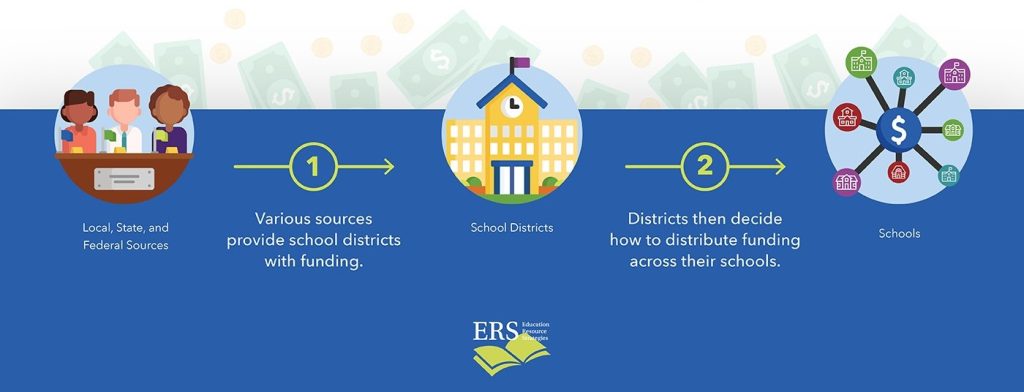
School funding models are systems used to determine where education funding comes from and how it is distributed among schools, districts, or other educational institutions.
Funding may originate from national or regional governments, local authorities, tuition payments, grants, charitable donations, or other permitted sources. The exact combination depends on a country’s education system and the type of school.
A funding model establishes the rules that determine how much money a school receives, which factors influence its allocation, and whether the funding must be used for particular purposes.
For example, one system may allocate funding mainly according to student enrollment. Another may provide additional resources to schools serving students with greater educational needs. Some systems combine several methods to account for enrollment, staffing, location, and program costs.
School funding models generally aim to support essential educational services, distribute resources predictably, and help institutions meet their responsibilities.
However, the way funding is designed matters. A system that treats every school identically may overlook differences in student needs or operating costs. Conversely, a complicated system may be difficult to administer or understand.
Effective funding requires a balance between fairness, flexibility, transparency, and financial sustainability.
Why School Funding Matters for Educational Opportunities
Funding affects the conditions in which teaching and learning take place. Schools need qualified educators, appropriate facilities, instructional materials, reliable technology, and support services to help students succeed.
When resources are insufficient or poorly distributed, schools may struggle to provide these essentials. Students can experience larger classes, fewer enrichment activities, outdated learning materials, or limited access to specialist assistance.
Adequate and fairly distributed funding can help schools:
- Recruit and retain qualified teachers.
- Maintain safe, accessible, and functional facilities.
- Provide current textbooks and instructional resources.
- Improve access to computers and educational technology.
- Support students with disabilities and additional learning needs.
- Offer counseling and other student-support services.
- Expand academic enrichment and extracurricular activities.
- Provide professional development for teachers.
- Maintain programs that support student achievement and well-being.
Funding alone does not guarantee educational success. School leadership, teaching quality, effective resource management, family engagement, and student circumstances also influence outcomes.
Nevertheless, funding determines which resources schools can realistically provide. Understanding how money is allocated is therefore an important step toward improving educational equity and quality.
1. Government-Funded Schooling
In many countries, public schools receive a substantial portion of their funding from national, regional, provincial, or local governments. These resources may support teacher salaries, school operations, facilities, educational materials, and student services.
Government funding can help make education accessible to students regardless of their family’s ability to pay tuition.
However, public funding systems differ considerably. Some rely mainly on national allocations, while others combine national funding with regional or local contributions.
The distribution of funding between levels of government can also influence the resources available to individual schools.
How government funding affects students
Stable public funding can help schools plan staffing, maintain facilities, and provide essential educational services. It can also support programs designed to reduce disparities between communities.
For example, a government may provide additional resources for schools serving remote communities or students who require specialized educational support.
However, public funding may be affected by changing government priorities, economic conditions, enrollment patterns, and competing demands on public finances.
When funding does not adequately reflect local needs, schools may struggle to maintain consistent educational opportunities.
A strong public funding system therefore needs transparent allocation rules, realistic assessments of costs, and mechanisms for reviewing whether resources are reaching the schools that need them.
2. Per-Student Funding Models
A per-student funding model allocates resources according to the number of students enrolled in a school. In a simple version, each student generates a predetermined amount of funding.
For example, if a school receives a hypothetical allocation of $5,000 per student and has 400 eligible students, its basic allocation would be $2 million.
This example illustrates the calculation only; actual funding rates and eligibility rules vary by education system.
Per-student funding can make allocations easier to understand and adjust when enrollment changes. Schools with more students generally receive larger allocations, while those with fewer students receive smaller amounts.
Benefits of per-student funding
This model can offer several advantages:
- It creates a relatively straightforward way to calculate funding.
- It can make allocations more predictable.
- It links some funding directly to enrollment.
- It can improve transparency when the rules are publicly available.
- It provides a clear starting point for school budget planning.
Limitations of per-student funding
The main limitation is that educating every student does not cost the same amount.
A school serving students who require additional learning support may face higher costs than a school with fewer specialist needs. A small rural school may also have difficulty spreading fixed operating costs across a limited number of students.
If funding is based only on enrollment, these differences may be overlooked.
For this reason, many systems combine basic per-student funding with additional allocations for student needs, school characteristics, or specific educational programs.
3. Needs-Based Funding Models
Needs-based funding provides additional resources according to the circumstances of students or schools.
Rather than assuming that every student requires the same level of support, this approach recognizes that some learners may need additional assistance to access comparable educational opportunities.
Depending on the system, additional funding may consider:
- Disability-related educational support.
- Language-learning needs.
- Economic disadvantage.
- Additional academic intervention.
- Rural or remote location.
- Specialized programs or services.
- Other documented educational needs.
For example, a school serving a large number of students who need intensive language support may require additional teachers, specialist materials, or small-group instruction.
Needs-based funding can help schools provide these services without taking resources away from other essential activities.
Why needs-based funding matters
Equal funding does not always produce equal opportunity. Students may face different barriers to learning, and schools may need different levels of support to address those barriers.
Needs-based models aim to account for these differences so that students have a fairer chance to participate and succeed.
However, the model must use clear and appropriate criteria. If eligibility rules are inaccurate, outdated, or too restrictive, some schools may receive less support than their students require.
Administrators should also be able to explain how additional resources are allocated and evaluate whether they are helping address the needs for which they were provided.
4. Local Revenue and Community-Based Funding
Some education systems rely partly on local revenue, including taxes, community contributions, or funding raised through local authorities.
This approach can give communities greater influence over educational spending and allow local decision-makers to respond to specific priorities.
For example, a community may choose to invest additional resources in school libraries, arts programs, sports facilities, or technology improvements.
However, local revenue models can create challenges when communities have very different financial capacities.
An area with a strong tax base may be able to raise more money for education than a lower-income area, even when students in both communities need high-quality schools.
The risk of unequal opportunities
When school resources depend heavily on local wealth, differences between communities can translate into differences in educational opportunities.
Schools in wealthier areas may have more flexibility to fund enrichment programs, improve facilities, or provide additional services. Schools in less affluent areas may struggle to cover basic operating costs.
Governments can reduce this risk through funding transfers, equalization arrangements, or additional support for communities with fewer resources.
The aim is to preserve the benefits of local decision-making without allowing a community’s financial capacity to determine students’ educational prospects.
5. Formula-Based Funding Models
Formula-based funding uses predetermined criteria and calculations to determine how much funding each school receives.
A formula may include a basic amount for each student, additional funding for specific educational needs, and adjustments for school size, location, or operating costs.
For example, a hypothetical formula might include:
- A base allocation for each enrolled student.
- Additional support for eligible students with disabilities.
- Extra resources for language-learning programs.
- An adjustment for schools in remote locations.
- Funding for approved specialist programs.
The actual factors and amounts vary across education systems.
Advantages of formula-based funding
A well-designed formula can make school funding more transparent and predictable. Schools can better understand how allocations are calculated and plan their budgets accordingly.
It can also reduce reliance on informal decisions by establishing common rules for comparable schools.
Challenges of formula-based funding
A formula is only as effective as its design and the information used to calculate it.
If the formula overlooks important differences in operating costs or educational needs, it may produce unfair results. Excessive complexity can also make it difficult for school leaders and families to understand how allocations are determined.
Effective formulas need clear objectives, reliable data, appropriate adjustments, and periodic evaluation.
The purpose is not simply to distribute money according to a mathematical rule. It is to create a fair and practical system that reflects the real costs of providing education.
6. Grant-Based and Targeted Funding
Some schools receive grants for specific programs, projects, or improvement goals. These grants may come from governments, foundations, charitable organizations, or other authorized funding bodies.
Targeted grants can help schools introduce initiatives that might otherwise be difficult to finance.
Examples include funding for:
- Classroom technology and digital learning.
- Literacy and numeracy interventions.
- Teacher training.
- School infrastructure improvements.
- Science laboratories and learning equipment.
- Student well-being initiatives.
- Accessibility improvements.
- Environmental or community projects.
Benefits of targeted funding
Grants can direct resources toward important needs and encourage schools to test new approaches. They may also provide opportunities for schools to expand services beyond their regular budgets.
Potential limitations
Grant funding may be temporary, competitive, or restricted to specific uses. Schools may need to prepare applications, demonstrate eligibility, meet reporting requirements, and evaluate project outcomes.
A further challenge arises when a grant supports a program that creates continuing expenses.
For example, a school may receive funding to introduce a digital learning platform but later need to pay for software renewals, technical support, maintenance, and staff training.
Before accepting a grant, administrators should consider both the immediate benefits and the long-term financial implications.
7. Private School Funding Models
Private schools may rely on tuition fees, donations, endowments, grants, fundraising, or combinations of these sources. The exact arrangement depends on the institution and applicable regulations.
Tuition can provide a predictable revenue stream when enrollment and fee collection are stable. Donations and endowments may also help schools finance scholarships, facilities, or specialized programs.
However, tuition-based systems can create affordability challenges for families. Students’ access to certain schools may depend partly on their household’s ability to pay, unless financial assistance or other support is available.
Private schools also vary widely in their financial resources. Some have substantial reserves or philanthropic support, while others operate with limited budgets.
How private funding affects opportunities
Schools with greater financial flexibility may be able to invest in smaller classes, specialist teachers, modern facilities, or extensive extracurricular offerings.
However, financial resources do not automatically translate into better educational outcomes. Effective teaching, leadership, student support, and responsible resource management remain important.
Scholarships, sliding-scale tuition, and other financial assistance programs can help eligible students access educational opportunities that might otherwise be unaffordable.
When public funds support private education providers, clear accountability and funding conditions can help protect educational access and ensure responsible use of resources.
8. How Funding Models Influence Teacher Recruitment and Retention
Teachers are central to educational quality, and staffing is often one of a school’s largest ongoing expenses.
Funding levels influence how many teachers a school can employ, whether it can recruit specialists, and how much it can invest in professional development.
Schools with adequate and predictable funding may be better positioned to maintain staffing levels, reduce excessive workloads, and provide continuity for students.
By contrast, financial constraints may lead to larger classes, fewer specialist teachers, reduced planning time, or limited access to professional learning.
Funding models can also affect schools differently according to location. Remote schools may face higher recruitment costs or difficulty attracting qualified staff, even when their enrollment is relatively small.
Funding arrangements that recognize legitimate differences in staffing costs can help schools maintain appropriate educational provision.
However, salary funding alone is not enough. Teacher retention also depends on working conditions, leadership, professional respect, career opportunities, and a supportive school environment.
9. The Connection Between School Funding and Learning Resources
Students need appropriate materials and learning environments to develop their knowledge and skills.
Funding affects whether schools can maintain libraries, purchase textbooks, update science equipment, provide accessible learning materials, and integrate technology into instruction.
A school with limited resources may need to rely on outdated equipment or delay replacing damaged materials. These limitations can restrict the activities teachers are able to offer.
Digital learning is one example. Devices and online platforms can expand access to information, but schools also need reliable internet, technical support, teacher training, and suitable digital content.
Simply purchasing technology does not guarantee better learning. Investments should be connected to curriculum objectives and supported by effective teaching practices.
School leaders should evaluate resource needs based on educational priorities rather than purchasing equipment because it is new or widely promoted.
When funding supports appropriate resources and effective implementation, it can help create richer learning experiences for students.
10. How School Funding Models Affect Educational Equity
Educational equity means that students have fair opportunities to learn and succeed, taking account of the barriers and circumstances they face.
Equity does not necessarily require every school to receive exactly the same amount of money. It requires funding decisions to consider whether resources are sufficient and appropriately distributed to meet educational needs.
Two schools with the same enrollment may have very different costs because of differences in student needs, building conditions, location, or available services.
A funding model that recognizes these differences may distribute resources more equitably than one that allocates identical amounts to every student without adjustment.
Horizontal and vertical equity
Two useful concepts help explain educational funding equity.
Horizontal equity means treating students or schools with comparable needs in a comparable way.
Vertical equity means providing different levels of support when students or schools have different needs.
For example, two schools with similar student populations might receive similar base funding. A school that also serves many students who require specialized educational services may receive additional support to meet those needs.
Both concepts matter. A fair system should avoid arbitrary differences while recognizing that some students require additional resources to access comparable opportunities.
Equity also requires attention to how money is used. Additional funding should reach the intended students and support the services for which it was allocated.
11. Funding Differences Between Urban, Rural, and Remote Schools
School location can influence the cost of delivering education.
Urban schools may face higher property costs, crowded facilities, or demand for additional student services. Rural and remote schools may experience transportation challenges, limited access to specialist professionals, higher supply costs, or difficulty recruiting staff.
Smaller schools may also have higher per-student costs because they must maintain essential facilities and staffing even when enrollment is low.
A funding model based only on student numbers may not fully account for these differences.
Location-based adjustments can help address legitimate cost variations, although the appropriate approach depends on local conditions and available evidence.
Administrators should identify the specific challenges affecting their schools and explain how those challenges influence operating costs and educational provision.
The objective is to ensure that students can access appropriate educational opportunities regardless of where they live.
12. How School Leaders Can Use Funding More Effectively
Funding models establish how money reaches schools, but school leadership influences how effectively those resources are used.
Administrators can improve resource management by connecting financial decisions to educational priorities and reviewing whether programs are achieving their intended goals.
Practical steps include:
Assess student needs. Use relevant information about enrollment, learning progress, accessibility, attendance, and student support requirements to identify priorities.
Develop realistic budgets. Estimate staffing, facilities, materials, and ongoing operating costs before committing to new programs.
Consult teachers and staff. Classroom professionals can identify resource gaps and explain which investments would be most useful.
Review existing spending. Determine whether current programs are effective and whether resources are being duplicated or underused.
Plan for long-term costs. Consider maintenance, training, subscriptions, staffing, and replacement expenses associated with new investments.
Monitor results. Review financial reports and relevant educational indicators to understand whether spending supports the school’s objectives.
Communicate decisions clearly. Explain why certain priorities receive funding and how the school evaluates the impact of major expenditures.
Responsible management cannot compensate fully for inadequate funding, but it can help schools make better use of the resources they have.
13. Questions Policymakers Should Ask When Designing Funding Models
Policymakers need to consider more than how much money is available. They must also decide how resources should be distributed and how the system’s performance will be evaluated.
Important questions include:
- Does the model provide sufficient resources for essential educational services?
- Are funding rules transparent and understandable?
- Does the formula reflect differences in student needs and school operating costs?
- Are disadvantaged communities receiving appropriate support?
- Can schools predict their allocations and plan budgets effectively?
- Are funding restrictions reasonable and clearly communicated?
- Can the system respond to changes in enrollment and local circumstances?
- Are schools accountable for how funds are used?
- Are administrative requirements proportionate to the funding provided?
- Is the model reviewed regularly using reliable evidence?
No funding model can eliminate every difference between schools. However, a well-designed system can make resource distribution more transparent, reduce avoidable inequalities, and provide a clearer basis for improving educational opportunities.
14. How Families and Communities Can Understand School Funding
Parents and community members can play a constructive role in understanding school resources and supporting educational improvement.
School budget reports, governing body meetings, public financial statements, and community consultations can help families understand how funding is allocated.
Useful questions include whether schools have adequate learning materials, how student-support services are financed, and whether planned spending aligns with identified educational needs.
Families can also ask how schools evaluate the effectiveness of major investments and how they communicate financial decisions.
It is important to consider the context behind funding figures. A school with a larger budget may also serve more students or have higher operating costs. Comparing total spending alone may therefore give an incomplete picture.
Looking at funding alongside enrollment, student needs, facilities, and educational priorities provides a more meaningful understanding of how resources support learning.
Community engagement is most productive when it focuses on clear information, practical needs, and constructive solutions.
Common Challenges in School Funding Systems
Even well-intentioned funding arrangements can face difficulties.
Unequal local resources: Communities with different financial capacities may struggle to provide comparable educational opportunities.
Outdated allocation formulas: Funding rules may fail to reflect changes in enrollment, staffing costs, or student needs.
Short-term grants: Temporary funding may create programs that become difficult to maintain after the grant ends.
Complex reporting requirements: Excessive administrative work can divert time and resources from educational activities.
Poor transparency: Unclear allocation rules can make it difficult for schools and families to understand financial decisions.
Weak evaluation: Without reviewing how funds are used, policymakers may struggle to identify ineffective programs or unmet needs.
Insufficient flexibility: Schools may be unable to respond quickly when local circumstances change, particularly when funding is tightly restricted.
Addressing these challenges requires reliable data, clear governance, meaningful consultation, and regular evaluation.
Conclusion
School funding models influence educational opportunities by determining how resources are collected, distributed, and used. They affect staffing, learning materials, facilities, student services, and the ability of schools to respond to different educational needs.
Per-student funding can provide a clear basis for allocating resources, while needs-based formulas can recognize differences in student circumstances. Government allocations, local revenue, grants, and private funding arrangements each offer potential benefits, but they also present challenges that must be managed carefully.
The most effective funding systems combine transparency, adequate resources, fairness, and accountability. They recognize that equal treatment does not always mean identical funding and that schools may need different levels of support to provide meaningful educational opportunities.
For administrators, understanding school funding models is an important step toward better budgeting and resource management. For policymakers, it provides a foundation for designing more equitable systems. For families, it helps explain how financial decisions influence the educational experiences available to their children.
Ultimately, funding should serve a clear purpose: helping schools create learning environments in which every student has a fair opportunity to develop their abilities and achieve their potential.
Leave a Reply